Monday, March 17, 2014
Volkswagen Golf Car Model
 |
| 2013 Volkswagen Golf Car Model |
 |
| 2013 Volkswagen Golf Car Model |
 |
| 2013 Volkswagen Golf Car Model |
 |
| 2013 Volkswagen Golf Car Model |
 |
| 2013 Volkswagen Golf Car Model |
 |
| 2013 Volkswagen Golf Car Model |
 |
| 2013 Volkswagen Golf Car Model |
 |
| 2013 Volkswagen Golf Car Model |
The new VW Golf, but also a team that features innovative standard security systems is optional between the systems of many previously only available on vehicles in a class above. Standard on all new Golf models is a multi-crash brake system. This automatically brakes the vehicle after a collision, to reduce the kinetic energy significantly and, thus minimizing the chance of a second domain. In germany, the research shows that around a quarter of the accident involving personal injury, there are multi-collision events. Also standard is PreCrash system made its debut on the Touareg. If it detects the possibility of an accident, this pre-tensions safety belts and closes the windows and sunroof, behind only a small space, to provide the best protection possible from the airbag.
For the first time, Volkswagen Golf is also available with the driver profile selection, which allows the driver to the four modes - the Environment, Sport, Normal and Individual; a DSG gearbox with the fifth option - Comfort - are also available. Each of these modes change the gas mapping and engine management (other parameters) to the selected style, so the Eco mode, for example, engine management, air and auxiliary systems, controlled to achieve maximum fuel consumption.
Powering the VW Golf VII a new range of petrol and diesel engines, all of which combine a Stop/Start and battery regeneration facilities. At Launch, petrol engines 1.2-liter TSI 85 PS unit returning to 4.9 litres/100 km (approximately 57.6 mpg, 113 g/km), and the 1.4-litre TSI 140 PS unit with the Active Cylinder Technology, which can disable the two-cylinder, manages up to 4.8 l/100 km (58.9 mpg and 112 g/km). The launch of the diesel engines of 1.6-litre unit with 105 PS, which returns the 3.8 l/100 km (74.3 mpg and 99 g/km and a 2.0-liter 150 PS unit which turns 4.1 l/100 km (68.9 mpg and 106 g/km).

Saturday, March 15, 2014
Mini John Cooper Works Paceman

With the Mini Paceman takes one three-door version of the Countryman to the market and would like to address with the "Sports Activity Coupe", especially young and dynamic customers who are looking for a lifestyle car.
As the top model acts again the John Cooper Works version that differs not only by their performance of the other models.
Visual level, the strongest Paceman in a modified front end with large spoiler in the fender flares is continued, 18 "alloy wheels, and chrome-plated tailpipes. This racy design is still supported by a 2-tone finish and makes the Paceman in John Cooper Works outfit into a real eye-catcher.
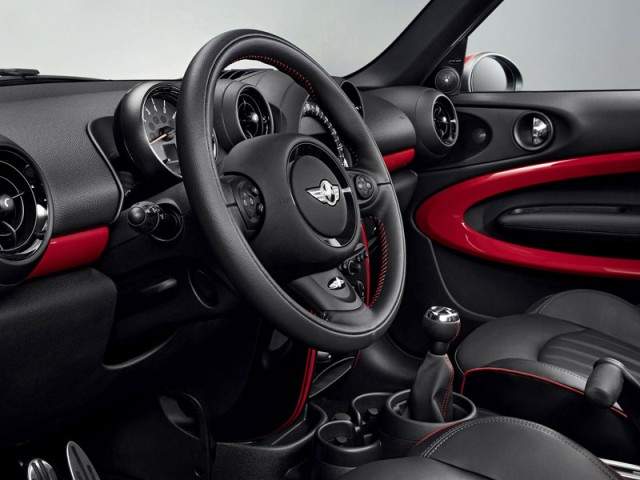
The interior has been adapted and is shown with a leather steering wheel with contrasting stitching and sports seats, which are standard in the execution "fabric diagonal track John Cooper Works Carbon Black" held with red contrast stitching.
Under the hood lies a 4-cylinder turbocharged engine that has an output of 218 hp (160 kW). As standard, the Mini John Cooper Works Paceman a manual 6-speed transmission, but is also an optional 6-speed automatic available.
Both versions provide the sprint from 0 to 100 km / h in 6.9 seconds, top speed is 226 or 224 km / h In consumption, the manually shifted Paceman. 7.4 liters with the nose before the automatic version, which indulges 7.9 liters

As standard equipment the strongest Paceman the ALL4 all-wheel drive, which not only ensures that the service is well accommodated on the road, but also runs off paved roads makes possible, with the strong Paceman recommends not yet a substitute for an off-roader.
To further enhance the sporty feel, even when driving, was the John Cooper Works Paceman namely lowered by 10 millimeters, and the suspension was adjusted to the character of the car and comes tighter than in the other models.
Its public debut of the 2013 Mini John Cooper Works Paceman debut at Auto Show in Detroit, the dealers he then rolls in March 2013.

Thursday, March 13, 2014
Mazda MX 5 Miata Price 31 225
 The 2013 Mazda MX-5 Miata is one of the latest version of 2013 Mazda. A 2013 Mazda MX-5 Miata is enliven booth at the Chicago Auto Show 2012. Roadster version of this special edition is only 450 units available. The 2013 Mazda MX-5 Miata is available in two colors red and white. Using the base model Grand Touring with Power Retractable Hard Top (PRHT).
 The 2013 Mazda MX-5 Miata has the retractable hard top convertible roof, mirrors and wheels give the special edition Miata a bold look when combined with either of the two paint packages available on the special edition; Velocity red and Crystal white pearl. Sportcar are marketed specifically for North America gets a new twist on the mirror is black, gunmetal 17-inch alloy wheels.
 The 2013 Mazda MX-5 Miata interior will come outfitted with black leather adorned seats, steering wheel, door trim and parking brake, along with contrasting grey stitching throughout. Other 2013 Mazda MX-5 Miata has newly blacked out interior features are the steering wheel spokes, dash and the roll bar garnish. A nice shiny set of alloy pedals is included as well. Installed also features Bluetooth, hands-free phone and SIRIUS satellite radio. On the front hood mounted machine 2.0-liter 167 hp-powered with 140 lb-ft of torque. Available version of the manual and automatic 6-speed. The 2013 Mazda MX-5 Miata price of $31,225 and $31,675.
Tuesday, March 11, 2014
Hyundai Accent Price 45 500
 The 2013 Hyundai Accent is one of the latest version of 2013 Hyundai. A 2013 Hyundai Accent was redesigned in 2012 and continues these improvements in this years model. The new 2013 Hyundai Accent is now a leading option in the subcompact class. The 2013 Hyundai Accent is expected to be released in the spring.
  The engine isn’t all the 2013 Hyundai Accent is going to bring to the table, though. With a new design and more powerful engine in 2013 Hyundai Accent is a 2 - or 4-door sedan, five-person family, or family sedan. The 2013 Hyundai Accent car is in three panels are available, ranging from the GL 3-door 4-door. The 2013 Hyundai Accent closest competitors.
 The bumpers and side moldings are designed with a swept back look that makes the 2013 Hyundai Accent look like a mid-size sedan. Designed with 2013 Hyundai Accent sheet metal and body ridges, this car stands out among subcompacts. After the introduction, the 2013 Hyundai Accent are standard equipped with a 1.6-liter, I4, 104-hp engine that reaches 29-mpg in the city and 33-mpg on the highway decorated. A 5-speed with overdrive is standard, and a 4-speed automatic transmission with overdrive is optional. The 2013 Hyundai Accent is freshened for 2013. It’s tough to wait for something as incredible as the 2013 Hyundai Accent to hit Tinley Park, Orland Park, Frankfort, and Mokena. The 2013 Hyundai Accent price of $45,500 - $49,000.
 Thursday, March 6, 2014
Bentley Continental GT Speed
About two years after the presentation of the revised Continental and one year after the launch of the facelift Convertible GTC, Bentley sends now the flagship of its highly successful series retreaded into the race. This still sounds on the additional title "Speed" and once again trumped up with new superlatives.
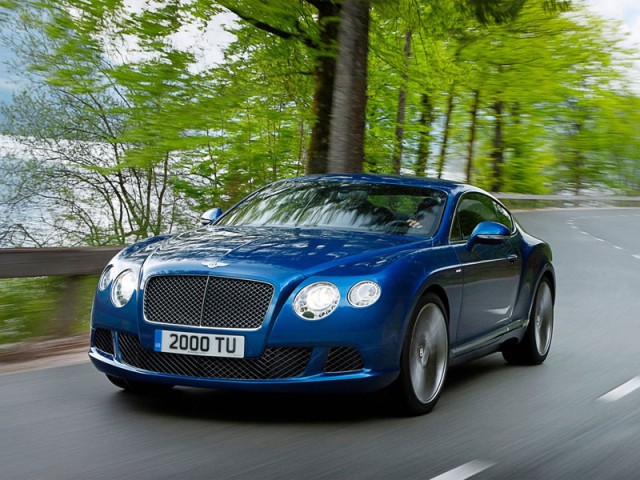 |
| 2013 bentley continental gt speed |
Drive
When speed is of course not the new 8-cylinder, but the proven six-liter 12-cylinder biturbo (W-shape) is used. This makes the updated standard 575 hp model. When the performance flagship has been screwed up to an impressive 625 hp. Even more impressive since only the maximum torque of 800 Nm sounds. Although the Continental GT weighs well over two tons, the engine has an easy game: It catapults the four-seat four-wheel drive in 4.2 seconds from zero to 100 kph, the speed is breathtaking 329 km / h For an extra narrow power transmission graduated eight-speed automatic transmission from ZF is responsible, which can be operated by manual interventions.
Distinguishing
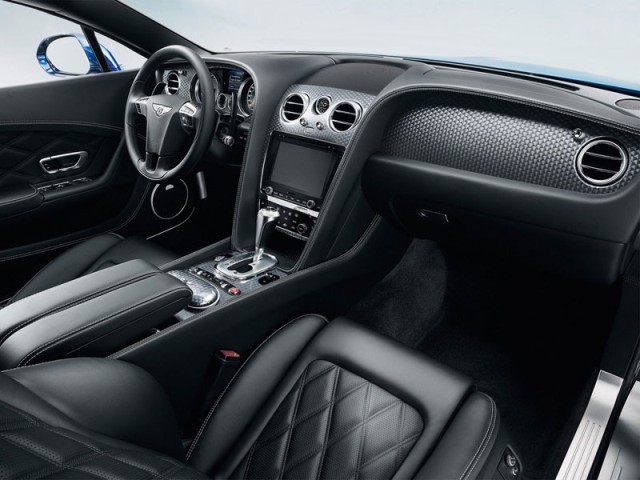
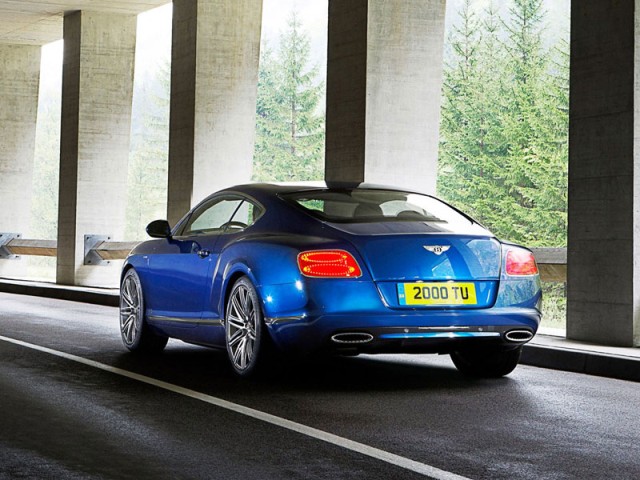
At first glance, the speed difference is not of the standard models. In the fall but a closer look at some differences. Among the highlights of the dark-tinted matrix grille to the radiator and include in the lower air intake (front) and exhaust pipes, which have a special ribbing. The body is lowered, however, only true connoisseurs stand out. The situation is different in the mighty 21-inch models in specific speed design. On the way, these are mounted 275er tires that provide the right traction. The black-colored interior, its sporty and luxurious to. Everything looks after the carbon is also carbon.
World premiere of the new Bentley Continental GT Speed celebrates at the Goodwood Festival of Speed (UK). This is this year of 29 June to 1 July 2012, on the stage.
Wednesday, March 5, 2014
Porsche Boxster Start Of Production
Porsche has officially begun production of its Boxster model factory Volkswagen Osnabrück GmbH. This will help the main factory in Stuttgart Porsche to meet the growing demand for its models. At the factory in Stuttgart-Zuffenhausen, the new Porsche 911 and Boxster continue to be built in mixed production on a single production line.

jobs will be retained and this lects the skills of the workforce in our town, where the automotive industry is part of the economic landscape for more than a century. ‘


Porsche Boxster 2013 News 

Porsche Boxster 2013: Start Of Production
Monday, March 3, 2014
Mazda 3
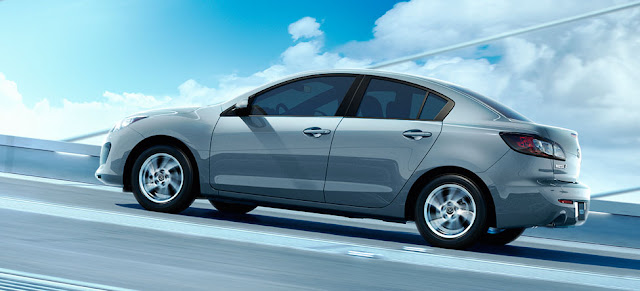 |
| 2013 Mazda 3 |
Friday, February 28, 2014
Kia Sorento
 |
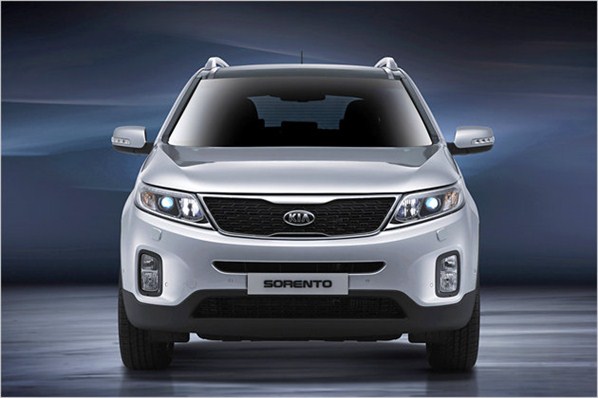
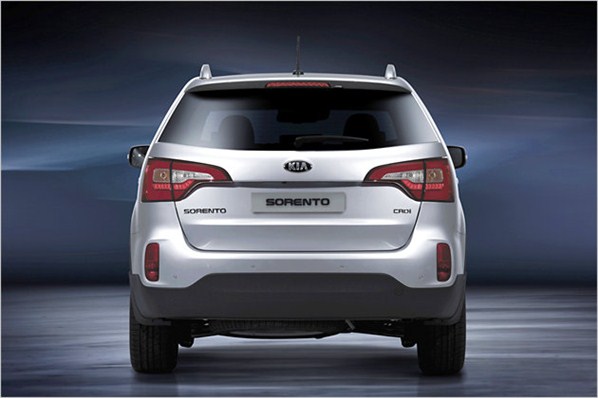
| 2013 kia sorento |
More economical with better suspension
The Engines terminate the Kia Sorento best in class in terms of consumption and pollutant emissions. Details on the engines - currently, the SUV with a 174-hp 2.4-liter four-cylinder gasoline engine or a 2.2-liter turbo diesel with 197 hp available - has not yet mirgeteilt the manufacturer. In addition, handling and comfort to be better than the pre-facelift model. Also, new security features to provide the revamped model. For the future, larger Sorento aluminum wheels, 19-inch model, available.
Sorentos interior is high quality
The interior of the deliverable as a five-or seven-seat SUV is expected to improve quality through more soft-touch surfaces. In addition, the Sorento, the center console with the seven-inch LCD monitor has been redesigned. The gear selector lever of the automatic version comes with a leather cover in the future. The 2013 Kia Sorento can be ordered with black or beige leather, depending on the model version may be let in through a panoramic glass roof, the sun.
Wednesday, February 26, 2014
McLaren MP4 12C Spider


- McLaren MP4-12C Spider, 2013
The new McLaren MP4-12C Spider, unveiled at the 2012 Pebble Beach weekend in California, is the second vehicle in the growing range of high performance sports cars from McLaren Automotive. This lightweight, mid-engine open-top sports car combines the astonishing performance of the 12C with the increased exhilaration of roof-down motoring. Unlike most other spiders or convertibles, the 12C Spider offers the same performance, handling and driver enjoyment as the fixed-roof coupé version.
The 12C Spider uses the industry-leading carbon fibre MonoCell as the 12C, which needs no extra strengthening to provide the necessary rigidity and strength for an open roof car. In conventional steel or aluminium chassis cars, extra strengthening - and associated weight increase - is normal during the conversion from fixed-head coupé to open-roof convertible. This can compromise performance, handling and driving enjoyment.
The composure of a sports car, the fun of a convertible
In the new 12C Spider you get the best of both worlds, says McLaren Automotive Managing Director Antony Sheriff. You get all the performance and driving integrity of the 12C, plus the thrill of open-roof motoring.
The new 12C Spider is mechanically identical to the 12C. It uses the upgraded 625PS engine, which is part of the 12C Model Year 2013 upgrade. Acceleration - 0-62mph (100 km/h) - takes just 3.1 seconds (when fitted with Pirelli P Zero Corsa tyres), the same as the coupé. Fuel consumption and emissions also remain the same, returning 24.2 mpg (11.7 l/100km) on the combined cycle and 279g/km. The figures are much better than most high performance convertible sports cars, in keeping with McLarens commitment to class-leading fuel efficiency. Maximum speed is 204 mph (329 km/h).
The Retractable Hard Top (RHT) on the 12C Spider is a fully automatic two-piece design which can be raised or lowered in less than 17 seconds at speeds of up to 30 km/h (19 mph). When lowered, the roof stows beneath a body coloured hard tonneau cover which incorporates twin buttresses. With the roof raised, the area beneath the tonneau cover can be used as additional luggage space.
The 12C Spider features a heated glass rear window, which can be operated independently of the roof. With the roof down, the rear window moves automatically to an aero position to minimise buffeting. Additionally, with the roof up, the window can be lowered to give direct access to the sound of the twin-turbo 3.8-litre V8 engine mounted directly behind the cabin.
A roll over protection system includes a steel structure within each of the rear buttresses to absorb any impact and protect occupants. An active pop-up system was ruled out as it would have added weight.
The detail changes of the 12C Spider extend to both the audio and climate control systems. Audio output changes when the roof is open - to compensate for extra external noise - while the climate control adapts when the roof is lowered.
12C programme included Spider from the outset
The 12C Spider is not a converted version of the 12C, notes Sheriff. Importantly, the two were conceived and developed at the same time, and alongside each other. The 12C programme included a coupé and convertible from the outset. The carbon fibre MonoCell chassis and all other mechanical components were designed to produce maximum performance in both configurations.
12C SPIDER: THE DETAILS
As with the 12C, everything on the 12C Spider was designed for a reason. There is no unnecessary jewellery, no styling fripperies. It is a pure sports car, designed to deliver maximum driving appeal and performance, with unmatched efficiency.
As with all McLarens, the 12C Spider is a racing car at heart, notes Design Director Frank Stephenson. That is not true of many - if any - other high performance convertibles.
It has the same timeless elegant style that distinguishes the 12C but with the added romance of open-top driving, adds Stephenson. We have tried very hard to preserve the same design purity. With the roof in place, it looks like a coupé sports car that could just as easily be at Le Mans, as in London or Los Angeles. With the roof down, it looks like it belongs on Sunset Boulevard or the Cote dAzur.
Retractable Hard Top (RHT)
The Retractable Hard Top (RHT) has been designed specifically for the 12C Spider. Low weight, combined with high strength, was of paramount importance - as with all areas of the 12C.
The two roof panels and tonneau are made from the same composite material used in the construction of the 12C body. This is light, strong and allows for a very high standard of paint finish. Heated rear glass completes the roof construction.
The fully automatic mechanism raises or lowers the roof in less than 17 seconds, and can be activated at speeds up to 30 km/h (19 mph). It is controlled by a two-position switch on the centre panel within the cabin.
At the end of the roof lowering cycle, the windows fully close, and the rear glass adopts an aero position that also reduces cabin wind buffeting. Continuing to hold the switch after the cycle is complete fully lowers the windows and rear cabin glass.
The RHT is operated by a single hydraulic pump. It is mounted as low as possible in the vehicle to optimise the centre of gravity, and improve handling.
Dual-purpose tonneau cover
When lowered, the roof stows beneath a body coloured hard tonneau cover which incorporates twin buttresses. With the roof raised, the area beneath the tonneau cover can be used as additional luggage space. This can accommodate 52 litres of luggage in two specially designed bags, supplied as standard. This is in addition to the 144 litres of luggage space provided under the bonnet.
Retractable rear glass provides increased audible drama
The rear glass can also be operated independently of the RHT. Roof up, the rear glass can be lowered to allow more engine sound into the cabin and also allows for a semi-open driving experience even in inclement weather. Roof down, the screen acts as a wind deflector, minimising disturbance in the cabin.
Roll over protection system
A roll over protection system ensures maximum occupant safety. Each rear buttress contains a steel structure to absorb the impact energy and protect both driver and passenger. An active pop-up system would have added unnecessary weight.
Carbon fibre MonoCell ideally suited for convertible use
As with the mechanically identical 12C, the 12C Spider is a mid-engine two-seat rear-drive high performance sports car. Unlike rivals, it uses a carbon fibre monocoque chassis, the MonoCell. This confers major advantages in weight, strength and torsional rigidity - all improving handling, ride comfort and performance.
The MonoCell is a unique one-piece moulded chassis that weighs just 75kgs (165lbs). It is 25 per cent stiffer than an equivalent all-metal structure and 25 per cent lighter than a comparable aluminium chassis (the difference with a steel chassis is even greater). It is also stronger and safer in a crash, acting as a safety survival cell, as it does in a Formula 1 car.
The MonoCell is unchanged from 12C to 12C Spider, as it was originally designed for both applications. This is highly unusual, notes Patterson. Most convertibles require a strengthened chassis to reduce flex, thus adding weight - while still not achieving the structural integrity of a coupé. This flex can compromise handling precision and reduce ride comfort; while the added weight affects performance.
The carbon fibre MonoCell not only gives advantages in strength and weight, it also improves packaging. The one-piece moulded design has been created to provide the perfect cabin - roomy, yet compact. We started with the driver, says Design Director Frank Stephenson. With the 12C and 12C Spider, the driver sits close to the centre line of the car, improving control and driver enjoyment. The pedals are positioned inboard, reducing wheel well intrusion. The result is the perfect driving environment- unique and uncompromised.
The steering column is centred on the driver, and is parallel to his seat and shoulders. The brake and throttle pedals are both placed directly in line with the driver and all primary controls are within reach. The overall cabin architecture is both elegant in its design and uncluttered and intuitive to use.
As with the 12C, the 12C Spider has class-leading all-round visibility. Enormous emphasis was put on ensuring excellent visibility, both for safety and driving precision, adds Stephenson.
McLaren: The carbon innovators
The carbon fibre MonoCell of the 12C and 12C Spider follows more than three decades of McLaren carbon innovation. In 1981, McLaren Racing introduced the carbon monocoque to Formula 1™. It offered an unbeatable combination of strength and weight-saving, and soon recorded the first victory for a carbon-based F1 car, at the British GP, driven by John Watson.
The legendary McLaren F1 road car, launched in 1992, was the first road car to use a carbon chassis and body. In fact, since 1981 McLaren has never built a car without a carbon chassis.
On the 12C and 12C Spider, aluminium extrusions and castings are jig welded onto front and rear structures and bolted directly to the MonoCell. Along with the carbon MonoCell, they carry the lightweight composite body panels. Apart from the roof, and the engine cover, body panels are identical to the 12C. A redesigned glass engine cover maintains an unobstructed view of the handsome twin turbo V8 engine.
The front and rear aluminium structures are easy to repair, adds Patterson. They absorb impacts and can be replaced easily. Cars with full aluminium chassis use their structure to absorb and crumple on impact, causing more damage and expense to the whole structure, including the passenger cell.
Unique Airbrake provides active aerodynamics
As with the 12C, the 12C Spider is fitted with the unique McLaren Airbrake - an active rear wing that increases its angle to boost downforce and improve stopping power and stability through corners. As with every other aspect of the car, we have "added lightness", notes McLaren Automotive Chief Test Driver, Chris Goodwin. Under heavy braking above 95 km/h, a piston operated by the transmission hydraulics raises the Airbrake to 32 degrees. Once this wing angle is set, and the Airbrake is pushed into the airflow, the centre of aerodynamic pressure forces the bottom of the wing up to 69 degrees. With the use of clever aerodynamics, rather than a bigger, heavier motor, the wing is deployed to its full and maximum angle. This weight-saving thinking has reduced the weight of the mechanism by 50 per cent.
The active aerodynamics of the McLaren Airbrake is another Formula 1™-derived innovation - although now banned, as it conferred a substantial performance advantage.
The total weight of the new 12C Spider is 1,474 kg, an increase of only 40 kg on the 12C, less than any other car in the class. The increase is because of the added weight of the Retractable Hard Top and other small changes, including a slightly heavier (by 2 kg) exhaust system. Overall, the 12C Spider is substantially lighter than most comparable convertibles, as well as being stronger and stiffer.
ENGINE AND TRANSMISSION
The light weight philosophy does not begin and end with the body and chassis of the 12C Spider. A light structure enables the designers to save weight through the whole design process. This includes the unique 3.8-litre twin turbo V8 engine, which weighs just 199 kg (439lbs).
Designed by McLaren Automotive, the British-made M838T engine features dry sump lubrication and a flat plane crankshaft, both of which have helped engineers place the engine extremely low in the chassis, lowering the centre of gravity and optimising handling and agility.
The engine in the 12C and 12C Spider offers low weight, low-rev tractability, potent mid-range performance and extensive high-rev reach, says Richard Farquhar, Function Group Manager for Powertrain. It also has a level of inement and efficiency you wouldnt normally expect from a V8.
Power boost for 2013
The McLaren MP4-12C Spider, along with the Model Year 2013 12C, gets the latest and more powerful 625PS (616hp) version of the engine, to give even more vivid acceleration with no loss of efficiency. Fuel economy has not been affected: it is still 24.2 mpg (combined) with emissions of just 279 g/km - excellent figures for so powerful a vehicle.
Revisions have also been made to the innovative Intake Sound Generator (ISG). This system works by controlling engine intake noise within the cabin at differing levels, depending on the Powertrain mode selected for the car. Moving up through Normal, Sport and Track Powertrain modes enhances the aural drama and driving experience of the 12C, allowing more of the natural sound of the V8 engine noise to enter the cabin. This allows the 12C Spider to be dramatic and exciting when required, but then also quieter for long distance journeys. With the 2013 specification 12C and 12C Spider, the driver can select the level of engine noise delivered in each mode through an electronic menu, accessible via the instrument cluster.
The exhaust system is the only part of the engine that has been changed for the 12C Spider. To ensure the audible experience is optimised for open-top driving, the exhaust has been developed to suit the harmonics of the 12C Spider body shape. An optional sports exhaust system is available, which is both lighter and louder than the standard equipment.
The seven-speed dual clutch SSG transmission used in the 12C Spider is unchanged from that used in the 12C. It utilizes the Model Year 2013 upgrades, including crisper throttle response and improved clutch control. Gear changes are now faster and smoother. Like the 12C, it is available in Normal, Sport and Track gearshift modes providing progressively faster shifts, and differing shift points when in automatic mode. These modes are selected using the Powertrain dial on the Active Dynamics Panel.
SUSPENSION
The goal with the 12C and 12C Spider was to offer executive car-like ride quality and sharp, agile handling. This is a combination of abilities that has never been seen on high-performance convertibles before.
Convertibles - especially fast convertibles - tend to have compromised ride and handling and often use different suspension settings than their fixed-head counterparts. The 12C Spider is a revelation. The exceptional strength and rigidity provided by the carbon fibre MonoCell means that the 12C Spider is able to retain exactly the same suspension components and settings as the groundbreaking 12C.
ProActive Chassis Control makes anti-roll bars redundant
The 12C Spider uses the same ProActive Chassis Control that proved such a revelation with the 12C. The suspension is based on double wishbones with coil springs, like a Formula 1 car. Innovative adaptive dampers, interconnected hydraulically and linked to a gas-filled accumulator, provide pro-active responses, depending on road conditions and driver perences. Normal, Sport and Track settings are available which operate independently of the transmission settings.
One of the advantages of ProActive Chassis Control is that it makes traditional metal anti-roll bars unnecessary. Notes Paul Burnham, McLaren Automotive Vehicle Dynamics Manager: An anti-roll bar is a popular and simple solution to reducing a cars roll. But the problem is that its stiffness is always there, reducing ride suppleness and comfort. The ProActive Chassis Control system, with its interconnected adaptive dampers, takes care of body roll without the need to use separate metal anti-roll bars. It is a large factor in our goal to offer the best high performance sports car handling and yet also offer executive car ride suppleness.
Electronic sensors monitor the movement of the body and the wheels, increasing the levels of damping as and when required.
Brake Steer is another important technology that helps to boost the agility of the 12C Spider. It is yet another Formula 1™ technology that McLaren uses on the 12C. However, unlike many of those technologies, Brake Steer is now banned in Formula 1™ because it offered a clear performance advantage. This was shown by the successful implementation in 1997 on McLarens 1997 Formula 1™ car.
The Brake Steer system offers the same benefits as a torque vectoring differential, but is up to 20 kg lighter - part of the weight down philosophy used on the 12C and 12C Spider. The system uses the hardware of the 12Cs existing Electronic Stability Control (ESC) to apply braking forces to the inside rear wheel, improving turn-in to corners, boosting cornering speed, agility and driver confidence.
Standard brakes - forged aluminium bell and cast iron ventilated and cross-drilled discs - are optimised for weight, saving around 8 kg from standard cast iron. Optional Ceramic Composite Matrix (CCM) brake discs are also available saving a further 3.7 kg.
INTERIOR
The McLaren MP4-12C Spider cabin design is identical to the 12C, offering a range of material and colour options allowing customers a great degree of freedom to personalise their car. This includes the, new for Model Year 2013, Semi-Aniline leather sport interior, which features a more naturally textured finish. The interior of the RHT roof panels are lined either in Carbon Black Fabric or optional Carbon Black Alcantara.
Audio and climate systems specially calibrated for the 12C Spider
Typical of McLaren attention to detail, the climate control and audio systems have been totally recalibrated, to compensate for top-down driving.
The audio system, developed specifically for the 12C Spider by Meridian, the bespoke British hi-fi specialists, optimises the music output depending whether the car is running with the top up or down. Meridian was involved in the audio systems development from the very outset of the cars design, to optimise audio quality.
The Automatic Volume Control (AVC) and Automatic Tone Control (ATC) are both recalibrated for the 12C Spider. Individual speakers are automatically adjusted to take into account increases in external sound.
The climate control system is also recalibrated to automatically adjust when the roof is lowered. Airflow to the windscreen is reduced and, instead, redirected to the lower cabin vents. Fan speed also responds to vehicle speed, to maintain the desired temperature.
When the roof is up, the climate control settings from the 12C are applied. However, even when the rear cabin glass is lowered - which can be done independently of the roof - the climate control system is automatically adjusted to ensure constant cabin temperature and occupant comfort.
MANUFACTURING
The McLaren MP4-12C Spider is built at the new £40 million McLaren Production Centre (MPC) facility in Woking, Surrey, adjacent to the McLaren Technology Centre (MTC). The manufacturing facility was opened in November 2011 by UK Prime Minister David Cameron and McLaren Group Chairman Ron Dennis.
Sunday, February 23, 2014
Honda CR V A Show In Paris
1000 times better present the same vehicle to extend its full range in a single event. It is for this reason that Honda took the Mondial de l’Auto in Paris to make another major publicity stunt for his new SUV, the Honda CR-V 2013.
Already in sales in the North American market, the Honda CR-V 2013Â offers many aesthetic improvements.
Consistent quality
The Honda CR-V Â offers the same 2.4-liter engine, whose power is 185 hp and 163 lb-ft of torque. SUV of the Japanese manufacturer offers a 5-speed automatic transmission as standard and a front wheel drive. In contrast, all-wheel drive is optional. With an average of 9.2 L/100 km city and 6.6L/100 km on highway, the Honda CR-V 2013Â is one of the most economical vehicles in its class. In addition, it is one of the only SUV market to offer the Eco Assist system that monitors in real time the fuel consumption in addition to tell you how to behave in order to reduce the latter. As if that was not enough, Honda has equipped its new SUV Econ system that adjusts engine output and a host of other technologies to reduce fuel consumption to a minimum.
A guardian angel…Honda CR-V 2013
The Honda CR-V 2013Â offers a multitude of systems whose sole function is to ensure the safety of passengers. System Stability Assist allows to reduce the risk of loss of control in tight corners. In addition, the Honda CR-V 2013Â is one of the few vehicles in its class that offers integrated straps that fit most child seats.
Comfort and entertainment
The Honda CR-V 2013Â offers a roomy, comfortable and warm. The multi-information intelligent SUV Japanese manufacturer allows you to adjust the data for your vehicle according to your perences. In addition, you can even add your custom wallpaper.
Honda offers a navigation system that is sure to please technophiles. The latter is connected by satellite and proposes a system for recognizing trilingual voice. You can not say that Honda makes no effort to adapt to the needs of consumers. As its interior, the Japanese manufacturer offers an arsenal of complementary technology to meet the whims of consumers. Rearview camera, hands-free communication system and seven radio speakers, the Honda CR-V 2013 offers all the options you can imagine.
Splendor deserved
The Honda CR-V 2013Â features a silhouette subtle but elegant. Its sunroof adds a touch of finesse to its design. All groups of options that offer the Honda CR-V , all Touring is by far the one offering the best quality / price ratio. The brand enthusiasts will all agree that the SUV of the Japanese manufacturer is a good long term investment.
Honda CR-V 2013
Honda CR-V 2013: A Show In Paris
Monday, February 17, 2014
Opel Cascada

The 4.70-meter long Opel Cascada is based on the Opel Astra, but will be positioned by finer materials and its four full-size seats as middle-class convertible.
Visually you can see the Cascada but of course the close relationship to the Astra, and also in the interior of the Cascada, despite higher-quality fabrics not deny the proximity of the compact Opel.
A classic fabric top will also underscore the exclusive touch of Cascada. Even when closed, the convertible looks very dynamic, and the ease which gives the fabric roof, fits perfectly to the contours of the vehicle.
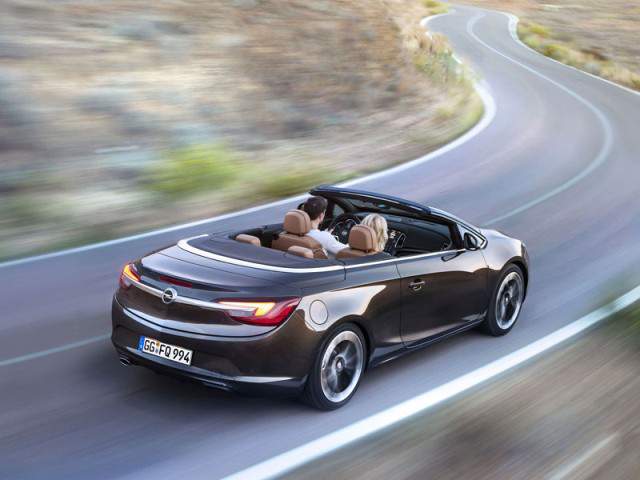
According to Opel, the roof may also be perfectly insulated, so that the wind noise should be barely higher than in a coupe. In just 17 seconds to open the electric hood, and an opening and closing up to 50 km / h is possible. At market launch, there will be three different roof colors that can be combined with ten exterior colors.
Inside the car, the exclusive impression continues. Elegant fabric and leather upholstery in harmony with soft-touch surfaces. Provide for convenient traveling completely new seats, which are designed on request, in leather and feature a vent. The seats are awarded the AGR (Campaign for Healthier Backs) seal of approval and theore suitable for long distances well.
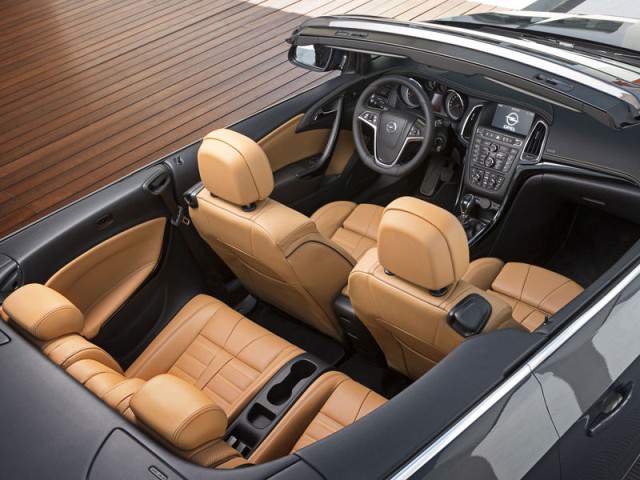
Enough room also offer many bins in the doors have even 1.5 liter beverage bottles. The boot capacity is sized at 350 liters with the roof closed, also tidy, open the soft top still features 280 liters.
Enjoyable driving experience in addition to the new 1.6 turbo petrol engine with direct injection ensure that with its 170 horsepower allows (125 kW), an agile locomotion. As standard, the 1.6 SIDI turbocharged engine with a manual 6-speed gearbox, on request is also a 6-speed automatic transmission available.
Also a choice of manual or automatic 6-speed transmission offers the 2.0 CDTI diesel engine with an output of 165 hp has (121 kW). As a base engine of 1.4 liter turbo petrol engine comes with a power of 120 hp (88 kW) or 140 hp (103 kW) are used.
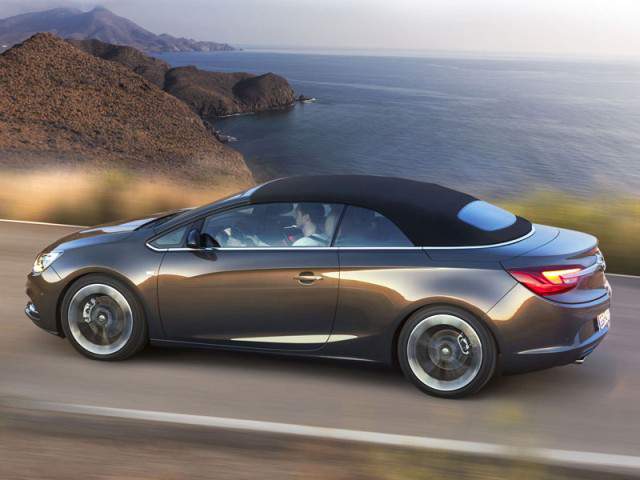
Of course there are also the elegant convertible FlexRide adaptive chassis control, which improves handling and again to adapt to the current driving style. On the topic of "security" to the Cascada offer, beside the standard rollover protection, ABS, ESP and six airbags are available on request and a rearview camera, parking assist, a lane assistant, a distance and collision warning, a blind spot warning system and also, the AFL + lighting system.
The new Opel Convertible will roll out the start of 2013 to the dealers and thus enjoy the first warm days in the new year already customers.
