Tuesday, March 11, 2014
Hyundai Accent Price 45 500
 The 2013 Hyundai Accent is one of the latest version of 2013 Hyundai. A 2013 Hyundai Accent was redesigned in 2012 and continues these improvements in this years model. The new 2013 Hyundai Accent is now a leading option in the subcompact class. The 2013 Hyundai Accent is expected to be released in the spring.
  The engine isn’t all the 2013 Hyundai Accent is going to bring to the table, though. With a new design and more powerful engine in 2013 Hyundai Accent is a 2 - or 4-door sedan, five-person family, or family sedan. The 2013 Hyundai Accent car is in three panels are available, ranging from the GL 3-door 4-door. The 2013 Hyundai Accent closest competitors.
 The bumpers and side moldings are designed with a swept back look that makes the 2013 Hyundai Accent look like a mid-size sedan. Designed with 2013 Hyundai Accent sheet metal and body ridges, this car stands out among subcompacts. After the introduction, the 2013 Hyundai Accent are standard equipped with a 1.6-liter, I4, 104-hp engine that reaches 29-mpg in the city and 33-mpg on the highway decorated. A 5-speed with overdrive is standard, and a 4-speed automatic transmission with overdrive is optional. The 2013 Hyundai Accent is freshened for 2013. It’s tough to wait for something as incredible as the 2013 Hyundai Accent to hit Tinley Park, Orland Park, Frankfort, and Mokena. The 2013 Hyundai Accent price of $45,500 - $49,000.
Friday, February 21, 2014
Hyundai Veloster 2012 New Blood
There was not so long ago, the styling of the cars produced by Hyundai wanting. Lines were anonymous silhouette more or less successful and nobody bought these cars for their beauty. In fact, for a long time, the price was fine. Mechanics were rural, the quality of materials was, at most, correct and driveability was … hope. When you look at the models that have been proposed today, we see how the manufacturer has made progress, and at all levels.
The most recent evidence adduced on the record of sophistication and modernization of the new products Hyundai Veloster 2012 sports coupe, the external appearance design is original and truly apart.
THREE OR FOUR DOORS? HYUNDAI VELOSTER 2012
It is clear that the designers assigned to the design of the Hyundai Veloster 2012 have not bothered to give us a product that really punch. I know, many critics have said that the lines were too troubled, too caricatured. That may be true. But ask the opinion of the buyer targeted by this model and say, “This is cool! “And it will also result.
The front part is probably the least successful of the self, especially because this grille relatively heavy compared to the dimensions of the car. One has the impression we wanted to put too much space. The T-shaped piece that overlooks the large air intake bumper blends poorly with the rest of the body. In fact, the most important element is the roof leaking to, which requires a windows decreasing. These two elements give dynamism to the figure and it will appeal to young people. The side walls are curved and slightly notched rocker gives relief to the whole.
Despite the rave text of press releases Hyundai Veloster 2012 interior contains presentations adopted by several manufacturers. For cons, the center console is more pronounced while contrasting stripes on each side form a ‘V’ relatively large. A large button in the center console that controls the temperature of the air conditioning and fan speed. As is now customary, the steering wheel hub is strewn with blocks of control.
But the most spectacular feature of this Hyundai Veloster 2012 is the use of a third door on the right rear. This time, it is not a door reversed (suicide door), but a conventional door. According to Hyundai, this configuration greatly facilitates access to the car. We are talking about three doors, but mathematically speaking, there are four, since the Hyundai Veloster 2012 is of course with a hatchback for access to luggage.
FASTEN YOUR SEAT BELTS … SECURITY
This Korean the silhouette was aggressive with a mechanical that should appeal to fans of small cars with good performance. The engine offered the only available elsewhere, is a 1.6-liter four-cylinder producing 138 horsepower and 123 lb-ft of torque. It is quite sophisticated because of the direct injection also has the infinitely variable valve timing for intake and exhaust. It is mated to a six-speed manual as standard. For those who wish to purchase a Hyundai Veloster 2012 with an automatic transmission, it is six reports. Even better, it is the first dual-clutch transmission to be offered by Hyundai.
In short, Hyundai Veloster 2012 has created a fun little car of relatively small size, with a silhouette that has impact and whose roadholding appeal to car enthusiasts manageable and efficient.
Hyundai Veloster 2012 News
Hyundai Veloster 2012 : New Blood
Saturday, February 15, 2014
2012 Hyundai Tucson Review Prices

 Upon introduction, the 2012 Hyundai Tucson GL Manual FWD is equipped with a standard 2.0-liter, I4, 165-horsepower engine that achieves 20-mpg in the city and 27-mpg on the highway. A 5-speed manual transmission with overdrive is standard. The 2012 Hyundai Tucson Limited Auto AWD PZEV is equipped with a standard 2.4-liter, I4, 170-horsepower engine that achieves 21-mpg in the city and 28-mpg on the highway.
  A 6-speed automatic transmission with overdrive is standard. The 2012 Hyundai Tucson might not be as big as its main rivals, but it makes amends with a handsome cabin, an ample list of features, sporty handling and a low price. Its a top pick for a small crossover. The 2012 Hyundai Tucson has got four-wheel-disc brake, four-wheel-independent suspension and rack-and-pinion steering. The standard safety specification of the 2012 Hyundai Tucson includes Anti-lock Braking System (ABS), Traction Control System (TCS) and Electronic Stability Program (ESP). The interior is flexible and specious enough to meet your cargo-carrying needs. The front seat can be folded to load more cargo.
 Tuesday, January 28, 2014
Hyundai Santa Fe EU Version


- Hyundai Santa Fe EU-Version, 2013
The Hyundai Motor Company, South Koreas largest car manufacturer, has staged the world premiere of the all-new Santa Fe at the 2012 New York International Auto Show, held at the New York Jacob Javits Convention Center.
The popular D-segment SUV is re-styled inside and out, fitted with enhanced features and new technology, and powered by re-tuned engines with improved efficiency - ensuring that it will offer European buyers a visually-appealing, sophisticated lifestyle vehicle when it goes on sale in late summer.
Hyundai is keeping the name, Santa Fe, continuing the heritage of the car manufacturers well-established SUV model as it enters its third generation. The Hyundai Santa Fe has achieved worldwide cumulative sales of almost 2,56 million units, and more than 350.000 in Europe, since its 2000 debut.
Hyundai expects the new-generation model to continue the companys strong performance in the SUV market, and to capture more than 5% share of its market segment in Europe during its first full year on sale in 2013.
Influenced by Hyundais form language, Fluidic Sculpture, the third-generation Hyundai Santa Fe adopts its own design concept called Storm Edge, which captures the strong and dynamic images created by nature during the formation of a storm.
Featuring sophisticated and ined lines, which are in harmony with its bold and voluminous surfaces, New Generation Santa Fe presents a more masculine, more aggressive and more characterful SUV appearance than its predecessor.
Three powertrain options available to European buyers, including a new, super-efficient, Euro 6 compliant 2,0-litre R VGT diesel engine. Producing 150ps, this powerplant emits just 155g/km of CO2. The 2,2-litre diesel unit has been tuned for greater efficiency, making it one of the cleanest offerings in the segment with CO2 emissions of only 145 g/km.
To ensure the newcomer is best suited to the tastes of European drivers, extensive development work has been completed for the European-specification model. This includes modifications to the steering, suspension and brakes, as well as changes to the cars set-up to aid to high-speed stability and towing ability.
As with all newly-launched models in Europe, the New Generation Santa Fe will come with Hyundais industry-best customer care package, Five Year Triple Care - comprising a five-year unlimited warranty, five years of roadside assistance, and five years of vehicle health checks.
Senior Vice President and COO of Hyundai Motor Europe, Allan Rushforth, commented, "The original Santa Fe has maintained strong sales year-on-year across Europe, thanks to its combination of quality, practicality and value. Now, New Generation Santa Fe retains the earlier models key strengths - practicality, roominess and dependability - while also offering consumers much more.
"With its fresh exterior styling, more efficient engines, greater comfort and improved quality, New Generation Santa Fe is a truly attractive proposition that will build on the successes of the previous model by broadening its emotional appeal."
The company expects the New Generation Hyundai Santa Fe to appeal to new consumers from a wider demographic range - including some owners of premium-brand SUVs.
STYLING & DESIGN
With its modern, urban style, the New Generation Santa Fe looks strong, dynamic and ined, with the vehicles body shape making a clear promise that this vehicle is safe and practical, but also sophisticated.
The new models designers drew inspiration from the shapes created by nature during the formation of a storm - a creative approach erred to as Storm Edge. Evidence of the significance of Santa Fe to Hyundais product portfolio, it is the first model to have its own interpretation of the Fluidic Sculpture design language which has modernised the appearance of the Hyundai range in recent years.
In line with the full Hyundai product range, the latest Hyundai Santa Fe features the hexagonal-shaped grille, finished on Santa Fe in sophisticated dark chrome. Large, tear-drop headlights above the bumper are matched in shape by fog lights below. The deep, two-tone underbody offers generous ground clearance, and the silver underbody panel visible at the front smoothes the vehicles aerodynamics and provides reassuring under-floor protection.
Longer, lower and wider than its predecessor, with the same 2700 mm wheelbase, the New Generation Santa Fe has a stronger presence. The conventional two-box SUV architecture is spaciously accommodating but, more than that, the new body shape also suggests great strength, with an imposing front-end and muscular upper flanks. The vehicles profile is complemented by the dark chrome finish of the alloy wheels - now offered as factory equipment up to 19-inch in diameter, for the first time on a Hyundai SUV. The deep doors cover the side sills, ensuring the sills stay clean and that dirt is not transferred to occupants clothes on entry or exit.
A dynamic stance is achieved by the lowered roofline, swept-back windshield, upswept lower edges to the rear side windows, and rakish rear windshield angle.
A sharp crease in the new Hyundai Santa Fes side panels sweeps along the car from the front wheel arches to the trunk, setting the level of the front and rear door handles and sharply defining the upper edge of the wrap-around tail-lamps. Above the lamps, the rear windshield is set beneath a small roof-level spoiler, further enhancing the dynamic stance of the new Santa Fe. Twin tailpipes and a hexagonal mesh set into the lower sections of the front and rear bumpers, add a sporty finishing touch.
Both the front and rear wheel arches are deep-set, so that the tyres are visible almost to their uppermost edges, the swelling of the bodywork over the wheels adding to the cars muscular sense of purpose.
CsayaFORT & CONVENIENCE
New Generation Hyundai Santa Fe come with a host of intelligent features that enhance the comfort and convenience of driver and passengers, providing a stress-free experience for all occupants.
To improve the driving experience, Hyundai has fitted the third-generation Santa Fe with driver aids, such as radar-controlled, adaptive cruise control. Light- and rain-detecting lights and wipers, which turn on when the conditions require, allow the driver to concentrate fully on the road ahead.
New Generation Santa Fe fitted with the Smart Parking Assist System to help drivers access even the tightest of spaces.
To improve comfort, the front seats are electronically powered and the drivers seat has a memory function to adapt to different drivers perred positions. The second row of seats slides and folds with a one-touch control, giving passengers quick and easy access to the optional third-row seats (where fitted).
Front- and second-row legroom have been increased - by 38mm and 45mm respectively - over the last-generation car, while a long, wide, single-frame panoramic sunroof allows high levels of natural light into the cabin. Luggage space in the trunk has been increased by 37mm in depth over the previous generation model, yielding a class-best luggage capacity of 534 litres with the front five seats upright.
When reversing, the tailgate-mounted camera automatically displays a clear, convex view of the area behind the car on the 7-inch screen. The wide-angle view is low enough to enable the driver to avoid low obstacles and small pedestrians.
An optional 220 Volt power socket can provide direct power to appliances including laptops, printers and vacuum cleaners. Located in the trunk, the socket can power equipment rated up to 200 Watts without a specific invertor.
The new Hyundai Santa Fe also has intelligent design features such as puddle lamps fitted within the exterior mirrors to illuminate the ground alongside the vehicle, and privacy glass for comfort and security.
ENGINES
The New Generation Santa Fes powertrain line-up has been developed to suit the demands of European customers, with three engines at launch covering 80% of demand in the regions D-SUV segment. Delivering a broad spread of power and torque, the three engines offer drivers performance across multiple terrains, without compromising class-leading fuel efficiency and emissions.
The powertrain line-up features one petrol and two diesel engines, with outputs between 150ps and 200ps. All of these engines combine excellent power with improved efficiency and class-leading emissions figures.
The range-topping diesel engine remains Hyundais 2,2-litre R diesel engine featuring a variable geometry turbo (VGT). This all-aluminium, powerplant generates 200ps and 431Nm of torque, and Hyundais engineers have reduced the CO2 emissions to 145 g/km - among the lowest in the segment.
With the powerful engine, the new Santa Fe delivers strong performance, accelerating from 0 to 100 kph in 9,4 seconds (manual transmission, 2WD).
Hyundai offer a smaller, 2,0-litre R diesel engine with VGT which completes the diesel line-up. Developing 150ps and delivering 382Nm of torque, this ined powerplant emits just 155g/km of CO2 emissions when applied to the Hyundai Santa Fe.
Thanks to the variable geometry turbocharger fitted to both diesel engines, New Generation Santa Fe offers 100% of torque from low revs - just 2.000 rpm - which makes the car well suited to both off-road terrains and dynamic on-road driving.
A Theta II 2,4-litre GDI engine offer European customers a petrol alternative. Its maximum power (193ps) and modest CO2 emissions of 197 g/km again set the New Generation Hyundai Santa Fe apart as a segment leader.
TRANSMISSIONS
New Generation Santa Fe is available with six-speed manual and six-speed automatic transmissions, which have been tuned to suit the power delivery of the three-strong engine line-up.
The Theta II 2,4-litre GDI petrol and 2,2-litre R VGT diesel engine are available with either the manual or automatic transmission. The 2,0-litre R VGT engine is fitted with the six-speed manual as standard.
The six-speed transmissions feature high top-gear ratios and were chosen to reduce fuel consumption and lower CO2 emissions when cruising at speed, while also enabling drivers to fully exploit the available performance on road or over rougher terrain.
The automatic transmission features two operating modes - fully automatic or Sport. For city driving, fully automatic mode is ideal, while Sport mode allows for clutch-less manual sequential gear changes for greater driver involvement. Although this transmission is a regular torque converter automatic, it incorporates a unique flat torque converter and an innovative layout makes it the most compact six-speed unit currently available anywhere in the world - weighing 12 kilos less and can boost fuel economy by up to 12%, compared to a conventional automatic.
When the 2WD 2,2-litre R VGT diesel engine is mated to the six-speed manual transmission, it emits just 145 g/km of CO2.
RUNNING GEAR
The New Generation Hyundai Santa Fe offers impressive road holding, as well as genuine comfort on-road and off-road, providing a car-like ride in normal driving conditions but switching automatically to four-wheel-drive whenever it is needed.
Hyundais FLEX STEER system is fitted to an SUV for the first time, providing three different settings for the steering to match customer perence and driving requirement. The selected mode - normal, sport and comfort - is displayed on the 4,2-inch LCD screen integrated into the instrument cluster.
The new Santa Fes suspension has been precisely calibrated to provide a well damped ride and reassuring responsiveness to driver inputs. The MacPherson strut front suspension uses reverse L-shaped lower arms for accurate camber control and steering sensitivity. The front subframe mounting bushes are calibrated to reduce unwanted vibrations, while preserving a confidence-inspiring connection with the road surface.
Multi-link suspension is employed at the rear, with the trailing arm connected to a chassis cross-member to ensure optimum ride inement without intruding on the trunk space. Self-leveling rear suspension is fitted as standard, preserving ride inement and balanced handling even when carrying a full complement of passengers or a heavy cargo load.
All-wheel-drive is delivered by an on-demand system which overrides the usual front-wheel-drive only when truly necessary. When sensors detect a loss of grip at the front wheels, power is automatically redistributed between the front and rear axles. The default power distribution is 100% to the front wheels, with automatic and continuous variation when slippery conditions are encountered up to 50% front / 50% rear.
For especially slippery conditions, such as muddy off-roading or driving on snow or ice, four-wheel-drive can be selected with the push of the lock button, delivering a 50/50 power split at speeds up to 40kph.
Supplementing the high levels of traction and grip, New Generation Hyundai Santa Fe is equipped with ABS (anti-lock braking), ESP (electronic stability programme), VSM (vehicle stability management), DBC (downhill brake control), plus hill-holding and HAC (hill-assist control).
Maximum towing capacity (for a fully laden vehicle) with a braked trailer is 2500 kg (manual transmission).
REFINEMENT
In creating the New Generation Santa Fe, Hyundai has retained the cars SUV heritage, but has also improved its on-road abilities.
A front subframe, which supports the engine, transmission and suspension, is mounted using specially designed bushes to minimise unwanted noise and vibrations reaching the cabin, while allowing the steering to provide excellent feedback to the driver in all conditions.
The all-new bodyshell of the third-generation Santa Fe uses the same technologies that were incorporated into the i40, which won the Euro Car Body award in 2011. A complex mixture of lightweight, high-strength steel and aluminium components increases bending strength and torsional rigidity compared to the previous model. The steel is sourced from the companys own plant - Hyundai Steel -in Korea.
Hyundai has optimised the powertrains in the third-generation Hyundai Santa Fe to be as ined as possible, using lighter materials, damped engine mounts and increased levels of sound insulation to create a quiet, cosseting interior.
These measures combine to reduce the NVH compared to the previous generation vehicle, making it a comfortable environment in which to travel - on or off road.
SAFETY
In line with the rest of Hyundais European vehicle range, the New Generation Santa Fe will feature high-tech active and passive safety features to ensure exceptional occupant safety and improved protection for pedestrians.
Active safety systems give Santa Fe drivers the best chance of avoiding an accident. These include ABS (anti-lock braking system), ESP (electronic stability programme), VSM (vehicle stability management), DBC (downhill brake control) and a hill-holder system.
A lane-departure warning system alerts the driver should the car drift into the adjacent lane without the side indicator being activated. An audible chime is sounded in the cabin, to draw attention to the situation.
An automatic cruise control system uses radar to monitor traffic ahead and ensure that Santa Fe will not get too close to the car in front. This increases convenience for the driver and also reduces the chance of a collision.
Good driver visibility is a key factor for safety, and the New Generation Hyundai Santa Fe has several features that enhance day and night time vision. HID Xenon headlights offer high-intensity, far-reaching illumination of the road ahead, giving the driver the best possible vision. To further aid vision and safety, the headlights switch on automatically if conditions require them, and daytime running lights are fitted as standard.
In terms of passive safety, the New Generation Santa Fe is built using a lightweight, high-tensile steel and aluminium structure which provides excellent bodyshell rigidity and strength, protecting occupants in the event of a collision.
New Generation Santa Fe is fitted with seven airbags as standard, including driver, passenger, side, curtain and drivers knee units, providing exceptional levels of safety to buyers across the range.
With pedestrians in mind, Hyundai has equipped the new model with an active hood - the first such application in a Hyundai, and an important contributor to greater pedestrian safety in the event of a collision. Upon impact, the hood rises to reduce the force of the collision and, thus, reduce the risk of injury.
These features ensure new Hyundai Santa Fe has outstanding levels of safety, and reinforce Hyundais commitment to providing its customers with class-leading cars in this crucial area. It is expected that, in line with recent Hyundai models, the New Generation Santa Fe will attain a five-star Euro NCAP safety rating - even meeting the demands of the new, more rigorous 2012 test procedure.
Sunday, January 26, 2014
2012 Hyundai Azera Review
Above all else in the Hyundai lineup, perhaps this car wins the “most improved” title. It even looks well-suited to the prestigious valet lineup of cars (which includes a bright yellow Ferrari 458 Italia) in front of the Mandarin Oriental in Las Vegas – where the car’s launch event is being held.
UNHEARD OF BY MOST, AN INTRODUCTION DOESN’T HURT
Helping convey the luxury look are the Azera’s sizable dimensions, fitting in between the Sonata and rear-drive Genesis in terms of size and price. It’s 3.5 inches longer than its mid-size sibling and an inch wider, and essentially the same numbers down from the Genesis.It’s smaller than most of its rivals (save the Maxima) and offers the most interior room by volume. Hyundai touts the fact that it has the best front head and legroom in its class, although in reality rear seat legroom, while good, isn’t as expansive as others.
 |
A large front-drive offering designed to grab market share in more Northern states where the rear-drive Genesis just won’t do, with the Azera, Hyundai is also hoping to attract and keep some of the more traditional buyers. According to internal numbers, 30 percent of mid-size car buyers look at buying a V6 engine and roughly 12 percent actually opt for that. With Hyundai’s decision to offer only a 4-cylidner with the Sonata, they’re hoping to move some of those buyers up-market.
FOR THOSE WHO PREFER A V6
 Offered exclusively with a 3.3-liter V6 engine, the Azera makes 293 hp and 255 lb-ft of torque, putting it in second place in the horsepower race, right behind the Buick LaCrosse. The car’s light weight does, however, give it the highest power-to-weight ratio
 On the street it never feels overly potent, though certainly not lacking. It does continue to pull well at higher speeds and doesn’t peter out like a 4-cylinder will.
As for fuel economy, an area where Hyundai excels with its numerous 40-mpg models, the Azera is also touted as a leader. Rated at 20 mpg in the city and 29 on the highway, it has a best-in-class combined rating of 23 mpg (which it shares with several other models). Real world numbers, however, proved disappointing on our admittedly short initial drive, coming up closer to 19 mpg on our test – and that includes partial use of the Eco mode which dulls throttle sensitivity and acts to keep the car in a higher gear.
WELL EXECUTED AND WELL EQUIPPED
It’s smooth and quiet to drive, though not quite to the level of a Lexus ES350. Most drivers of a full-size sedan won’t mind the soft steering – it is appropriate for the market. However, it’s also extremely numb on-center, as with all Hyundai products, save the Genesis models.Another area where Hyundai would like to draw a comparison with the Lexus is the interior. Certainly the spread-wing design and modern cues of the dash are superior, and while the Lexus is dull, the workmanship and materials are hard to match.
 |
 If you’re looking to really load up on toys, Hyundai offers just one simple option, a $4,000 Technology Package that includes ventilated front seats, parking sensors, ambient lighting, a power tilt and telescopic steering wheel, an upgraded 550-watt 12-speaker Infiniti audio system, HID headlights, a massive panoramic sunroof, 19-inch wheels, a power rear sunshade and manual second row ones, plus memory settings for the seat, mirrors and steering wheel. It’s a lot of kit for $4,000 and you’d be hard pressed to turn an option like this down.
Compared to the previous Azera, the increase is significant at $6,600. Hyundai counters, however, that the previous gen base model had little content and that next to no one bought one. Similar in content to the previous top-trim version, the increase is a less outrageous $2,000.
INDIRECT RIVALS
Hyundai says that with the Azera it wants to inject passion and style into the segment, and it certainly seems to have achieved both goals. Along with traditional full-sized rivals, it’s threatening cars like the Acura TL and Lexus ES, both of which, to be fair, are in the twilight of their product cycles. |
Still, the 300C starts at a few thousand less than the Hyundai Azera (though it does top out well above), and shares one major trait – style. Hyundai admits it’s looking to draw in customers with a great looking package. Likewise, the 300C has the same charm.
THE VERDICT
Before this review, there’s a good chance you’d never heard of the Azera, even though it’s been on the market since 2005 – or dating all the way back to ’98 as the XG. The reason is that until now it has been completely forgettable, and that’s a seriously huge insult when you consider its competition. |
http://www.autoguide.com/manufacturer/hyundai/2012-hyundai-azera-review-1883.html
Review Hyundai Elantra GT

As an American of British/Irish descent, I have often marveled that in spite of the fact that the USA is comprised of citizens from all walks of life, rich, poor, and from every corner of the world, there is one common perception about cars. And as Americans, most tend to snub their noses at a hatchback, and why is that? There is this crazy misconception that a hatchback is akin to flying economy class, while a formal sedan is more like flying coach. This silly rationale is one of the reasons Europeans point and laugh at us when we travel abroad.
By now, the Elantra is a household name, but in 2002, Hyundai slipped in a sleek five door hatch called the Elantra GT. One look at it, and I saw it as sort of a poor mans Saab 9-3. The Elantra GT disappeared after 2007, but 2009 saw saw the introduction of the Elantra Touring, which was a small station wagon based on the European market Hyundai i30. The Elantra Touring is gone, but Hyundai reinvented the i30 as a hatchback, and what we get is the Elantra GT.
The Elantra GT is a fantastic looking car from any angle. Fluid lines, swooping curves make a strong statement. With the GT, Hyundai has done a fine job of designing a compact car that looks more expensive than it is. No one is going to mistake the car for an Audi A7, the Elantra GT comes off as cool and sophisticated. Rolling in to a four star hotel outside Washington DC, the GT needed no excuses or apologies, and looked right at home.

Ill confess, I wasnt thrilled knowing Id be making the drive from my native Connecticut to Washington DC in the Elantra GT, but the car more than proved itself as a competent road tripper. More than enough room for a family of three and their luggage, but the Elantra GT really proved itself for a long drive beset by accidents and terrible traffic conditions. After an eight hour drive to DC, we were exhausted, but to the Elantras credit, we did not ache a bit. Clear gauges and intuitive controls make the Elantra easy to live with. After a 650 mile round trip, the Elantra GT passed with flying colors.
Motivation for the Elantra GT is delivered via a 1.8L four cylinder rated at 148hp. Buyers can choose between a six-speed manual or automatic. Thats about on par for cars in this class, but Hyundai deserves a huge thank you from enthusiasts for letting the stick be available no matter how you option out your GT, while the competition makes their most basic car the only option if you like to shift for yourself. Our test car was equipped with the automatic, which shifted smoothly and was always ready to drop a couple gears if I needed more speed. The Elantra is peppy around town, and can more than hold its own on the highway, but you wont be winning any drag races. That said, the Elantra GT cruised comfortably for hours at 80mph. While I am told Hyundai softened the suspension a tad for Americans, this was a real tight car as far as ride and handling go.

The Elantra GT starts at a reasonable $18,545USD, with SiriusXM Radio, Bluetooth and iPod integration standard. Our test car included the Style Package, which added 17 alloys, panoramic sunroof, leather interior and a power drivers seat. Also, the Technology Package added a rearview camera, dual zone auto climate control and navigation. Including delivery, our Elantra GT rang in at $25,550USD, which is not bad for the amount of kit our car came with.
And so, The Garage has sampled the entire family of the Elantra-sedan, coupe and GT. Of the threesome, the GT is my pick. For style, features and panache, the Elantra GT represents a great value, not to mention excellent utility to boot. Yes, Hyundai knows the sedan will easily outsell the GT, but as enthusiasts lets be thankful Hyundai has offered us the GT, a delightful Korean car with a European accent.
Thursday, January 23, 2014
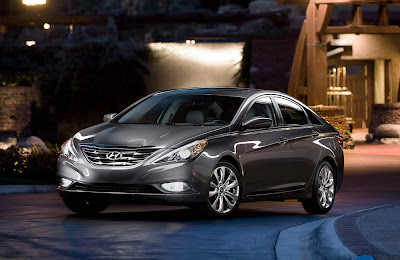
2012 Hyundai Sonata Review Owners Manual
 |
| 2012 Hyundai Sonata Review & Owners Manual |
Tuesday, January 21, 2014
Hyundai Azera Sport

Hyundai Azera has four seats on the inside of a car with four doors on the side that is able to facilitate the entry and exit of car owners are getting easier, and this car is a car with low fuel optimum performance car that has a very high speed, with the Hyundai Azera car was supported by a very good car stability and maximum at the Hyundai Azera is a car drove at high speed on the road. In addition, Hyundai Azera car that has a 3.3 liter V6 engine with gasoline injection GDI car capable of traveling at a maximum, therefore this car gives very good safety facilities and complete enough to include seat belts, safety door locks, anti-theft systems and others.
Tuesday, January 14, 2014
Hyundai Santa Fe

Monday, December 16, 2013
Hyundai Veloster C3 Roll Top Review And Prices
 The 2013 Hyundai Veloster C3 Roll Top is one of the latest version of 2013 Hyundai. The 2013 Hyundai Veloster C3 Roll Top not only brings its “dual personality” to the table, but it also brings along some power. A 1.6-liter turbocharged GDI four-cylinder engine powers the Veloster C3 concept, and produces 201 horsepower at 6,000 rpm.
 This 2013 Hyundai Veloster C3 Roll Top has 1.6-liter Gamma turbocharged engine features a twin-scroll turbocharger that when combined with the GDI system, results in instantaneous power delivery. With large, free-flowing circular exhaust pipes and a robust intake manifold, the 2013 Hyundai Veloster C3 Roll Top promises a good rumble, for a 4-banger.
 All the modifications on the 2013 Hyundai Veloster C3 Roll Top were made with cost in mind, and the driver can change the color of the rear wheels easily, while a high-gloss white paint, combined with the flat-red and flat-black details and smoked taillights amount to a look that looks urban, but not in a street-racer sense.It appears that some of Hyundai’s U.S. designers had the same thought; conceived at Hyundai Design North America, the 2013 Hyundai Veloster C3 Roll Top has a canvas roof that can be opened toward the windshield or toward the rear of the vehicle, depending on the needs. The 2013 Hyundai Veloster C3 Roll Top price is soon be revealed.
Saturday, December 14, 2013
2012 Hyundai Veracruz Price of 26 000
 The 2012 Hyundai Veracruz is one of the latest version of 2012 Hyundai. A 2012 Hyundai Veracruz is a 4-door, 7-passenger sport-utility, available in 4 trims, ranging from the GLS to the 2012 Limited AWD. The 2012 Hyundai Veracruz is available at price of $28,345 - $36,195 And has invoice Price of $26,908 - $33,564.
 Upon introduction, the 2012 Hyundai Veracruz GLS is equipped with a standard 3.8-liter, V6, 260-horsepower engine that achieves 17-mpg in the city and 22-mpg on the highway. The 2012 Hyundai Veracruz Limited AWD is equipped with a standard 3.8-liter, V6, 260-horsepower engine that achieves 16-mpg in the city and 21-mpg.
  A 6-speed automatic transmission with overdrive is standard on both trims. The 2012 Hyundai Veracruz sports a new front grille and standard second-row heated seats on Limited models. An Alpine-branded navigation system is also now available on the Limited.Each Veracruz trim level comes standard with antilock disc brakes, stability and traction control, front-seat side airbags, side curtain airbags and active front head restraints. The 2012 Hyundai Veracruz looks a little plain outside, its handsome interior and solid materials quality disguise a crossover built as a class value leader. The 2012 Hyundai Veracruz cabin features wood and faux-aluminum trim and accents, with controls laid out in clean, minimalist fashion.
Friday, December 13, 2013
2012 Hyundai Sonata Review Prices
 The 2012 Hyundai Sonata is one of the latest version of 2012 Hyundai. 2012 Hyundai Sonata is a 4-door, 5-passenger family sedan, available in 9 trims, ranging from the GLS Manual to the Hybrid. The 2012 Hyundai Sonata is available at MSRP price of $19,695 - $28,095 And Has Unvoice price of $18,876 - $26,252.
 Upon introduction, the 2012 Hyundai Sonata GLS Manual is equipped with a standard 2.4-liter, I4, 198-horsepower engine that achieves 24-mpg in the city and 35-mpg on the highway. A 6-speed manual transmission with overdrive is standard.
  The 2012 Hyundai Sonata Hybrid is equipped with a standard 2.4-liter, I4, 166-horsepower, hybrid engine that achieves 35-mpg in the city and 40-mpg on the highway. A 6-speed automatic transmission with overdrive is standard. The 2012 Hyundai Sonata optional touch-screen navigation has been upgraded to a 7-inch high-resolution screen, which is up from 6.5 inches in 2011. Sonata Limited trims now come with a three-piece panoramic sunroof as standard equipment. A backup camera is now available on the SE trim when equipped with a navigation and sunroof option. Fresh off a full redesign last year, the 2012 Hyundai Sonata remains the car to beat in its class. Fresh off a full redesign last year, the 2012 Hyundai Sonata remains the car to beat in its class.
Monday, December 2, 2013
Hyundai Elantra GT Price 16 695

 The 2013 Hyundai Elantra GT is one of the latest version of 2013 Hyundai. A 2013 Hyundai Elantra GT, which is making its debut at the 2012 Chicago auto show, is a much better-looking piece and should be more fun to drive. While the2013 Hyundai Elantra GT sedan is a very good compact, its not particularly sporty.
 The 2013 Hyundai Elantra GT Coupe, also taking the stage in Chicago, certainly looks the part, but while it should be slightly sportier than the sedan, its the middle child on the performance scale. The 2013 Hyundai Elantra GT is the performance model, hot-hatch style. The 2013 Hyundai Elantra GT sedans standard 148 horsepower 1.8-liter four-cylinder is untouched and still cranks out a mid-pack 131 lb-ft of torque.
 Friday, November 29, 2013
2012 Hyundai Veloster Price of 16 000
 The 2012 Hyundai Veloster is one of the latest version of 2012 Hyundai. 2012 Hyundai Veloster is a 3-door, 4-passenger sports coupe, available in one trim only, the Base. the 2012 Hyundai Veloster is available at price of $17,300 and Invoice price of $16,699.
  Upon introduction, the 2012 Hyundai Veloster is equipped with a standard 1.6-liter, I4, 138-horsepower engine that achieves 28-mpg in the city and 40-mpg on the highway. A 6-speed manual transmission with overdrive is standard, and a 6-speed automatic transmission with overdrive is optional.
 The 2012 Hyundai Veloster includes a standard USB/iPod interface, RCA inputs, Bluetooth hands-free, and GraceNote music display technology that lets you request music with voice commands. Hyundais BlueLink suite of services is also included, in a trial subscription, and options include a huge panoramic sunroof, a navigation system, upgraded wheels, and a 115-volt outlet. The 2012 Hyundai Veloster works multiple angles, attempting to charm discerning younger vehicle shoppers with its unique formulation of hip urban design, a sporty driving feel, reasonable comfort, and enough features to satisfy and entertain a crowd thats always connected.
Sunday, November 24, 2013
Hyundai i20
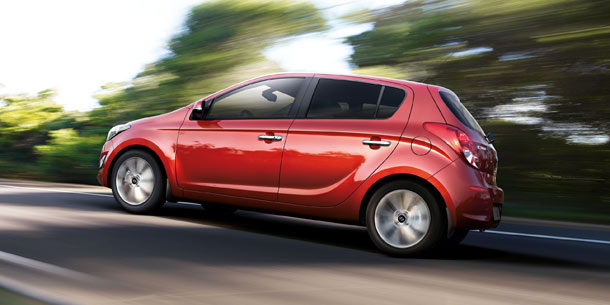
2013 Hyundai i20 can also be seen after about processing at first glance. forward it will now also the current brand image with the typical hexagonal grill as we know about the i30. Fits to the headlights and air intakes were modified. At the rear lights and bumpers were subtly revised. With the new lighting graphics look the i20 especially striking dark. Due to the new design of front and rear bumper has also the total length of the car by 55 mm increased to 3995 mm (30 mm front and 25mm rear). Width, height and wheelbase remained unchanged. The same is true for the space and the trunk (370 to 1080 liters).

Interior
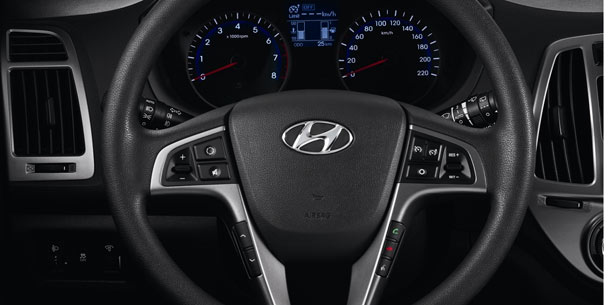
The interior has been redesigned. In addition to revised seat fabrics and the use of soft-touch materials in the area of the dashboard and the center console has been completely revised. Overall, the boy has now grown and in quality. For the first time now are also extras such as cruise control, LED daytime running lights, rain sensor, rear camera and a parking aid (rear). The Hyundai i20 was also technically brought up to date. Better insulation will also increase the noise levels.
Engines
The engine range consists of four engines (two diesel and two petrol engines), together covering a power range from 70 to 100 HP. To reduce the CO2 emissions of the already known motors have been revised. Are particularly proud of the developers on the 1.1-liter 3-cylinder diesel, which we in the Kia Rio platform brother were already testing them. The 75 mini-engine hp (180 Nm) shines in the "blue version" (start-stop system, etc.) with CO2 emissions of 93 grams, this corresponds to an average fuel consumption of 3.6 liters. Without Blue package to the values (3.8 l/100km, 99 grams) are also impressive. Top-diesel is the 90 hp 1.4-liter four-cylinder with a torque of 220 Nm. Here, the fuel consumption is 4.1 liters per 100 kilometers (blue: 3.7 litres/100 km).
Completely new is the 1.25-liter four-cylinder gasoline engine with 85 hp and 121 Nm. Here, the fuel consumption is 4.9 liters and 4.7 (blue) to 100 kilometers (CO2 rating of 109 or 114 g / km). In the 1.4 liter petrol engine with 100 horsepower and is ranked 137 Nm. This is also available with a rather outdated 4-speed automatic. The diesel and petrol engines of the top come standard with a manual six-speed manual gearbox. Purchasers of the 1.25 liter version must be content with five gears.
Wednesday, November 20, 2013

Monday, November 18, 2013
G Oil In my Hyundai Accent

For those of you new to the blog Im a big proponent of bio-based fuels and lubricants. In my previous car I used 5w-30 G-Oil to great success, but I couldnt find the 5W-20 weight of this bio-based motor oil until now. Thanks to Revolution Bio-Based Lubricant LLC I was able to purchase the proper weight of oil for my 2012 Hyundai Accent.
Products like these are very important to me. They allow me to cut out at least a portion of my petroleum usage and replace it with a renewable product that is american made. This product used natural base stocks taken from unused animal fats and mixed with a non-petroleum synthetic additive package. I drive a lot and use more oil than the average driver. This is one way I decrease my usage of petroleum.
G-Oil offers four types of motor oil a U.S. sources conventional motor oil, a synthetic blend, a full traditional synthetic and a bio based full synthetic. The top of the line bio-based synthetic goes for $28.10 for a 5.1 quart jug.
Another awesome feature about G-Oil is that is it non-toxic and biodegradable. This means I dont have to worry as much about it touching my skin or feel as bad when I accidently spill some during an oil change. Since I am a do-it-yourselfer and I dont want to constantly handle a carcinogenic substance all the time. Especially when I will probably do hundreds of oil changes in my life.
Finally the oil is API SN, SM and SL certified as well as holding an ILSAC GF-5 certification. What does this mean for someone who doesnt know what these standards mean? Most cars require an API certified motor oil. Use of non-certified oils might put your cars warranty at risk. Luckily for consumers like me who are still in warranty this oil has that certification. The engine oil is tested to the same standards as current generation petroleum and synthetic motor oil.
This certainly isnt an advertisement for this product. For someone like me who is looking to reduce his petroleum dependence this is an awesome product. If youre worried that this could harm your engine or will void your warranty then simply dont use it. I will also do my best to have this oil analyzed to make sure everything is working correctly with my engine. I certainly understand the trepidation felt by many car owners to use a product such as this. If you have any questions about the product leave a comment below and I will do my best to track down the answers.
Thanks again to Tyson Steffans at Revolution Bi-Based Lubricants for helping me get my hands on some of this awesome product.