Showing posts with label sedan. Show all posts
Showing posts with label sedan. Show all posts
Sunday, January 12, 2014
Maltese Power Company Imagines New Chreos Electric Luxury Sedan that Hits 100km h in 2 9s
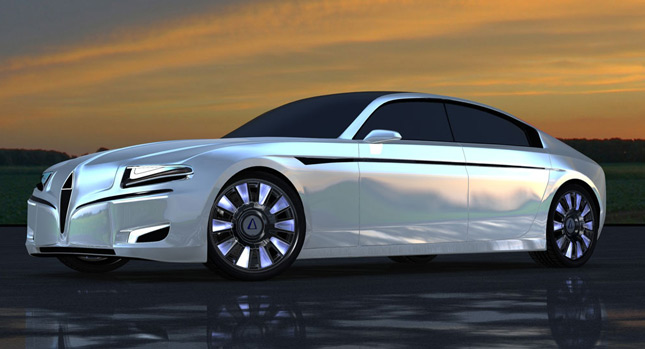
The resurgence of battery-powered vehicles this past decade or so has inspired many companies outside of the automotive industry to try their luck in creating new types of vehicles. The complexity of designing any car that complies with norms in major international markets such as Europe and North America, however, means that very few have succeeded in building and selling their EV idea.
Nevertheless, these difficulties havent stopped new entrants from seeking time in the limelight, like Malta-based Silex Power, which is a green-energy company that has been involved in a number of projects, including photovoltaic plants, hydroelectric and wind farms, with offices in Italy, France, China and the UK. Their automotive project is named the Chreos, and its a large limousine that measures 5.42 meters (213.4 inches) in length.
"I would like to present to your team our new creation, a concept that we are looking to bring into production over the next 3 years," the CEO of the company Johnaton Grech, told CarScoop in an email. "It is an extremely powerful and fast electric vehicle, sporting 640bhp power, 4400Nm torque (There is no extra 0), 1000km range and an innovative recharging time of less than 10 minutes."
At this stage, the Chreos has been imagined to be powered by four in-wheel electric motors that in theory, will allow it to complete the 0-100km/h (62mph) sprint in 2.9 seconds, reach 200km/h (124mph) in "less than 6 seconds" and top out at 300km/h (186mph). Were also told that the electric limousine will tip the scales at around 2,200 kg (4,850 pounds).
Depending on how you look at it, those performance numbers are either extremely impressive or overly ambitious…
Thats all we have on the Chreos for now, but well be sure to keep you in the loop if we find out more.
Preliminary Specifications:
- 640bhp
- 4400Nm torque
- 2200kgs weight
- 5420mm length
- 2160mm width
- 1480mm height
- 3540mm wheel base
- 0 - 100Km/h in <2.9s
- 0 - 200Km/h in <6.0s
- 300km/h top speed (electronically limited)
- 1000km autonomy (at 125kmph speed)
- <10 min charging time from flat batteries to full charge
- Full LED / OLED lighting throughout
- 4 passenger seating capacity
- Carbon fibre body




Monday, December 23, 2013
Mazda 6 Sedan


- Mazda 6 Sedan, 2013
The Mazda premieres the completely redesigned Mazda 6 at 2012 Moscow Motor Show. Following on from the Mazda CX-5, the all-new Mazda 6 is the second of a new generation of Mazda vehicles which adopt the full range of SKYACTIV technology and the "KODO - Soul of Motion" design language. Mazda has consistently strived to provide stylish, insightful and spirited cars and the new generation vehicles also offer outstanding environmental performance.
Mazdas environmental technology development is directed by its Building Block Strategy which first calls for thorough improvements in the base automotive technologies. The next step builds on these improvements with the sequential introduction of electric devices designed to improve fuel economy. The first such device was the i-stop idling stop system introduced in 2009 with the Mazda 3. The second device, which makes its debut with the new Mazda 6 is i-ELOOP, Mazdas unique brake energy regeneration system which begins charging a capacitor the moment the driver takes his foot off the accelerator. Electricity stored in the capacitor can then be used to power electric components throughout the car. In freeing the engine from much of the duty of providing electricity to these components, more fuel energy goes directly to powering the car resulting in further improvements in fuel economy. In addition, a variety of advanced active safety technologies have been adopted. The new Mazda 6 delivers not only precise response and a high-quality, exhilarating driving experience but also outstanding environmental and safety performance.
Drawing on the full potential of both SKYACTIV technology and KODO design, the Mazda 6 aims to take the "joy of driving" to a new level. As the flagship model of a new generation of vehicles, it will build on the momentum created by the success of the CX-5, and heralds a new era for Mazda. It will be introduced to global markets starting in late 2012.
"Driving pleasure" begins before you even turn the key
Creation of a flagship model that takes driving pleasure to another level.
Design
The new Mazda 6 is the mass production model born of the Mazda Takeri concept car first showcased at 2011 Tokyo Motor Show. "The new Mazda 6 has a robust framework and a low, wide stance that expresses strength and stability, creating the impression of amazing vitality without detracting from the universal aesthetic appeal and beautiful form it displays as a CD car," says Chief Designer Akira Tamatani. "We have created a design in which the wild and dynamic expressions of motion artistically realize a powerful presence. Simply looking at the car heightens ones expectations about the driving experience even before actually riding in it."
At a single glance, the exterior design conveys animalistic tenacity, dignity and a sporty flare through its smooth and powerful physique. The coordinated interior, in keynote black, is both chic and contemporary without compromising on a timeless feeling of luxury and quality.
Exterior
In the front view, the signature wing is incorporated, a unifying element of the new Mazda family face design, into the deeply sculpted face. The hood creases extend from the tips of the signature wing and flow into the body character lines. Together with the solid design of the nose, they complement the overall dynamic form of the body that expresses a strong desire for motion.
Three character lines dominate the side view - an elegant line that extends forward from the rear tire, a rear fender line suggesting driving force from the vehicles hind quarter, and a front fender line denoting strong shoulders supporting nimble forefeet. The combination of these lines capture the form of a predator crouched and ready to leap forward in an explosion of movement.
The rear view displays stability through the well balanced proportions of the wedged body, prominent rear fender and compact cabin.
For the head lights, signature LED luminescence and halo ring light guides are adopted for the first time in a Mazda mass production vehicle.
The first use of "Soul Red", a new color born of a unique technological process developed by Mazda, that balances depth and shading which accentuate the cars dynamic form, and vividness which expresses sportiness.
Interior
The driver-oriented cockpit offers generous space. Three meters laid out symmetrically in the meter hood heighten the expectation for exciting driving.
The passenger side space provides a sense of both openness and safety with the decorative horizontal line extending through the center panel to the air-conditioning louvers as well as with the encircling form of the dash.
Soft materials are used for areas frequently touched such as the door trim and the upper part of the instrument panel.
The solid, decorative instrument panel features 2 colors, Bordeaux metal and Dark metal.
White scale markings appear to stand out from the meter face which feature a combination of spindle groove and honeycomb patterning to achieve a feeling of depth and quality craftsmanship. An encircling metal ring completes a tasteful design which conveys a zeal for driving.
Craftsmanship
New generation Mazdas are developed under the design craftsmanship concept which incorporates the designers aesthetic sense into a base of detailed and precise engineering. Full-scale implementation of this concept with the new Mazda 6 enabled a high-quality, premium finish with a harmony of form and quality while not compromising on functionality. Attention was paid not only to areas passengers see and touch but also to the feel and sound of operating the vehicle in order to create a sense of unity throughout the car. An overall feeling of quality appeals to all the senses and creates an expectation that the new Mazda 6 will offer heightened levels of driving pleasure no matter where you take it.
Details of all parts, including design pattern, moulding, surface grain and gloss treatments are carefully executed according to a consistent philosophy.
In the cabin, the instrument panel is laid out horizontally, and a smooth continuity between the upper area of the instrument panel and the door trim creates an impression of simplicity and neatness.
Care has been taken to ensure metal-like decorations, such as satin chrome plating.
Parts which the driver often handles, such as the steering wheel, shift knob and parking brake lever are carefully crafted to achieve a smooth and consistent feel.
The layout of the instrument display and operating devices surrounding the drivers seat has been optimized in consideration of both the characteristics of human vision and arm and hand movements.
Packaging
A spacious and comfortable environment is provided within the dynamic and elegant body form realized by KODO design. It offers an environment where the driver can relax and concentrate on the pleasure of driving. A feeling of anticipation is stirred every time you look at the car, run your hand over the fender, grasp the wheel or adjust the mirror.
Two fundamental aims directed the development of the packaging. The first was to realize a spacious, comfortable cabin that perfectly matches KODO design. The second was to refine the Human Machine Interface (HMI) to create a cockpit environment where the driver can feel completely at ease. The new Mazda 6s packaging achieves all three aims and provides driver and passengers with a great environment in which to savour the "joy of driving".
Spacious, comfortable cabin that perfectly matches KODO design
The 2,830 mm long wheel-base allows a spacious backseat area, ample interior space and a broad canvas for the unrestrained expression of KODO.
Large 19-inch diameter wheels create a feeling of unshakable stability.
Compared to the previous model, the front wheel has been moved forward by 100 mm in relation to the A-pillar resulting in reduced overhang. The rear deck is also shorter than the previous model. The cars stance, with the bulk of the mass toward the rear, gives a sense of explosive power ready to be unleashed at any moment.
Shoulder room of 1,450 mm in the front seat (20 mm wider than the previous model) and a large radius corner on the center console ensure comfortable seating.
The rear seats feature ample legroom with a knee clearance 43 mm greater than the previous model and amongst the best in the segment. Leg space is 984 mm, which is 37 mm more than on the previous model. The length of the rear seat cushion is increased by 20 mm and the seat back length by 33 mm. The rear center arm rest has been enlarged by 60 mm.
The trunk was designed from an ergonomic perspective. The upper opening width is 32 mm wider than on the previous model, for easy loading. A swan hinge enables easy and smooth opening and closing of the trunk.
Cockpit environment
An adjustable front seat combined with adjustable tilt and telescopic steering wheel enable precise adjustment of the driving position.
A multi commander allows intuitive control of an array of functions such as audio, navigation system and sensitivity of the automatic windshield wipers via the center display.
Trip management information is displayed on a 3.5-inch multi-information display in the meter cluster. Navigation information is shown on a 5-inch display located in the center panel. By separating information into categories and showing them on two different displays, readability and operability were further enhanced.
Driving dynamics
When it came to driving dynamics, the aim was to provide an exhilarating driving experience that can only be felt when the driver and car become one. Mazdas fundamental belief is that a smooth linear response to driver input is the basis of driving pleasure, and full enjoyment cannot be attained through speed and power alone. This was the motivation for the introduction of SKYACTIV technology throughout the car including the engine, transmission, body and chassis.
Aiming to realize both agility and linearity by uniting the driver and the car, Mazda concentrated on providing outstanding levels of high performance via a control system that responds to the drivers intentions. In terms of acceleration characteristics, this means natural, linear acceleration in response to pedal operation without a hint of jerkiness or delay. For cornering characteristics, this means faithfully responding to steering input, providing immediate feedback from the road and mildly increasing roll so that no steering adjustment is required to maintain the desired cornering line. Finally, for braking characteristics, this means braking performance that gives the driver the feeling of being in complete control, even when releasing the brakes. Closely concentrating on human sensitivity, Mazda strove to balance fundamentally contradictory characteristics of motion: refined, supple motion and light, agile motion. Fitting for the Mazda flagship model, extremely impressive driving performance including superior high-speed straight-line stability that gives the feeling of complete control has been realized, thus providing an enjoyable, comfortable drive regardless of distance.
Chassis & Body
The all-new Mazda 6 sedan has a finely tuned SKYACTIV-Chassis front strut and rear multi-link suspension, delivering agile driving performance in the low to mid-speed ranges and stability in high-speed driving.
The column-type electric power assist steering system offers precise control by responding to small steering inputs as needed without forcing changes in the positions of the hands holding the wheel, thus contributing to a linear steering feel. The new control assist enhances straight-line stability and prevents steering pull on rough road surfaces.
The optimized brake booster curves deliver effective, precise and assured braking performance all the way up to high G areas. This is the result of easily-controllable initial pedaling and enhanced stability enabled by higher brake cooling efficiency.
The robust SKYACTIV-Body structure makes wider use of ultra-high tensile steel reducing weight while at the same time improving torsional rigidity by about 30%
Engineering efforts in NVH performance focused on achieving class-leading quietness in the cabin and creating a pleasant yet exhilarating engine sound under acceleration. The improved NVH performance mainly comes from effectively blocking noise paths from the engine and the road to the cabin and designing parts to effectively absorb sound energy.
The optimized under-floor design improves aerodynamic performance by rectifying airflow under the vehicle and minimizing the trailing vortex by directing the airflow upwards via the tail up design of the main silencer. The Coefficient of Drag target is a class-leading 0.26 (depending on grade). This contributes to high-speed stability as well as fuel efficiency.
Powertrain
SKYACTIV-G 2.0 (gasoline engine) equipped models offer abundant torque characteristics at low engine speeds enabling acceleration that precisely matches the drivers intention in various driving situations, and contribute to a precise and linear response, high-quality and pleasant ride and superb fuel economy performance. The maximum torque is 210 Nm / 4,000 rpm and the maximum output is 110 kW / 6,000 rpm.
SKYACTIV-G 2.5 (gasoline engine), which will see its first deployment in the new Mazda 6 is light weight and delivers class-leading maximum torque of 256 Nm / 3,250 rpm. The maximum output is 141 kW / 5,700 rpm. The balance shaft contributes to the mitigation of engine vibration and low noise output.
SKYACTIV-G 2.0 comes with the 6-speed SKYACTIV-Drive automatic transmission or the 6-speed SKYACTIV-MT gear box. SKYACTIV-G 2.5 is combined with the SKYACTIV-Drive transmission. Precise and nimble driving performance is supported by both SKYACTIV-Drive, designed to control driving force and gear speed linearly in response to acceleration pedal input, and SKYACTIV-MT offering a light and crisp shift feel.
Environmental and Safety Performance for driving pleasure and peace of mind
Environmental and safety performance was further enhanced in the all-new Mazda 6 so customers can enjoy driving with peace of mind. In terms of environmental performance, the addition of i-stop and i-ELOOP improves the already outstanding fuel economy achieved with SKYACTIV technology. The foundation of the new Mazda 6s safety performance lies in its outstanding handling that responds immediately to the drivers input, its excellent visibility and the crash-worthiness of the highly rigid SKYACTIV-Body. On top of this, an array of advanced safety technologies has been employed to support the driver in the safe operation of the vehicle. For example, Rear Vehicle Monitoring (RVM) and Adaptive Front Lighting system (AFS) improve driver awareness and field of vision at night. Smart City Brake Support (SCBS) takes steps to avoid or reduce the severity of an accident. Finally, superior passive safety minimizes damage when collisions do occur.
Environmental performance
The new Mazda 6 is the first model to adopt the "i-ELOOP" brake energy regeneration system, which contributes to an improvement in fuel efficiency in real world driving situations. This is the first passenger car brake energy regeneration system in the world to utilize a capacitor. SKYACTIV-G 2.5 engine models are equipped with i-ELOOP.
Award-winning single-nanotechnology in the catalyst improves the exhaust gas after-treatment process and reduces the amount of precious metal required.
Active Safety Technologies
Moving the bottom of the A-pillar rearwards by 100 mm, compared with the outgoing model, and mounting the rear view mirror on the door rather than the base of the A-pillar helps to enhance the forward and peripheral visibility.
High-Beam Control system (HBC) uses a sensor to detect oncoming vehicles and automatically changes between high and low beam to help avoid blinding other drivers during night driving.
Adaptive Front-lighting system (AFS) predicts curves based on the degree of steering input and vehicle speed and turns the headlights in the direction that the vehicle is actually heading. This improves visibility when driving at night.
Hill Launch Assist (HLA) helps prevent the Mazda 6 from rolling backwards while the drivers foot moves from the brake pedal to the accelerator pedal when taking off on a hill.
Emergency Stop Signal (ESS) cause the hazard lights to rapidly flicker on and off in the event of panic braking at 50 km/h or faster in order to warn vehicles behind.
Rear Vehicle Monitoring (RVM) comes into effect at speeds of 30 km/h or faster and detects cars approaching from behind or driving in the blind spot on either side, warning the driver when he turns on the indicator to change lanes.
The Lane Departure Warning System (LDWS) uses a camera to judge the position of lines on the road and warns the driver of unintentional lane departures, thus minimizing the risk of collision due to driver inattention or fatigue.
Smart City Brake Support (SCBS) uses a near-infrared beam sensor to help prevent and, in cases where prevention is not possible, reduce the impact of frontal collisions at low speed (up to 30 km/h) by automatically applying the vehicles brakes.
Passive Safety Technologies
The lightweight yet highly-rigid SKYACTIV-BODY provides excellent crashworthiness and is designed to attain top safety ratings in tests around the world.
A multi-load path structure and a front end with an X-shaped cross-section increases impact energy absorption, further improving safety performance in frontal, side and rear-end collisions.
The anti-whiplash design of the front seats helps to reduce neck injury in the event of a rear-end collision.
There are two impact beams in the front doors. The upper beam has a round cross-section, and the lower beam has a double-ridged cross-section. The lower rear beam also has a double-ridged cross-section, helping to improve strength.
Wednesday, December 4, 2013
2012 Cadillac CTS Sedan Review Prices
 The 2012 Cadillac CTS Sedan is one of the latest version of 2012 Cadillac. 2012 Cadillac CTS Sedan is a 4-door, 5-passenger luxury sedan, available in 8 trims, ranging from the 3.0L Base to the 3.6L Premium AWD. The 2012 Cadillac CTS Sedan is available at price of $35,915 - $50,190 And Invoice Price of $33,940 - $47,430.
 Upon introduction, the 2012 Cadillac CTS Sedan 3.0L Base is equipped with a standard 3.0-liter, V6, 270-horsepower engine that achieves 16-mpg in the city and 26-mpg on the highway. A 6-speed manual transmission with overdrive is standard, and a 6-speed automatic transmission with overdrive is optional.
  The 2012 Cadillac CTS Sedan 3.6L Premium AWD is equipped with a standard 3.6-liter, V6, 318-horsepower engine that achieves 18-mpg in the city and 27-mpg on the highway. A 6-speed automatic transmission with overdrive is standard. The 2012 Cadillac CTS Sedan range has received an update for the 2012 model year that brings a redesigned grille, a revised V6 engine and a new Touring Package edition. The improvements will be carried over to all three CTS models, including the Sedan, the Coupe and the Sport Wagon, with first deliveries expected in late summer.
Friday, November 22, 2013
Honda Civic Si Sedan 2012


- Honda Civic Si Sedan, 2012
The all-new 2012 Honda Civic represents the ninth generation of one of the companys most popular and globally recognized products. Having earned a reputation for being a fun-to-drive compact that is simultaneously fuel efficient, sporty, stylish and durable, the Honda Civic has become a beloved and relied-upon member of the worldwide transportation family. Cumulatively, the Civic has reached 8.8 million customers in the United States through 2010 since its launch as a 1973 model.
Each generation of Honda Civic has improved with a specific development theme in mind. The 2012 Civic embraces the fundamental concept of a "futuristic and distinctive compact," a direction that introduces new values that reach ahead of present-day needs and elevates the experience that Honda Civic represents. Major strides include improvements to refinement throughout, increased fuel economy on all models, the further addition of interactive technologies for personalization and convenience, along with enhancements to performance, ride and interior packaging.
Civic customers span the entire public spectrum of automotive drivers. They are high school graduates and college students just beginning their adult lives; they are families with young children; they are schoolteachers, soccer parents and professionals, environmentalists and performance enthusiasts; and they are Generation Y, baby boomers and retirees. And they live in Snow Belt states, Sunbelt states, in the Midwest and in Hawaii and Alaska. But regardless of their demographic and psychographic makeup, Honda Civic customers are tied together by one thing - they are young at heart. Because at the end of the day, beyond its myriad attributes (including safety, economy, durability, comfort and style), the Civic is fun to drive.
Model Lineup
The automotive landscape has rapidly evolved in the last decade with increased interest in fuel economy, low emissions and overall affordability. All of these traits are among the Civics strongest advantages. The new 2012 Civic lineup further embraces these concepts with six different variants that span from ultra efficient to high performance, with specific models designed to better meet individual needs and preferences. For 2012, a highly affordable and highly efficient Honda Civic HF has been added to the lineup. The aero-enhanced Civic HF achieves an estimated highway fuel economy rating of 41 miles per gallon, two more mpg than the regular Civic Sedan, and the highest highway fuel economy rating in America for any gasoline-only compact sedan equipped with an automatic transmission.
The 2012 Honda Civic model lineup is comprised of:
Civic Sedan (Civic DX, Civic LX, Civic EX and Civic EX-L)
Civic Coupe (Civic DX, Civic LX, Civic EX and Civic EX-L)
High-efficiency and value-oriented Civic HF (new)
High-performance Civic Si Sedan and Civic Si Coupe
Ultra-efficient Civic Hybrid (with new Lithium-Ion batteries)
Ultra-clean Civic Natural Gas, previously known as Civic GX (available at qualified dealers nationwide)
The Foundation of Civic
Beneath the aerodynamic skin of every 2012 Civic is Hondas commitment to its foundational pillars of safety, fun-to-drive performance, style, comfort, convenience, durability, quality and refinement. The end result is a vehicle thats not only a smart decision when new, but can also provide long-term joy of ownership unique to this class of vehicle.
Safety - Advanced safety systems include Honda-exclusive Advanced Compatibility Engineering (ACE) body structure for frontal collision energy management and vehicle-to-vehicle crash compatibility, and a long list of standard safety equipment including two-row side curtain airbags, dual-stage, multiple-threshold drivers and front passengers airbags, drivers and front passengers side airbags, Vehicle Stability Assist (VSA), an anti-lock braking system (ABS) with Brake Assist, and a new Motion Adaptive Electric Power Steering system that helps the driver steer in the ideal direction to mitigate oversteer or understeer situations. Internal crash test information indicates that the new Honda Civic should achieve top marks in both the federal governments National Highway Traffic Safety Administration (NHTSA) New Car Assessment Program and the independent Insurance Institute for Highway Safety (IIHS) designation as a "TOP SAFETY PICK."
Fun to Drive - Every Honda Civic model is designed to be fun to drive, with a MacPherson strut front suspension, a multi-link rear suspension, and front and rear stabilizer bars. Motion-Adaptive Electric Power Steering (EPS) improves steering response at low speeds while rewarding the driver with outstanding feel at higher speeds. In addition, with EPS there is no parasitic power loss to the engine as is common with a traditional hydraulically boosted steering system - which benefits both power output and fuel economy. Standard 15-inch diameter wheels with all-season tires, 16-inch wheels on Civic EX and Civic EX-L models, and 17-inch wheels on Civic Si models (with performance-oriented summer tires available) provide a satisfying blend of ride comfort and all-weather grip. The Civic Si Sedan and Civic Si Coupe further expand the driving fun with a new, larger displacement (201 horsepower) engine and specially tuned suspension.
Distinctive, Aerodynamic Styling - As a new interpretation of the Honda Civics iconic "one-motion" mono-form shape, the 2012 Civic is designed to convey an even more substantial, high-energy appearance. The exterior styling of both Civic Sedan and Coupe models showcases the clean-yet-powerful body lines with sleekly angled windshields, wide stances and pronounced character lines along the profile. The look of the Civic Coupe conveys an aggressive attitude with a more angular front fascia, mesh grille and a tapered rear roofline that flows smoothly into the trunk. Hidden aerodynamic features such as flat-bottom unit-body construction, precisely placed aero strakes, and other features work together to help the Honda Civic achieve excellent fuel-economy.
Comfort, Convenience and Personalization - Crisp, smart and driver focused, the new Civics 5-passenger interior is a careful blend of form and function, with an advanced instrument layout that is unique in its class. A "smart interface" approach divides the interior into different areas, with key instrument displays located above the steering wheel. Secondary information is located lower in the area, while a third area to the drivers right groups controls that are not essential to driving. New for 2012, the intelligent Multi-Information Display (i-MID) on all models (except Civic DX) provides a 5-inch color monitor for the display of vehicle information and audio information including album artwork (if available). Along with customizable vehicle settings, the i-MID includes the ability to upload personal wallpaper backgrounds. The Civic can be further personalized for driving with Eco Assist on all models (except Civic Si), the first time this feature has been included on any non-hybrid Honda model in America. The performance-oriented Civic Si exclusively features a new Sequential Rev-limit Indicator and a Power Monitor screen that can be displayed on the new i-MID.
Durability, Quality and Reliability - For many customers the Durability, Quality and Reliability (DQR) of the Honda Civic is what keeps them returning year after year. These fine qualities - and the resale or trade-in value they engender for the Civic - become a powerful purchase incentive. Virtually every major study of vehicle residual value has shown that the Honda Civic typically has one of the highest residual values in the industry. As an end result, a high residual or resale value makes the Civics true cost of ownership less than many lower-priced competitors.
Powertrain
Honda has long been known for its world-class engine technology and a continuous process of innovation and improvement. At the core of Hondas powertrain engineering is the ongoing pursuit of greater performance, enhanced fuel economy and low emissions. The 2012 Civic model range embodies Hondas ongoing effort to offer a wide range of powertrain choices including gasoline, hybrid and Compressed Natural Gas (CNG) that offer unique solutions for different buyers.
An advanced 140-horsepower, 1.8-liter i-VTEC engine is standard in the Civic Sedan, Civic Coupe and Civic HF, with a choice of a 5-speed manual or 5-speed automatic transmission (automatic only for Civic EX-L Coupe, Civic EX and EX-L Sedans, and Civic HF). A variant of the same 1.8-liter engine develops 110 horsepower in the compressed natural gas (CNG) powered Honda Civic Natural Gas, which comes standard with a 5-speed automatic transmission. The performance-oriented Si model has a 201-horsepower, 2.4-liter i-VTEC engine, matched with a close-ratio 6-speed manual transmission. And finally, the Civic Hybrid is powered by an ultra-efficient 1.5-liter i-VTEC engine with Integrated Motor Assist producing 110-horsepower. This is coupled to a Continuously Variable Transmission (CVT).
Civic Sedan, Civic Coupe, Civic HF and Civic Natural Gas Powertrain
The Honda Civic Sedan, Civic Coupe, Civic HF and Civic Natural Gas benefit from an updated and refined version of the 1.8-liter I-4 engine that powered the previous generation Civic. The new engine has extensive changes that reduce friction, improve emissions performance and increase fuel economy.
The engine is a Single Overhead Cam (SOHC) 1.8-liter inline 4-cylinder design with 16 valves, i-VTEC, and a dual-stage intake manifold. In the Civic Sedan, Civic Coupe and Civic HF, the engine produces 140 horsepower at 6300 rpm, and 128 lb-ft. of torque at 4300 rpm. In the Civic Sedan and Coupe, the 1.8-liter engine has an estimated EPA city/highway fuel economy rating of 28/39 miles per gallon when equipped with automatic transmission.
Honda Civic Si Powertrain
The 2012 Civic Si is powered by a new 2.4-liter inline 4-cylinder engine that is the largest and most powerful of any Civic introduced in the United States. The dual overhead cam (DOHC) engine is an all-aluminum design that uses four valves per cylinder (16 valves total), a high-performance version of the i-VTEC® system and a specially tuned high-volume intake manifold. The Civic Si produces 201 horsepower - up four horsepower from the 2.0-liter engine it replaces. The i-VTEC® "intelligent" valve-control system, new friction-reducing technologies and extensive weight control measures helps the Civic Si deliver exhilarating acceleration, improved fuel economy and low exhaust emissions.
The new larger displacement engine in the Civic Si delivers peak power at a more accessible 7000 rpm compared to the previous Si engines 7800 rpm power peak. The engines increased displacement results in a substantial 22-percent increase in peak torque. The new 170 lb-ft rating occurs at just 4400 rpm, 1700 rpm lower than the previous engines 139 lb-ft at 6100 rpm. Even with its increase in displacement, horsepower and torque, the 2012 Civic Si has an estimated EPA city rating of 22 mpg (up 1 mpg compared to the 2011 Civic Si) and increases highway fuel economy with a rating of 31 mpg (up 2 mpg compared to the 2011 Civic Si). In addition, the Civic Si engine meets strict Ultra-Low Emission Vehicle (ULEV-2) emissions standards.
The Honda Civic Si is available exclusively with a 6-speed manual transmission with a short-throw shifter. Designed to be compact and lightweight, the 6-speed has also been engineered to provide quick and precise shift action. The Civic Si also includes a clutch with a torsion mechanism that enhances refinement in terms of engagement and feel.
Honda Civic Hybrid Powertrain
The newest-generation Integrated Motor Assist (IMA) system fitted to the Civic Hybrid uses a gasoline engine as the primary source of power while an electric motor provides additional power and electricity regeneration capability. The new IMA system consists of a larger 1.5-liter i-VTEC 4-cylinder engine connected to a larger, more powerful electric motor and a Continuously Variable Transmission (CVT). A new Lithium-Ion (Li-Ion) battery pack is used to capture and store electricity for the upgraded 23-horsepower electric motor. The new Lithium-Ion battery is more powerful, lighter and more compact than the nickel-metal hydride (NiMH) battery it replaces.
Together, the gasoline engine and electric motor team to produce 110 horsepower at 5500 rpm and 127 lb-ft of torque at 1000-3500 rpm. Compared to the previous generation Civic Hybrid, the new Civic Hybrid has the same peak horsepower, but achieves it at 500 fewer rpm. The new Hybrid has gained 4 lb-ft of torque, and it is spread over a wider rpm range (between 1000 rpm to 3500 rpm) for improved performance during normal city driving.
During acceleration, the engine or the engine and electric motor propel the vehicle. During sustained cruising, the gasoline engine and/or the electric motor can individually propel the vehicle. During braking, the gasoline engine deactivates and the electric motor acts as generator to replenish the Li-Ion battery pack. When the vehicle is at a stop, the engine can enter an idle-stop mode to conserve fuel and reduce emissions - and the engine remains off until the brake pedal is released.
Compared to the previous Honda Civic Hybrid, the fifth-generation Honda IMA powertrain provides improved acceleration at highway speeds, while simultaneously delivering a combined city/highway EPA-estimated fuel economy rating of 44 mpg - an increase of 3 mpg from the previous model.
Body
The new 2012 Honda Civic Sedan and Civic Coupe are the most aerodynamically and aggressively styled models in the models history - and also the most functional and versatile in how most Civic customers like to use their cars. As in past years, both 5-passenger sedan and 5-passenger coupe body styles are available. The sedan design is sophisticated and efficient, while the coupe is more dramatic and exciting. Both are highly aerodynamic, including a sleek windshield angle with narrow A-pillars (and thinner C-pillars in the Coupe) for excellent outward visibility, numerous under-vehicle aerodynamic aids, and even low rolling-resistance tires on all models except Civic Si.
Apart from the headlights, hood and front fenders, no visible exterior body panels, lights, glass, grille or bumpers are shared between the Civic Sedan and Civic Coupe. Differences between models include aggressive front grille, front and rear fascias and other elements for the Civic Si Coupe and Civic Si Sedan, and extensive aerodynamic aids for the high fuel economy Civic HF. However beneath the skin, the underlying chassis construction is the same between the Civic Sedan and Civic Coupe, except that at 105.1 inches, the wheelbase of the Civic Sedan is two inches longer than that of the Civic Coupe.
Civic Sedan Design
Though roomier inside than previous models, the 2012 Civic Sedan adds a sophisticated flair while retaining the Coupes dramatic styling character. Its four doors provide improved utility, with excellent ingress and egress for all passengers. In back, the trunk lid gracefully meets the rear window and seamlessly ties in with the overall styling of the car. Standard are 15-inch diameter steel wheels with full wheel covers, 15-inch aluminum wheels for the Civic HF, 16-inch aluminum wheels for the Civic EX and Civic EX-L models, and 17-inch aluminum wheels for the Civic Si.
Civic Coupe Design
Everything about Honda Civic Coupe says this is a drivers car, with the short, wide front fascia generating an aggressive overall look. Adding to the Civics distinctly sporty and dynamic flavor are wide, angular headlights, a bold grille, and fog lamp openings in the lower fascia. A wedge design continues along the Civic Coupe body side, with the hood, windshield and cabin all forming decisive character lines that create a strong sense of motion. The high rear deck further reinforces the Coupes dynamic wedge styling, while a functional rear lip spoiler and 16-inch aluminum wheels on Civic EX and Civic EX-L models (17-inch wheels on the Civic Si) add to its clear sporting intentions.
Advanced Compatibility Engineering (ACE) Body Structure
The Advanced Compatibility Engineering™ (ACE™) body structure is a pioneering Honda unit-body construction technology. Introduced to Civic in the 2006 model, it increases the bodys ability to disperse crash energy in a frontal collision and is anticipated to help deliver top safety ratings.
Rigid Unit-Body Construction and Energy-Absorbing Crush Zones
The Civics aerodynamic unit-body structure plays a strong role in helping both the coupe and sedan achieve their expected high fuel-economy and projected top safety ratings, but it also contributes to a smooth, quiet ride and a fun-to-drive character. A rigid body allows for noise and other disturbances to be more efficiently isolated by bushings and other dampers throughout the vehicle.
Increased Use of High-Strength Steel
Both the Honda Civic Sedan and Civic Coupe feature a rigid and lightweight unit-body design made possible by increased use of high-strength steel. The 2012 Civic Sedan now uses 55 percent high-strength steel, compared to 50 percent in the previous generation. This contributes to a 7-percent reduction in body weight compared to 2011 Civic Sedan. Although the body structure is now lighter, static and dynamic rigidity are 10 percent better.
In addition, more slender A-pillars (also constructed of high-strength steel) provide a greater field of view without compromising body strength. Along with a new side mirror shape, the thinner A-pillars also help minimize wind noise at highway speeds.
Aerodynamic Enhancements
The 2012 Civic Sedan and Civic Coupe are just as aerodynamically efficient as their appearance suggests, resulting in improved fuel efficiency, reduced emissions, improved handling at higher speeds and lower levels of interior noise. The improvements are the result of extensive modeling and testing conducted during the design process. Examples:
A guide under the front bumper directs the flow of air into the engine compartment for cooling.
Lightweight plastic parts under the engine bay, the fuel tank and parts of the rear underbody enhance airflow.
Front spoiler and strakes ahead of the front and rear tires help direct air flow around the tires and wheel wells.
A new flat under-floor significantly improves aerodynamic efficiency by helping air to move over, around and under the vehicle - resulting in a significant 3.4-percent lower coefficient of drag as compared to the 2011 Civic.
Low-drag side mirrors reduce wind noise by minimizing turbulence (Civic EX and Civic EX-L models also include heated side mirrors).
Multi-Reflector Halogen Headlights
All 2012 Honda Civic models are equipped with multi-reflector halogen headlights with an auto-off feature (Auto On/Off on EX-L, Hybrid and Si) for confident nighttime driving, along with a dynamic and dramatic appearance. The auto-off feature automatically turns off the headlights when the key is removed from the vehicle. Inboard mounted halogen high beams offer further nighttime driving confidence with a crisp, bright and focused light beam. The halogen high beams serve double-duty as the daytime running lights (DRL) by operating at a lower voltage. All Civic models include a headlights-on reminder.
Meanwhile Honda Civic Si Sedan and Coupe models add fog lights located in openings below the front bumper. Integrated fog lights are likewise available as a dealer-installed accessory on other 2012 Civic models.
LED Brake Lights on Civic Hybrid
The 2012 Honda Civic Hybrids taillight system features attention-grabbing LED illumination for the brake lights and soft glowing surface lighting for the taillights. The sculpted, 3-dimensional look of the units adds a distinctive and technical styling element to the rear view of the Civic. Additionally, LED lighting uses less power and longer service life compared to traditional tungsten light bulbs, which is consistent with the vehicles emphasis on efficiency.
Power Windows
All 2012 Honda Civic models (except for Civic DX) feature power windows with auto-reverse. All trim levels (except the Civic DX) also feature an auto up/down drivers window for added convenience.
One-Touch Power Moonroof with Tilt Feature
Civic EX, Civic EX-L and Civic Si models have one-touch power moonroof actuation with tilt feature that will open or close with one touch of the switch. The moonroofs thin construction allows for maximum headroom and improved comfort. Also included is a sliding sunshade that automatically opens with the moonroof, and the shade can be closed to block sunlight. An auto-reverse feature is built into the moonroof operation.
Security System with Remote Entry
Remote entry and remote trunk entry systems are now standard on all 2012 Civic models except for DX. Using a wave key with integrated remote buttons, all doors can be locked with one touch of the LOCK button. Pressing UNLOCK once unlocks the drivers door, while pressing it twice unlocks all doors. The trunk can also be unlocked by pressing a separate trunk button. The system has an operating range of up to 50 feet.
Cargo Area
Another strength of the new 2012 Civic Coupe and Sedan is impressive storage capacity. The Civic Sedan offers 12.5 cu-ft of storage space (12.1 cu-ft. for Sedan EX-L), exceeding the 12.0 cu-ft trunk volume of the previous generation - an improvement of 0.5 cu-ft or 4.2-percent. The Civic Coupe trunk offers 11.6 cu-ft of storage, a slight increase over the previous models 11.5 cu-ft. Folding the second-row seatback yields additional room for the storage of bulky items. Civic Hybrid and Civic Natural Gas have a fixed rear seatback.
Conveniently placed latches enable customers to lower the fold-down rear seatback from the trunk. The Civic EX and Civic EX-L and Civic Si models add even more convenience with 60/40 split fold-down rear seatbacks, which allow simultaneous passenger seating and cargo storage.
Exterior Colors
The 2012 Honda Civic offers a dynamic color palette that adds character and boldness to the entire model range. All-new colors for the 2012 Civic Sedan include Dyno Blue Pearl, Cool Mist Metallic and Crimson Pearl. While on the 2012 Civic Coupe, Dyno Blue Pearl and Cool Mist Metallic are new additions to the color lineup. Civic Si Coupe and Civic Si Sedan models add a unique Sunburst Orange Pearl, while the Civic Hybrid comes in Green Opal Metallic. All the new colors change in appearance depending on sunlight conditions, further amplifying the Civics dramatic bodylines.
Chassis
The 2012 Civic chassis was developed to maximize driving enjoyment as well as passenger comfort and safety. The chassis features Hondas highly developed MacPherson strut front and multi-link rear suspension systems, along with Motion-Adaptive Electric Power Steering for excellent steering performance and improved efficiency. Regardless of whether it is a versatile Civic Sedan or Coupe, sporty Civic Si, or efficient Civic Hybrid, clean Civic Natural Gas or value-oriented Civic HF model, every 2012 Honda offers a high level of refinement, confident handling and a fun driving experience - while also providing excellent safety.
Wheels and Tires
The 2012 Honda Civic Sedan and Civic Coupe models feature a variety of 15-, 16- and 17-inch diameter wheels and all-season tires, with a space-saver spare tire located under the trunk floor. Details:
Civic DX Sedan, Civic DX Coupe and Civic LX - 15x6 steel wheels with full covers and P195/65R15 tires
Civic EX Sedan, Civic EX Coupe and Civic EX-L - 16x6.5-inch aluminum wheels and P205/55R16 tires
Civic Hybrid - 15x6-inch aluminum wheels and P195/65R15 tires
Civic Si Sedan and Civic Si Coupe - 17x7-inch alloy wheels and P215/45R17 (with available summer tires)
Civic Hybrid - 15x6-inch alloy wheels and P195/65R15 low-rolling-resistance tires
Civic Natural Gas - 15x6-inch steel wheels with full covers and P195/65R15 tires
Civic Sedan HF Sedan - 15x6-inch aluminum wheels and P195/65R15 low rolling-resistance tires
For improved fuel economy, the 2012 Civic uses new tires that are 5-percent lighter with 10-percent improvement to the Rolling Resistance Coefficient (RRC) as compared to the previous Civics tires. Constructed of low-mass tread material, thinner sidewalls and an optimized structure, the new tires help reduce fuel consumption - all while maintaining comparable durability and projected service life. The Civic HF further reduces the rolling resistance of the tires by an additional 21-percent compared to the standard Civic tires.
The Interior
Creative and expressive, roomy and practical - the 2012 Honda Civic interior is as impressive as the body design, while featuring a bold and advanced instrument layout thats unlike anything in the class. The new Civic interior builds on the already sophisticated design of the current generation Civic by adopting a "smart interface" approach. With this approach, the interior is divided into different areas for key instrument displays above the steering wheel, secondary information located lower in the area visible through the steering wheel, and a third area to the drivers right. Overall, the controls are clear and easy to operate, with a cleanly simple layout and highly intuitive operation.
All the shapes, textures and colors work together to create a welcoming contemporary environment that is both visually and tactilely rewarding. Everything the driver needs is close at hand and materials and finishes are as carefully selected as the equipment features. Distinct upper and lower areas of the instrument panel have their own unique materials that create visual zones that add beauty and richness.
Building on the successful packaging on the previous generation, the 2012 Honda Civic Sedan has gained a small amount of interior passenger volume and also made gains in shoulder and hip room. The Civic Coupe gains an increase in front shoulder room. Both the Sedan and Coupe are classified as compact vehicles by the Environmental Protection Agency (EPA).
Interior Dimensions
Though the 2012 Civic Sedan is externally the same width and length, it has gained in interior passenger volume by 3.7 cubic feet, and has more front shoulder room and additional front and rear hip room. The Civic Coupe has gained 1.2 inches in front shoulder room. Other interior dimensions are within an inch of the previous generation.
Steering Wheel
The Honda Civics new 3-spoke steering wheel is a small diameter unit befitting the cars sporty character and accents the vehicles quick-ratio steering. Civic EX-L and Si steering wheels are leather trimmed for an even sportier look and feel. All Civic models feature a manual tilt and telescope steering column adjustment to better accommodate drivers of various sizes. Civic LX and models above now include audio, i-MID and cruise control buttons. Bluetooth® HandsFreeLink® control buttons are included in all models except Civic DX, Civic LX and Civic HF.
Interior Materials
Interior surfaces on the 2012 Civic are designed to be pleasing to the touch, with controls that are ergonomic and operate with precision. Cloth upholstery is standard in most Civic models, with Civic EX-L receiving leather seating surfaces. Leather is also available on the Civic Hybrid.
Seating
Like the previous generation Honda Civic, the 2012 model can accommodate five passengers. The two front seats have been completely redesigned with a more supportive seat construction. The Civic Coupe has deeper side bolsters than the Civic Sedan, and the Civic Si further increases lateral support with firmer side bolsters. Both front seats manually recline, and the drivers seat features a manual height adjustment control. To improve access into the rear seats on the Civic Coupe, the front passenger seat has a one-touch seatback release and slide feature.
A flat rear floor improves passenger comfort by providing considerably more foot room for the middle passenger. To increase storage space, Civic DX, Civic LX and Civic HF models feature a one-piece folding rear seatback, while Civic EX, Civic EX-L, and Civic Si models feature a 60/40 split-folding rear seatback. The Civic Hybrid and Civic Natural Gas have fixed rear seatbacks.
Interior Storage
A redesigned center storage console with a large armrest combines comfort with functionality. Two large cup holders are positioned in the center console, and each door panel has a built-in storage bin and bottle holder. Civic Coupe models have a bottle holder and storage bin integrated into each side of the rear cabin. A spacious glove box and an open compartment located left of the steering wheel provide additional storage.
Climate Control Systems
Civic LX and above models have air conditioning with an integrated micron air-filtration system capable of filtering nearly 100 percent of particulates that are over eight microns in size (the size of most pollen), and approximately 40 percent of particulates down to 0.3 microns (about the size of diesel emissions). The Civic Hybrid has automatic climate control with a secondary compressor, powered by a high-voltage electric motor that ensures the cabin temperature stays at the preferred level during engine idle-stop.
Power Windows, Locks and Keyless Entry
Power windows are standard equipment on all Honda Civic models. Civic LX and above models provide auto-up and down operation on the drivers window. Power door locks with a customizable auto-locking feature are standard on Civic LX and above models. Remote entry is standard on all models except DX, and an engine-immobilizer system is also standard on all 2012 Civic models.
Safety
The 2012 Honda Civic includes a high level of standard safety equipment in every model. The 2012 Civic integrates Hondas most advanced safety technology including the Advanced Compatibility Engineering™ (ACE™) body structure, two-row side curtain airbags and front side airbags in every model and trim level. The ACE™ body structure enhances occupant protection and crash compatibility in frontal crashes. The ACE™ design utilizes a network of connected structural elements to distribute crash energy more evenly throughout the front of the vehicle. This enhanced frontal crash energy management helps to reduce the forces transferred to the passenger compartment and can help to more evenly disperse the forces transferred to other vehicles involved in the crash. ACE™ also increases the likelihood of the two vehicles bumpers properly connecting during a collision- including larger and smaller vehicles and those with differing bumper heights.
Every Civic incorporates side curtain airbags and front side airbags with a passenger-side Occupant Position Detection System (OPDS) as standard equipment. In addition, all seating positions include head restraints that are designed to help mitigate the severity of a neck injury in the event of a rear collision. Additional standard safety features include dual-stage, multiple-threshold front airbags, an anti-lock braking system (ABS) with Brake Assist, and front seatbelts with automatic-tensioners and load limiters. Every 2012 Honda Civic model also features daytime running lights (DRL) and a pedestrian injury mitigation design for the front of the vehicle.
The ninth-generation Civic is expected to earn top safety ratings for the driver and front passenger and rear seat passengers in both frontal and side impact crash-safety tests, as well top roll-over resistance ratings, undertaken by the National Highway Traffic Safety Administration (NHTSA). It is also anticipated to earn top safety ratings from the Insurance Institute for Highway Safety (IIHS).
Thursday, October 17, 2013
2013 Seat Toledo Sedan
In Geneva, the celebrated trial of Toledo Concept VW - Seat daughter its world premiere. At the exhibition, the Spaniards also announced that the production version of the new Seat Toledo sedan late 2012 / early 2013 will go on sale. Actually the first ready-Toledo will be revealed in late September at the Paris Motor Show. But the Internet was once again faster.

Sister model from Skoda
As previously reported, the new Toledo runs together with its sister model, the Skoda Rapid band. The two sedans both have a wide, including the rear window and tailgate soaring use of proven VW technology. For example, the front landing gear come from the current Polo and the rear axle from the Golf V. Therefore, the newcomers can be calculated very sharply priced, and will mainly provide the Koreans (Hyundai and Kia) and Dacia stand up.

Design and Dimensions
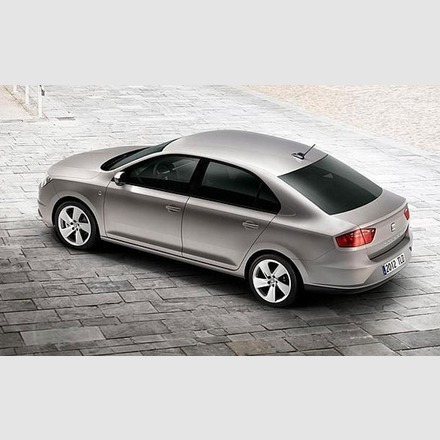
The new Seat Toledo sedan is about 4.5 meters long and has a boot capacity of 500 liters. Five people are likely to find problems caused by the long wheelbase place. Visually, the production version is based heavily on the study. After the Spanish low-cost car certainly looks not. The front looks more dynamic than those of the Rapid. Seen from the side and rear, however, there is little difference. Only the tail lights are different from the Seat Skoda. A look inside shows a tidy work space with a relatively simple but not boring design. The three-spoke steering wheel will also be available in a version with control buttons. In addition, an automatic selector lever is recognizable. Seat Toledo will be available on the request including a double clutch transmission.
Engines
Seat Toledo Sedan will be available for several engines. As an entry engine is the 75-horsepower three-cylinder gasoline engine. In gasoline engines rank with 85 hp, 105 hp or 122 hp. The diesel engines, two 1.6-liter TDI with 90 and 105 hp.
[ Read More.. ]
Sister model from Skoda
As previously reported, the new Toledo runs together with its sister model, the Skoda Rapid band. The two sedans both have a wide, including the rear window and tailgate soaring use of proven VW technology. For example, the front landing gear come from the current Polo and the rear axle from the Golf V. Therefore, the newcomers can be calculated very sharply priced, and will mainly provide the Koreans (Hyundai and Kia) and Dacia stand up.
Design and Dimensions
The new Seat Toledo sedan is about 4.5 meters long and has a boot capacity of 500 liters. Five people are likely to find problems caused by the long wheelbase place. Visually, the production version is based heavily on the study. After the Spanish low-cost car certainly looks not. The front looks more dynamic than those of the Rapid. Seen from the side and rear, however, there is little difference. Only the tail lights are different from the Seat Skoda. A look inside shows a tidy work space with a relatively simple but not boring design. The three-spoke steering wheel will also be available in a version with control buttons. In addition, an automatic selector lever is recognizable. Seat Toledo will be available on the request including a double clutch transmission.
Engines
Seat Toledo Sedan will be available for several engines. As an entry engine is the 75-horsepower three-cylinder gasoline engine. In gasoline engines rank with 85 hp, 105 hp or 122 hp. The diesel engines, two 1.6-liter TDI with 90 and 105 hp.
Monday, October 7, 2013
2011 Infiniti G Sedan
 |
(2.5L V6 7-speed Automatic) Pros Athletic handling; attractive design inside and out; excellent brakes; strong value. Cons Road noise; not as opulent as European rivals. View Road Test Specs |
Be Sensible, but Keep the Attitude
When it comes to fast luxury sedans, the Infiniti G measures up to the four-doors from the established German brands. The Infiniti G is the smart, subversive choice in the market, the one that makes its statement with an edgy 3.7-liter V6 engine instead of just an oversize grille. So imagine our horror when we heard talk of a G sedan with a smaller, more sensible 2.5-liter V6 engine. Would this be a discount special, an Infiniti with generic ingredients instead of the real thing?
Would it be like life without Starbucks?
Well, you can quit holding your breath. The 2011 Infiniti G25 still has the beans to get you going, even though its a bit slower than the double-shot-of-espresso Infiniti G37 sedan. With the G25s 218-horsepower V6, you can pass more gas stations than youd guess, yet it still has the energy you expect from a V6 engineered by Nissan. Meanwhile, the G chassis gives you the same thrill when its heeled over in a corner and the same sense of pride when you see it in the parking lot. Besides saving you a little money at the gas pump, the G25 also saves you money up front, since its MSRP is $2,600 less than the Infiniti G37.
Think of the G25 as a single shot of espresso, not a sellout to decaf.
Among sporty sedans with luxury leanings in the Infiniti G25s market segment, the BMW 3 Series remains a perennial favorite. The entry-level BMW 328i is priced right there with the Infiniti, as is the Audi A4 2.0T. If performance isnt as important as comfort and features, the Hyundai Genesis or Mercedes-Benz C-Class will probably be more to your liking. Whichever way you might be leaning, we suggest a look at the 2011 Infiniti G25. You give up a little, but you get to keep the attitude.
 |
| The Infiniti G25s styling manages to be different but doesnt look as though its trying too hard. |
 | |
| The G25 might be down on power compared to the G37, but its fun-to-drive character remains intact. |
 |
| Comfortable without being boring; performance without being frantic; high-tech without being confusing. The G25 is all about balance. |
View details Review
Sunday, September 22, 2013
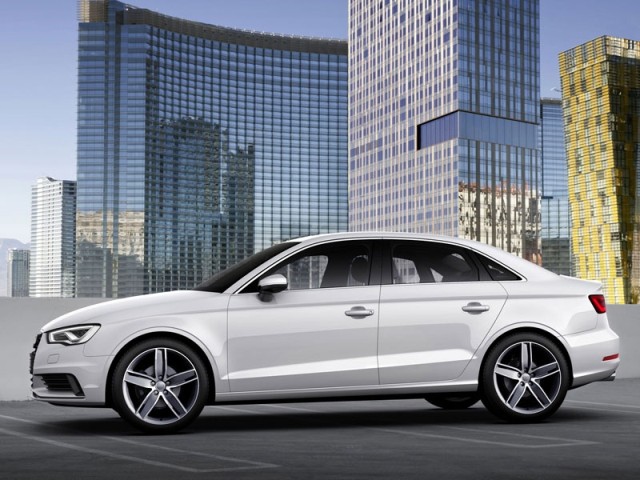
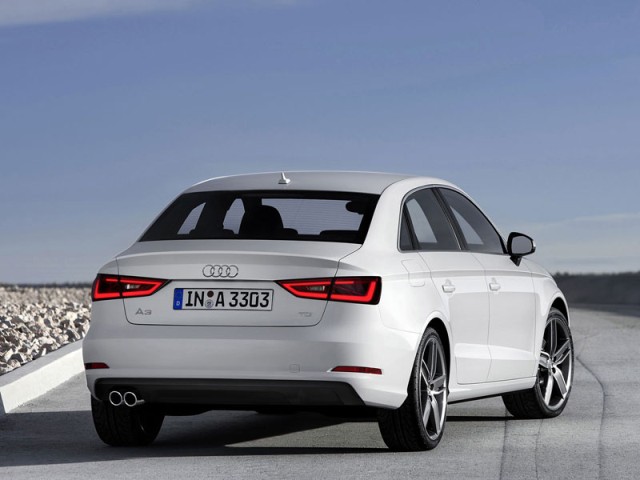
2014 Audi A3 Sedan
New York celebrates the new 2014 Audi A3 sedan world premiere, launch is in autumn 2013.
Audi is expanding the A3 model series for the first time also a sedan version. Globally, the segment of compact sedans, the largest, even if this body style to be found in our rare.
Therefore, the Audi A3 sedan now celebrated its premiere in New York, where vehicles of this segment are very popular, as was already the VW Jetta shows.
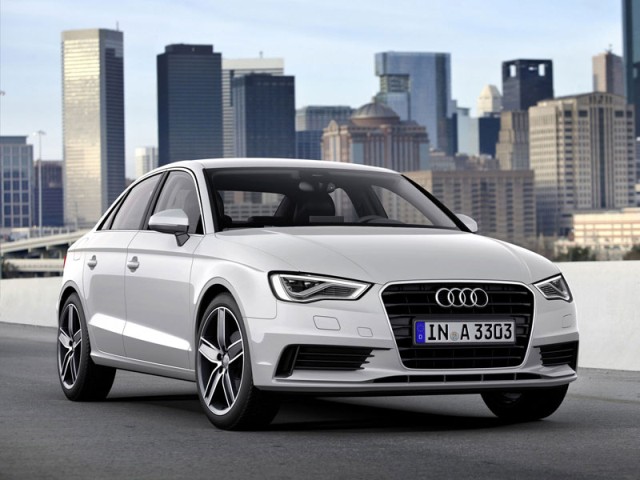
The design of the A3 sedan fits the current Audi design language perfectly, especially the rear end looks very crisp and very dynamic. Despite the sporty rear conclusion offers the A3 sedan still 425 liters of storage space in the trunk.
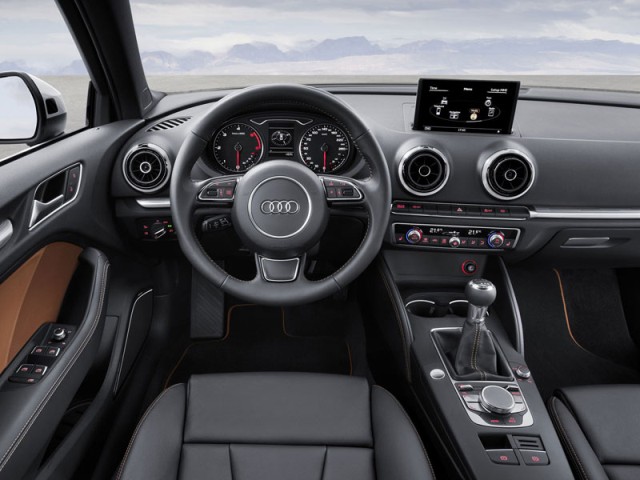
The overall length of the vehicle is 446 cm, the wheelbase measures 264 cm. So ought passengers find a decent space. The interior is on the design of her identical to the other A3 models, and there are the same options as with all body shapes. Sun are among others an adaptive cruise control, the Lane Assist that. Audi connect infotainment system including 7 "monitor and 3D map display as well as leather seats available
To start, there will be the A3 sedan with three different 4-cylinder engines. The gasoline engines are the 1.4 TFSI with 140 hp (103 kW) and variable cylinder deactivation and the 1.8 TFSI with 180 hp (132 kW) available. The 1.4 TFSI has a fuel consumption of 4.7 liters also very economical (the CO2 emissions are at 109 grams), but sprints in 8.4 seconds from a standing start to 100 km / h and up to 213 km / h.
Other engines will come later, including the top version, the S3 sedan, which was also shown in New York. The 2.0 TFSI in the S3 sedan has. An output of 300 hp (221 kW) and a maximum torque of 380 Nm In just 4.9 seconds the fleet sedan sprints combined with the 7-speed s-tronic from 0 to 100 km / h and up to 250 km / h fast.
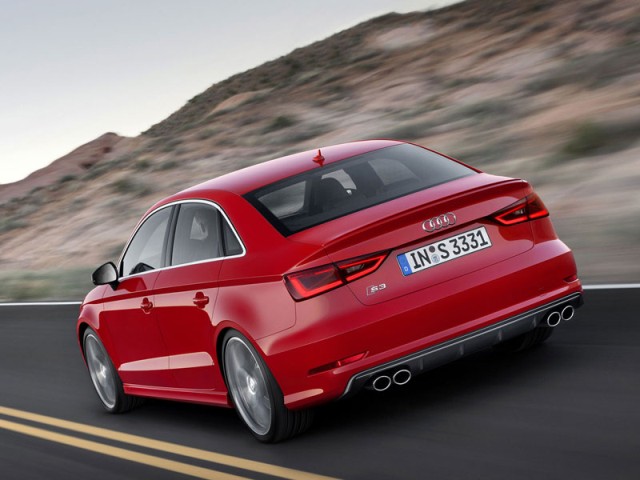
Fuel consumption is an average of 6.9 liters of still at a very low level. The power is transmitted via the quattro all-wheel drive to all four wheels.
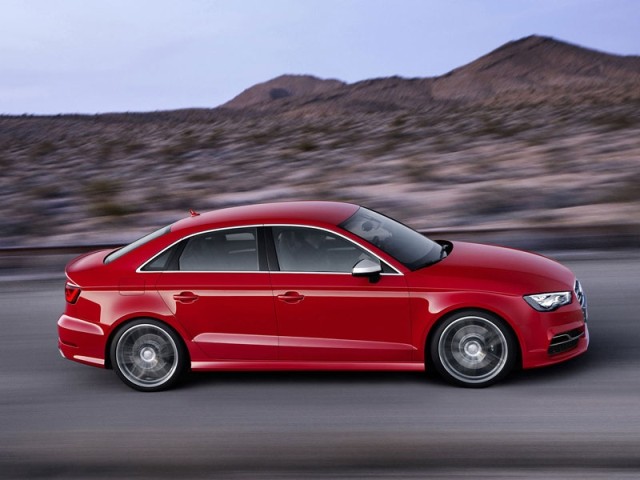
Even the look of the S3 is again slightly different from the other models and is shown with aerodynamically designed attachments around and the typical S-aluminum wheels and grille.
Prices for the new Audi A3 sedan are not set yet, but will be published in time for the market launch in autumn 2013.

[ Read More.. ]
 |
| New Audi A3 Sedan 2014 |
Audi is expanding the A3 model series for the first time also a sedan version. Globally, the segment of compact sedans, the largest, even if this body style to be found in our rare.
Therefore, the Audi A3 sedan now celebrated its premiere in New York, where vehicles of this segment are very popular, as was already the VW Jetta shows.
The design of the A3 sedan fits the current Audi design language perfectly, especially the rear end looks very crisp and very dynamic. Despite the sporty rear conclusion offers the A3 sedan still 425 liters of storage space in the trunk.
The overall length of the vehicle is 446 cm, the wheelbase measures 264 cm. So ought passengers find a decent space. The interior is on the design of her identical to the other A3 models, and there are the same options as with all body shapes. Sun are among others an adaptive cruise control, the Lane Assist that. Audi connect infotainment system including 7 "monitor and 3D map display as well as leather seats available
To start, there will be the A3 sedan with three different 4-cylinder engines. The gasoline engines are the 1.4 TFSI with 140 hp (103 kW) and variable cylinder deactivation and the 1.8 TFSI with 180 hp (132 kW) available. The 1.4 TFSI has a fuel consumption of 4.7 liters also very economical (the CO2 emissions are at 109 grams), but sprints in 8.4 seconds from a standing start to 100 km / h and up to 213 km / h.
Other engines will come later, including the top version, the S3 sedan, which was also shown in New York. The 2.0 TFSI in the S3 sedan has. An output of 300 hp (221 kW) and a maximum torque of 380 Nm In just 4.9 seconds the fleet sedan sprints combined with the 7-speed s-tronic from 0 to 100 km / h and up to 250 km / h fast.
Fuel consumption is an average of 6.9 liters of still at a very low level. The power is transmitted via the quattro all-wheel drive to all four wheels.
Even the look of the S3 is again slightly different from the other models and is shown with aerodynamically designed attachments around and the typical S-aluminum wheels and grille.
Prices for the new Audi A3 sedan are not set yet, but will be published in time for the market launch in autumn 2013.
Subscribe to:
Posts (Atom)