Showing posts with label quattro. Show all posts
Showing posts with label quattro. Show all posts
Wednesday, December 4, 2013
Audi A1 quattro Sale for British market only
Audi continues to remain on top for a premium car manufacturer. German manufacturer launched a sub-compact A1 quattro, which mentioned a car with surprising performance.

Unfortunately, the Audi A1 quattro is still limited only to the UK market. Audi A1 quattro has not assemble with right rudder. Manufacturers with the four rings emblem will bring 20 units to the UK, from a total of 333 units produced.
As reported by Autocar, Wednesday (01/25/2012), Audi already received several orders for the A1 quattro variants of this. It is expected that 20 units can be supplied in demand until the end of this year.
Audi A1 quattro uses a 2.0-liter turbocharged four-cylinder. This capacity provides 256 horsepower at 6,000 rpm engine speed and peak torque of 350 Nm (258.2 pounds-ft) between 2,500 and 4,500 rpm.


The car uses a six-speed manual gearbox to send power to the quattro All Wheel Drive system. A1 quattro is able to accelerate 0-62 mph (0-100 km / h) in just 5.7 seconds. The highest speed can penetrate 152 mph (245 km / h).
[ Read More.. ]
Unfortunately, the Audi A1 quattro is still limited only to the UK market. Audi A1 quattro has not assemble with right rudder. Manufacturers with the four rings emblem will bring 20 units to the UK, from a total of 333 units produced.
As reported by Autocar, Wednesday (01/25/2012), Audi already received several orders for the A1 quattro variants of this. It is expected that 20 units can be supplied in demand until the end of this year.
Audi A1 quattro uses a 2.0-liter turbocharged four-cylinder. This capacity provides 256 horsepower at 6,000 rpm engine speed and peak torque of 350 Nm (258.2 pounds-ft) between 2,500 and 4,500 rpm.
The car uses a six-speed manual gearbox to send power to the quattro All Wheel Drive system. A1 quattro is able to accelerate 0-62 mph (0-100 km / h) in just 5.7 seconds. The highest speed can penetrate 152 mph (245 km / h).

Monday, November 11, 2013
2012Audi A1 Quattro
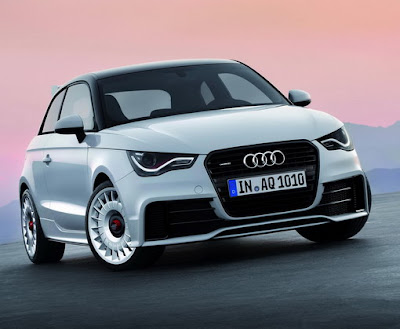
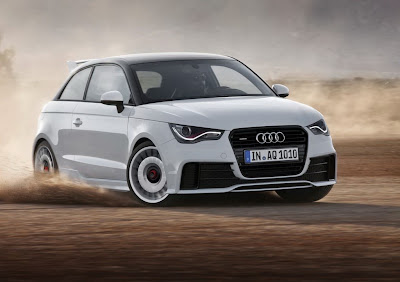
The 2012 A1 Quattro is a new limited edition subcompact hatch from Audi. Highlights of this model include a 2.0-liter turbocharged and direct-injected four-cylinder engine, something normally seen in Audi’s S3 model. Key highlights include a 252 horsepower engine offering a 70 hp improvement on the original A1 model. While every technical spec is not yet available, the German car maker promises the car will match the S3′s 0-60 mph time of 5.7 seconds, which needless to say will make many take notice. The exterior of it is in line with many of Audi’s sophisticated and sporty looking bodies, while the interior has an upgraded instrument panel, aluminum pedals and red contrast stitching on the leather seats. This model is set to release sometime late next year and unfortunately will only be made in a quantity of 333. Unfortunately it will not be available stateside.
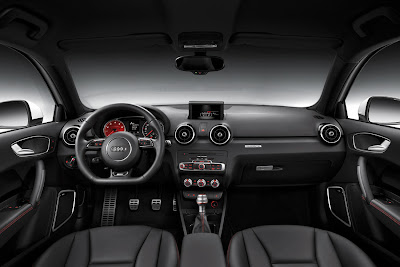
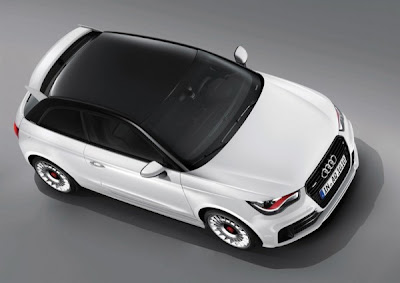
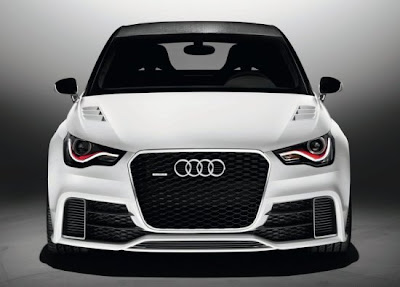
Not only does the A1 Quattro look stunning - special props to the red handlebar ’wing’ lights - but it’s also got some serious ponies under its hood. It’s not in the level of what the 500-horsepower A1 Clubsport was capable of, but it certainly packs a meaner punch than a lot of factory-built A1 models out on the market these days.
Creative and evocative design matched to an impressive 2.0-liter TFSI powertrain and the use of Audi’s very own quattro all-wheel drive has turned the Audi A1 Quattro into a serious must-have. The only downside is that Audi will be limiting the release of the car to just 333 units with prices still to be announced. But we like it so much that even if we don’t know how much it’s going to cost, we’ll be saving up for a chance to get a piece of this super duper hot hatch.

It’s got a double-clutch S-tronic gearbox, hasn’t it?
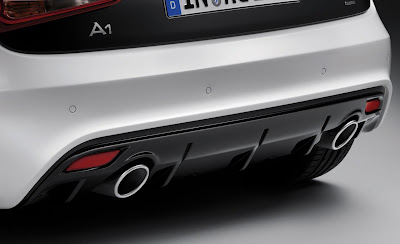
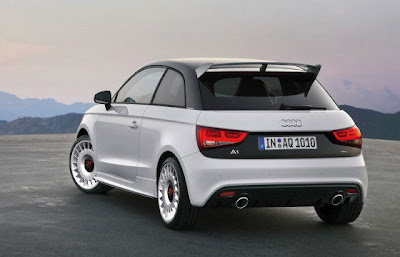
Actually it hasn’t. The prototype four-wheel drive A1 we tested earlier this year had a six-speed manual, and so does this production A1 Quattro. And enthusiasts should also like the sound of the chassis tweaks: Audi promises this limited-run A1 ‘is much more tautly tuned than the production model’.Those are changes below the skin though; much more obvious is Glacier White paint (the only colour available) the deep front bumper (that mainly comprises intakes rather than any actual metalwork), red-tinted headlights, sill extensions, twin exhaust pipes, the big rear wing and white alloy wheels. There are 225/35 R18 tyres all round, 312mm front brakes clamped by black callipers, and a three-stage ESP system with a Sport mode and a you’re-on-your-own setting. Inside there’s a red rev counter, and red stitching to contrast with the black Nappa leather.
source:topspeed.com,hypebeast.com,carmagazine.co.uk
Thursday, October 17, 2013
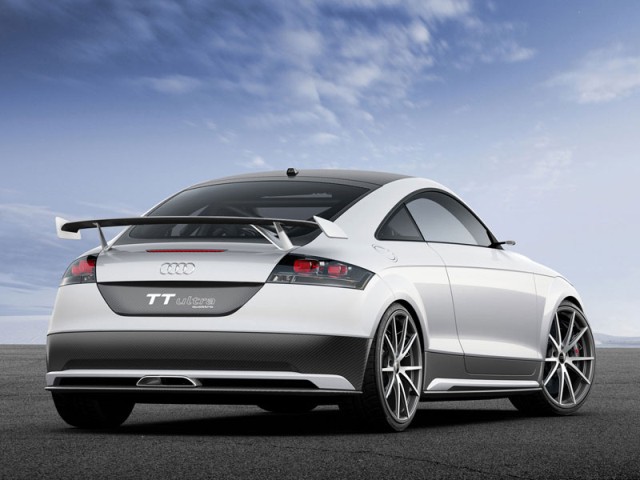
2013 Audi TT Ultra Quattro Concept
At the Wörthersee Tour 2013 Audi will again be represented with a lot of highlights and present again a very special concept car.
The Wörthersee Tour is a fixed date each year for tuning fans, and Audi has long been present with its own stand and many highlights.
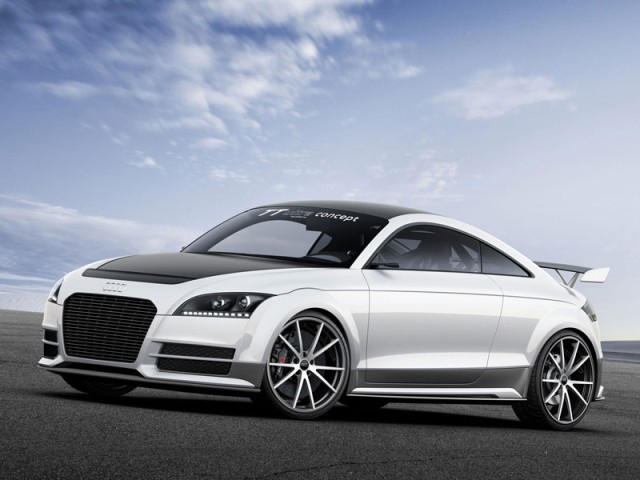
In the center of the exhibit is 2013 Audi TT ultra quattro concept. The technical study combines minimum weight with maximum sportiness. With a weight of only 1111 kg and a power of 310 hp (228 kW) creates the sporty Audi sensational performance.
The sprint from 0 to 100 km / h puts the TT ultra quattro concept out in 4.2 seconds and up to 280 km / h. Compared to the standard model, the weight saving is around 300 kilograms.

This is mainly achieved through the consistent use of lightweight materials. Instead of coil springs made of steel springs made of fiberglass reinforced plastic (FRP) are used, for example.
Nevertheless, the passengers do not have to give up luxury and also have power windows or air conditioning on board. Compared to the production vehicle, the TT ultra quattro concept has a digital cockpit. In addition, he has held over normal mirrors on compact cameras that transmit the image directly into the cockpit.
In addition to the Audi TT Ultra quattro concept also all RS models, the new R8 family including the R8 e-tron and the legendary Audi Sport quattro S1 will be admired at the Audi stand in Reifnitz.
[ Read More.. ]
The Wörthersee Tour is a fixed date each year for tuning fans, and Audi has long been present with its own stand and many highlights.
In the center of the exhibit is 2013 Audi TT ultra quattro concept. The technical study combines minimum weight with maximum sportiness. With a weight of only 1111 kg and a power of 310 hp (228 kW) creates the sporty Audi sensational performance.
The sprint from 0 to 100 km / h puts the TT ultra quattro concept out in 4.2 seconds and up to 280 km / h. Compared to the standard model, the weight saving is around 300 kilograms.
This is mainly achieved through the consistent use of lightweight materials. Instead of coil springs made of steel springs made of fiberglass reinforced plastic (FRP) are used, for example.
Nevertheless, the passengers do not have to give up luxury and also have power windows or air conditioning on board. Compared to the production vehicle, the TT ultra quattro concept has a digital cockpit. In addition, he has held over normal mirrors on compact cameras that transmit the image directly into the cockpit.
In addition to the Audi TT Ultra quattro concept also all RS models, the new R8 family including the R8 e-tron and the legendary Audi Sport quattro S1 will be admired at the Audi stand in Reifnitz.
Monday, October 14, 2013
Audi Q5 Hybrid quattro 2012


Audi Q5 Hybrid quattro, 2012
The Audi Q5 hybrid quattro combines the performance of a six-cylinder with the fuel economy of a four-cylinder. The highly variable interior offers plenty of room for recreation and family. The vehicle is powered by a 2.0 TFSI producing 155 kW (211 hp) and an electric motor producing 40 kW (54 hp). This combination provides for a system output of 180 kW (245 hp). The average fuel consumption measured according to the NEDC is just 6.9 liters per 100 km (34.09 US mpg). The quattro permanent all-wheel drive system and an agile chassis are an unbeatable technology package.
During the development process, Audi focused on a high share of electrically powered driving. The sportiest hybrid SUV on the market covers about three kilometers (1.86 miles) with zero local emissions at a constant speed of 60 km/h (37.28 mph), and can drive at up to 100 km/h (62.14 mph) under electric power alone.
The Audi Q5 hybrid quattro is the perfect car for an active lifestyle. It is efficient, dynamic, spacious, multifunctional and comfortable. It will be appearing in the fourth quarter of 2011 at a starting price of EUR 53,700.
Proportions
The Audi Q5 hybrid quattro is 4.63 meters (15.19 ft) long and 1.90 meters (6.23 ft) wide, but only 1.63 meters (5.35 ft) high, giving it the sportiest proportions in its market category. Its drag coefficient of just 0.32 also represents a top figure for its category. The design is elegant and sculptured - typical for Audi, which is the leading brand in this domain.
Exterior cues identifying the Audi Q5 hybrid quattro are hybrid badges on the sides and on the rear, the single-frame grille painted in high-gloss black, the exclusive body color Arctic Silver, 19-inch wheels in a ten-arm turbine design and chrome trims on the tailpipes.
The headlights are optionally available with xenon plus lamps and LED daytime running lights, in which case the rear lights also use LEDs.
Rising lines dominate the side view. The elegant roof contour, crowned by low-height roof rails, accentuates the slim, coupe-like appearance of the Audi Q5 hybrid quattro. The wrap-around tailgate, like the engine hood, is made from lightweight aluminum.
The wheelbase measuring 2.81 meters (9.22 ft) provides for a generously spacious interior. The seats are ergonomically shaped and versatile in their layout. The angle of the rear seat backs can be adjusted, and they can be laid flat very easily - it suffices to operate the release catches in the cargo area so that they can be folded down onto the seat cushions. This increases the cargo volume from 460 to 1,480 liters (16.24 - 52.27 cu ft). The lithium-ion battery cells are located in a crash-proof area beneath the cargo floor, minimizing their impact on the cargo volume.
Out in front: the safety equipment
The body of the Audi Q5 hybrid quattro contains a high proportion of high-strength and ultra-high-strength steel components. These reduce weight while simultaneously improving crash safety, rigidity and vibrational behavior. The front seat belt force limiters and airbags act together in a new, highly intelligent way.
All of the conductive components throughout the entire high-voltage system are electrically isolated, i.e. there is no electrically conductive connection with the rest of the vehicle. Consequently, there is no elevated risk of electrocution. The high-voltage system of the Audi Q5 hybrid quattro is deenergized automatically upon activation of the belt tensioners or the airbags.
Inside, the Q5 hybrid quattro presents a variation on Audis clear, elegant design language. The cockpit has a bias towards the driver; its controls can be operated with intuitive ease. The new display concept with the power meter shows the driver the overall output of the system on a scale from 0 to 100 percent. At the same time, the large MMI monitor also shows the operating states.
Aluminum links: the suspension
The chassis also underscores the dynamic character of the Audi Q5 hybrid quattro. Ride height was lowered by 25 mm (0.98 in) to reduce driving resistances. The direct steering ratio closely connects the driver to the road. The five-link front suspension and trapezoidal-link rear suspension are made substantially from aluminum, and the low-mounted electromechanical steering gear transmits steering wheel movements directly to the wheels. Large, 17-inch brakes provide for powerful deceleration. 19-inch alloy wheels with 235/55 tires are standard, with wheels measuring up to 20 inches in diameter available from Audi as options.
Audis hybrid SUV drives with sporty precision and unwavering stability, while always providing a comfortable ride. The switch between electric and conventional drive is imperceptible. Its ESP stabilization system incorporates new functions that the competition is unable to match. For instance, the ESP has a sensor that identifies when a roof rack is mounted and then knows that the Audi Q5 hybrid quattros center of gravity is higher. This is significant, because the roof load may be as much as 75 kilograms (165.35 lb). In this case, the ESP cuts in slightly earlier as the handling limits are approached. This allows the system to apply a very dynamic basic characteristic.
The standard hill descent assist makes driving down steep slopes safer by holding the speed below 30 km/h (18.64 mph). The ESP and ABS have special mapped characteristics for offroad driving. The ESP emphasizes maximum traction in off-road conditions. The ABS automatically identifies the surface conditions and selects the ideal control strategy for sand, gravel or scree.
Audis new performance SUV is generously equipped. Standard equipment includes automatic air conditioning, onboard computer with color display, MMI navigation plus with energy flow display and the Audi sound system. In combination with the Bluetooth online car phone, this version of the MMI navigation plus with hard drive and DVD drive offers the ability to use images from Google Earth for the navigation system and to use online services. A Wi-Fi hotspot is then also available for mobile devices.
Optional digital radio reception or an interface for the iPod or MP3 player with USB connection are perfectly integrated into the high-end sound system from the Danish specialist Bang & Olufsen.
Assistance systems: luxury from the full-size category
Upon request, Audi can equip the Audi Q5 hybrid quattro with high-tech systems adopted from the full-size category, making driving an even more controlled, relaxing affair. The Audi parking system advanced employs a reversing camera to aid the driver in maneuvering; Audi lane assist helps the driver to maintain the lane; and Audi side assist alerts the driver to potential hazards during a lane change.
The other equipment items likewise underscore the Audi Q5 hybrid quattros status as a performance model. These include the convenience key for keyless access, a large panoramic sunroof, three-zone automatic air conditioning, roller sun blinds for the rear side windows and the Audi adaptive light dynamic cornering light system. The high-beam assistant switches automatically between high-beam and low-beam headlights. The front seats can be adjusted, heated and cooled electrically.
Exterior design
Every Audi makes its dynamic nature visually apparent at first glance. The Audi Q5 hybrid quattro also has the sportiest proportions in its vehicle segment. It measures 4.63 meters (15.19 ft) in length and 1.90 meters (6.23 ft) in width, but only 1.63 meters (5.35 ft) in height. Its body design comes across as powerful, athletic and emotionally charged. With the new Q5 hybrid quattro, the Audi brand once again underscores its leadership in automotive design.
The Audi Q5 hybrid quattro is distinguished by visual features on the outside. The tailgate, the fenders and the aluminum sill panel strips bear the hybrid badge. The radiator grille is painted high-gloss black, and the tailpipes feature chrome trims. The exclusive Arctic Silver, metallic paint finish is optionally available.
The 19-inch cast aluminum wheels feature a ten-arm turbine design, with their spokes resembling turbine blades. The wheels are fitted with 235/55 tires. Audi offers optional wheels with 19- and 20-inch diagonals; an S line bumper is available from quattro GmbH.
With their slightly angular cut, the headlights lend the Audi Q5 hybrid quattros face an air of resolve. The optional xenon plus headlights are an elegant setting for the daytime running lights, comprising 12 daylight white LEDs each. The xenon plus headlights can also be combined with the adaptive light cornering light system.
Like the front end, the rear of the Audi Q5 hybrid quattro has a strongly expressive character; horizontal lines accentuate the impression of width. The bumper incorporates the rear fog lights, and the license plate area is recessed into the tailgate. Like the engine hood, the wraparound tailgate is made from lightweight aluminum. It is exceptionally wide, like that of its big brother, the Audi Q7.
The undivided rear lights are mounted on the large tailgate. Because they are not visible when the hatch is open, the Audi Q5 hybrid quattro has auxiliary lights in the bumper. The main lamps have bulbs housed in separate chambers as standard; Audi uses light-emitting diodes in the optional xenon plus headlights.
Body
Good design is always functional design - the Audi Q5 hybrid quattro has a drag coefficient of just 0.32, the best in its segment. This is attributable to the intensive fine-tuning of the body and the underbody. The frontal area of the performance SUV measures 2.65 m2 (28.52 sq ft).
The body is unusually light in weight; the tailgate and the engine hood are aluminum. The rigid body shell incorporates hot-stamped steel in numerous places, combining low weight with very high strength. Despite the generous level of standard equipment, the Q5 hybrid quattro with its curb weight of 1,910 kg (4,210 lb) is the lightest hybrid SUV on the world market. All its hybrid components add less than 130 kg (287 lb) of extra weight.
Ultra-precise: welding and bonding
The way the body is put together is also a highly precise affair. The areas in which conventional resistance spot welding is used now account for only 73 percent of the total - equivalent to about 5,000 weld points. To boost strength further, Audi uses bonding in some areas as well as or instead of welding. A two-component adhesive forms the bond in 17 percent of the cases; the adhesive seams measure a total length of 83 meters (272 ft).
There are two particularly elaborate joining technologies among the remaining 10 percent. Laser welding is the method of choice around the sills and on the doors. The components in the visible part of the tailgates water channel, like the zero gap between the side section and roof, are joined by high-tech soldering methods. This zone is visible evidence of Audis uncompromising quality philosophy, epitomizing the precision joints running all across the body.
The use of ultramodern materials and joining techniques is the basis of the bodys rigidity. It keeps the noise level on board low and paves the way for superb drivability - it is the basis for both low tire noise and sporty, precise handling.
Uncompromising: long-term quality
Long-term quality is again a top priority in the Audi Q5 hybrid quattro, in keeping with the brand with the four rings. To protect against corrosion, all body cavities are flooded with hot liquid wax. Audi is the only premium brand to implement this method.
Maximum safety: the special features of the Audi Q5 hybrid quattro
Like every Audi, the Q5 hybrid quattro satisfies the stringent safety standards which the brand with the four rings requires of all its vehicles. A comprehensive safety package begins with the high-strength occupant cell and includes front, side and head airbags, the integral head restraint system in the seats, the belt tensioners and a sophisticated system of sensors that initiates the protective measures necessary for the situation at hand.
Thanks to its spacious crumple zone, the Audi Q5 hybrid quattro meets all Japanese and European requirements for collisions with pedestrians. In the type-specific crash, which involves driving into a barrier at 15 km/h (9.32 mph) and a 40 percent overlap, crash boxes made from aluminum located ahead of the longitudinal members prevent damage to the body structure. The radiator can be displaced slightly to the rear thanks to its sliding mounts. Minor bumps at up to 4 km/h (2.49 mph) when maneuvering in parking lots do not leave any dents in the aprons, and these components can be replaced individually after collisions at higher speeds.
Special attention was paid to the concept-specific requirements of a hybrid vehicle. The Audi Q5 hybrid quattro has special protective mechanisms that are triggered in the event of a hazard. All of the conductive components throughout the entire high-voltage system are electrically isolated, i.e. there is no electrically conductive connection with the rest of the vehicle. This isolation ensures that there is no elevated risk of electrocution. Furthermore, the high-voltage components are deenergized if the airbags or belt tensioners are triggered.
Cargo area
The Audi Q5 hybrid quattro is the performance SUV for a dynamic, active clientele - it displays all the talents needed in a vehicle designed for sports, family and recreational use. Its buyers are people with a high level of education who value an active lifestyle. Audi Q5 hybrid quattro customers view their car as an expression of their individuality and consequently attach great importance to attractive design, sportiness and performance.
The cargo area is one of the Audi Q5 hybrid quattros practical strengths. In its basic configuration, it already offers a substantial 460 liters (16.24 cubic ft) of cargo space, which can be used very effectively. The floor is completely flat; the loading lip is only 665 millimeters (26.18 in) high and lies almost flush with the floor. The loading width is an impressive 105 centimeters (41.34 in) even between the wheel arches, and the loading length 93 centimeters (36.61 in). Four golf bags can easily be stowed cross-wise, and the maximum payload is a hefty 580 kilograms (1,279 lb).
The extended cargo area has a capacity of 1,480 liters (52.27 cubic ft) (loaded to roof height) and a loading length of 170 centimeters (66.93 in). It can be significantly increased yet again by the convenient option of a folding front passengers seat, with special kinematics to fold its seat back down forwards. The standard rear bench seat plus makes the cargo area even more variable. This can be slid forward by 10 centimeters (3.94 in) and also incorporates a large load-through hatch. The seat back of the slightly narrower center seat (40:20:40) is designed to fold down individually. The standard strip of stainless steel for the cargo area offers protection during loading and unloading.
The optional trailer hitch can be pivoted out, and light-emitting diodes indicate whether it is correctly locked in position. The accessories range includes various racks for transporting bikes, canoes, surf boards and skis on the roof.
Interior
Feeling immediately at ease is a typical response when climbing into a new Audi. The Audi Q5 hybrid quattro is no exception; its developers have created a light, luxurious and spacious interior. It is elegant in appearance, the build quality is of the customary superb standard, and the intuitive ease with which it is controlled can be further enhanced with numerous high-tech features from the full-size category.
The drivers and passengers seats offer an ergonomically excellent seating position and support the body perfectly. The standard seats are height-adjustable, and their head restraints can be raised a large amount.
Audi offers the option of sport seats with manual angle adjustment, extendable thigh rest and electric four-way lumbar support - this latter feature can also be ordered separately. Alternatively, all-electric seat adjustment is available for adjusting the fore/aft position, seat back angle and height. A memory function that remembers the preferred seat and exterior mirror positions is also available. With typical Audi thoroughness, the optional heated seats have six settings.
The climate-controlled comfort front seats offer the ultimate in luxury. Each seat back and base cushion has two small fans with six power settings. To prevent chilling of the occupant, there is a supplementary function that cuts in automatically, if need be. The climate-controlled comfort seats are upholstered in perforated leather.
An extensive range of design packages is available. These include Havana cloth upholstery or the leather grades Milano and Fine Nappa for the standard seats; these come in a range of five colors. The sport seats are upholstered in Micron cloth or the leather types leather/Alcantara, Milano and Fine Nappa. Here again, the customer has a choice of five colors.
The Audi Q5 hybrid quattros colors and equipment, too, have a sporty, elegant character. The vehicles interior is visually harmonious in black, gray or beige. This philosophy creates a light interior impression in which the inlays provide visual highlights. The standard version is in micrometallic platinum, a metallic-effect paint finish, or optionally in aluminum or the woods walnut brown or fine grain ash almond beige. With the fine grain ash brown version, the woods pores remain open and thus allow the natural materials structure to be explored by the fingertips.
For individualists: the S line sport package
The S line sport package creates even more sporting individuality. Besides 19-inch or 20-inch wheels and the special body colors Daytona Gray and Monza Silver, it includes a whole array of distinctive individual details inside the vehicle. The interior and headlining are in black, with a choice of black or silver seams. The upholstery of the sport seats - in cloth/leather, Alcantara/leather, Milano leather or Fine Nappa leather - features special S line embossing. The inlays are in matt aluminum (or optional piano finish). The leather sport steering wheel is emblazoned with the red and silver S line badge, and the gear knob is trimmed in perforated leather.
Feel-good factor: the perfect ergonomics
The sense of well-being that the interior of the Audi Q5 hybrid quattro creates is underpinned by the perfect ergonomics for the driver. The sportily short gear knob is positioned such that the drivers hand finds it intuitively, and the distances and angles of the steering wheel and pedals are perfectly matched. The steering wheel has 60 millimeters (2.36 in) of manual reach and 44 millimeters (1.73 in) of height adjustment, with electric-motor locking.
The standard leather multifunction sport steering wheel has four spokes; a leather multifunction sport steering wheel with three spokes is available as an option. It has small drum-type and pushbutton controls for the basic functions of the navigation system, radio system, car phone and speech dialogue system. These are elegantly framed with narrow chrome surrounds.
All functions in the Audi Q5 hybrid quattro are focused on the person at the steering wheel. The center console, which is subtly angled to the left, comprises a unit with the instrument cluster. It features an innovative display concept that renders the individual driving states of the hybrid drive clear-cut and tangible. The tachometer has been replaced by a "power meter," with a needle that indicates the total system output on a scale of 0 to 100 percent. A second scale is divided into colored segments, whose green and orange sections show at a glance how the Q5 hybrid quattro is currently traveling - with a greater share of electrical power or combustion engine power. An additional instrument displays the charge level of the battery.
At the same time, the color display of the driver information system and the large monitor of the standard MMI navigation plus show the operating states and power flows in the hybrid system in elegant graphics with a three-dimensional effect. The MMI monitor also displays differentiated consumption and recuperation statistics in easily understandable bar graphs.
Powerful and efficient: the automatic air conditioning
The Audi Q5 hybrid quattro comes standard with automatic air conditioning with a pollen and recirculated-air filter, plus a function that incorporates the suns position into how it operates. A powerful blower circulates large quantities of air. Typically for Audi, the innovative system is quiet, powerful and efficient. And it is remarkably light in weight.
The climate control system of the Audi Q5 hybrid quattro was also adapted to the requirements of electric driving. The air conditioning compressor has a high-voltage electric drive. Demand-controlled for high efficiency, the compressor ensures AC operation even when the combustion engine is shut down. An electric auxiliary heater supports interior heating.
The optional deluxe automatic air conditioning has even more features - it regulates the temperature, volume and flows of air in three separate zones for the driver, front passenger and rear passengers. A responsive moisture sensor minimizes the risk of window fogging, and separate outlets on the top of the dashboard provide low-draught indirect ventilation.
The interior of the Audi Q5 hybrid quattro is like a perfectly tailored suit - it is airy but cut to fit perfectly. The statistics prove how spacious it is: elbow room is 1,527 millimeters (60.12 in) up front and 1,494 millimeters (58.82 in) in the rear. The Audi Q5 hybrid quattro also has an exceptional amount of front headroom - 1,043 millimeters (41.06 in).
Even tall passengers will find the rear compartment amply spacious. The seats provide a sporty standard of comfort at head, elbow and knee level; there is space for the feet under the front seats. The seat back angle of the standard seats can be adjusted between 24 and 30 degrees. The long door cutouts, the wide opening angle of the doors and the low sills maximize ease of access to the rear of the Audi Q5 hybrid quattro. The holders in the doors can even accommodate large 1.5-liter (50.72 fl oz) bottles. A fold-out center armrest provides comfortable arm support, and optional nets are available for the backs of the front seats.
Versatile: the rear bench seat plus
A versatile feature is the standard rear bench seat plus; the sections of the 40:60 split bench can be slid forward or back independently by 100 millimeters (3.94 in). Its center armrest incorporates two pull-out cup holders. Other extras are manual blinds for the side windows - a feature that will be particularly appreciated by children when out and about in the summer.
There are numerous convenient features up front, too. The spacious door pockets have brackets that are also suitable for large bottles. Then there are two more cup holders on the center tunnel. One of them is optionally available as a thermal cup holder. An electronically controlled peltier element - an electrothermal converter similar to the principle found in a cooler bag - operates in tandem with a fan. At the push of a button, it cools or heats the inside of the thermal cup holder across a range from 3 to 58° Celsius (37.4 to 136.4° F). A small display serves as a visual reminder for the user when the cup holder is hot.
The front center armrest is a particularly comfortable option - it can be adjusted lengthwise by 6.5 centimeters (2.56 in) and to four different heights. The unit has a soft foam exterior and is particularly large thanks to the absence of a handbrake, instead of which there is the electromechanical parking brake.
Engines and transmissions
The 2.0 TFSI in the Audi Q5 hybrid quattro has a displacement of 1984 cc. Its output is 155 kW (211 hp), with the maximum torque of 350 Nm (258.15 lb-ft) permanently available at 1,500 to 4,200 rpm. The 4-cylinder engine combines direct injection with turbocharging - typical for the Audi philosophy of downsizing, which replaces displacement by forced induction. The Audi valvelift system (AVS) further increases power, torque and efficiency by switching the stroke of the exhaust valves between two stages depending on the load and rpm.
The 2.0 TFSI has been overhauled in some respects for use in the Audi Q5 hybrid quattro. The drive of the ancillary units has been dropped, and the crankshaft bearing and fine tuning of the turbocharger have been adapted to the specific demands.
A secondary air system at the cylinder head makes sure that the exhaust gas treatment cuts in particularly fast. Integrated in the engine control unit, the hybrid manager controls the efficient change and smooth transitions between the operating modes, and was fully developed by Audi alone.
The optimal interplay between the combustion engine and the electric motor briefly results in a peak system output of 180 kW (245 hp) and a maximum system torque of 480 Nm (354.03 lb ft).
Drivetrain
A largely modified eight-speed tiptronic serves the power transmission without the aid of a torque converter. Its place is taken by the disk-shaped electric motor, combined with the multi-plate clutch operating in an oil bath - it couples and decouples the electric motor and the TFSI. The innovative decoupler operates with high precision, smoothly and quickly in any situation.
The highly comfortable and fast-shifting hybrid gear unit contributes significantly to the efficiency of the Audi Q5 hybrid quattro - its eight gears are widely spaced. When the 2.0 TFSI is turned off, an electric pump maintains the oil pressure in the hydraulic system to safeguard the convenient start-stop feature.
The power electronics and the electric motor
The power electronics, connected to the battery and the electric motor by high-voltage cabling, is located in the plenum chamber of the engine compartment. In the form of a pulse-controlled inverter, the power electronics serves as a controller between the battery, which outputs direct current, and the electric motor, which operates on alternating current.
Innovative technologies keep the volume and weight of the power electronics low, with cooling provided by a separate low-temperature water-filled circuit. The component includes a DC/DC converter that couples the electric consumers in the 12 V electrical system with the high-voltage network.
A permanent magnet synchronous machine serves as an electric motor, as a starter and - during deceleration - as a generator. It delivers up to 40 kW (54 hp) of power and 210 Nm (154.89 lb ft) of torque. The electric motor is integrated in the engines cooling circuit.
The battery
A lithium-ion battery system, weighing a mere 36.7 kg (80.91 lb), serves as the energy store for the electric motor of the Audi Q5 hybrid quattro. The compact unit with its 26 liter (6.87 US gallon) capacity is positioned in a crash-safe area under the cargo floor, with hardly any intrusion on the cargo area. The battery consists of 72 cells. At 266 volts, its nominal energy is 1.3 kWh and its output 39 kW.
The lithium-ion battery is cooled by air in two ways, depending on the requirement. At low-temperature load, it draws temperate air from the vehicle interior by way of a fan. If its temperature exceeds a certain limit, a separate refrigerant circuit is activated. It is coupled to the main climate control system of the vehicle and uses a separate evaporator.
This heavy-duty active cooling system distinguishes the Audi Q5 hybrid quattro from many other hybrid vehicles, and makes a key contribution to the high electrical availability of the hybrid system.
The operating modes
With its parallel hybrid system, the Audi Q5 hybrid quattro can travel in five different operating modes. Driving with the combustion engine alone, with the electric drive alone or in hybrid mode is possible, as are recuperation and boosting.
At a standstill, e.g. before starting or at a traffic light, both drive sources are deactivated. In this convenient start-stop mode, the climate control system remains active. Once the driver releases the brake, the Audi Q5 hybrid quattro starts rolling.
The driver can change between three programs using a button on the center console or a selector lever. The EV characteristic map gives priority to the electric drive in the city; the D mode controls both motors for optimal consumption; and the S mode as well as the touch control gate of the tiptronic are designed for a sporty driving style.
When the driver accelerates sharply, the combustion engine serves as a power source for the drive. The electric motor is then actuated by the operating strategy in order to achieve optimal efficiency and consumption. In quick acceleration, or "boosting," the electric motor operates together with the TFSI; at full throttle in the S mode the full system output of 180 kW (245 hp) is briefly available. The hybrid drive with its 480 Nm (354.03 lb ft) of torque then supplies the propulsion power of a large naturally aspirated engine, but with far more efficiency.
When the driver releases the accelerator, the electric motor acts as a generator and recovers energy. In most situations, the TFSI is then decoupled from the drive system so as not to cause any loss from towing. The electricity recovered by the electric motor here and in braking is buffered in the lithium-ion battery. If the driver brakes only slightly, the electric motor performs the deceleration itself; in more forceful braking, the hydraulic braking system is simultaneously activated. The brake servo is additionally supplied by an electric vacuum pump. A complex rule-based strategy adapts the braking to the conditions of electric driving and energy recuperation.
The highly efficient 2.0 TFSI works together with the electric motor to combine the performance of a six-cylinder with the fuel economy of a four-cylinder. The sprint to 100 km/h (62.14 mph) takes just 7.1 seconds. Top speed is 225 km/h (139.81 mph). The Audi Q5 hybrid quattro is also extremely efficient, consuming just 6.9 liters of fuel per 100 km (34.09 US mpg) in the standard NEDC cycle, which corresponds to CO2 emissions of 159 g/km (255.89 g/mile).
If operated by the intelligent control system or the driver at a constant speed of 60 km/h (37.28 mph), the Audi Q5 hybrid quattro can drive for three kilometers (1.86 miles) purely on electric power, which means with zero local emissions. This value is not the only benchmark set by the Audi Q5 hybrid quattro. The top speed of 100 km/h (62.14 mph) in purely electric mode is also unmatched by the competition.
Chassis
The Audi Q5 hybrid quattro applies its power to the road via the quattro permanent all-wheel drive system. The enhanced traction, road dynamics, safety and directional stability that it delivers together make up Audis proverbial "Vorsprung durch Technik."
The Audi Q5 hybrid quattro is the sportiest model in the hybrid SUV segment - its chassis redefines the benchmark. It combines precision and dynamism with a high level of stability and comfort. The suspension mountings, steering, wheels and brakes have been developed for top performance and the extensive use of aluminum reduces unsprung masses to a minimum.
The five-link front suspension, with an ample track width of 1,625 millimeters (63.98 in), is a big factor in the dynamic character of the Audi Q5 hybrid quattro. Because the development engineers moved the differential further forward up the driveline and the clutch further back, the axle could be positioned far to the front. This configuration permits an optimal weight distribution between the front and rear axles.
Lightweight aluminum - a material in the use of which Audi possesses an unequaled level of experience - is used in many areas. For example, the largest and most complex chassis component, the subframe for the engine and front axle, is made of aluminum. Rigidly bolted to the forward structure, it forms part of the body, and its high rigidity transmits steering forces without any delay.
Lightweight construction: aluminum links
Aluminum is also used in the Audi Q5 hybrid quattro for the bearing mount that links the upper suspension control arms with the body, and for the pivot bearing. The front suspension comprises five links per wheel - one support link and one control arm at the bottom and two control arms at the top. The fifth link is the tie rod that connects the electromechanical steering gear with the pivot bearing.
All suspension control arms are forged aluminum parts, guaranteeing low unsprung masses and extremely precise wheel location. The anti-roll bar is made from a high-strength tube, a design that also saves weight.
The five-link front suspension handles longitudinal and lateral forces separately when the car is in motion. In the lateral direction the bearings are rigid, enhancing sporty precision and high cornering speeds.
In the longitudinal direction, on the other hand, they have a supple, soft response, combining the dynamism of a sports sedan and the comfort of a full-size vehicle.
The rear axle of the Audi Q5 hybrid quattro, with its track of 1,620 millimeters (63.78 in), is inspired by the self-tracking trapezoidal-link rear suspension layout of the large A8 and A6 model lines. It combines excellent drivability and ride comfort with compact packaging. The Audi Q5 hybrid quattro offers great advantages for sports and recreational use: the loading lip and floor are at a low height, and the floor is flat.
The unsprung masses have again been kept to the absolute minimum at the rear axle. The two trapezoidal links are warm-hardened aluminum castings; the wheel carriers are of chill-cast aluminum. The upper transverse links and the track rods are aluminum forgings. The anti-roll bar, designed as a tube like at the front axle, likewise combines low weight with high rigidity.
Separate: the springs and dampers
The springs are supported directly on the wheel carriers - an arrangement that has made it possible to increase the ride comfort to luxury-car level and improve the road dynamics to the standard of a sports sedan. The separate springs and dampers also improve response; special rubber formulations in the axle mounts improve boost comfort further. The new rear suspension kinematics keep brake dive closely under control, and in this way add to the cars sporty, dynamic appeal.
Worthy of a sports sedan: the steering
An electromechanical unit serves as the steering system, with a small electric motor generating the power. The system operates at high efficiency, since it need not consume any energy in straight-ahead driving. This low energy consumption improves the Audi Q5 hybrid quattros fuel efficiency by about 0.2 liters per 100 km.
The Audi Q5 hybrid quattro comes standard with servotronic. Configured as a speed-dependent power steering system, it requires only little effort from the driver to maneuver into a parking space thanks to the high servo boost. At higher speeds it trims back the boost level for a superbly calm response on the freeway.
The range of wheels also underscores the dynamic character of the Audi Q5 hybrid quattro. Audi ships its new hybrid SUV equipped with elegant aluminum wheels in two substantial dimensions - 19 and 20 inches. Measuring 19 inches and shod with 235/55 tires, even the standard wheel, a lightweight cast wheel, suggests the powerful performance of the Audi Q5 hybrid quattro with hybrid drive. Audi offers 17-inch and 20-inch winter wheels.
Large and powerful: the brakes
The large wheels of the Audi Q5 hybrid quattro conceal brakes that are easily up to whatever braking tasks they may be confronted with. All four disks - measuring 345 millimeters (13.58 in) in diameter at the front and 330 millimeters (12.99 in) at the rear - are vented.
The high-performance brake pads achieve high, stable coefficients of friction and are only minimally susceptible to fading even under extreme loads. The vented front disks no longer have any conventional cooling ducts. Instead, the two halves of the disk are joined together by hundreds of small metal cubes that are able to dissipate a high volume of hot air very rapidly.
The brake calipers have a composite design based on the floating-caliper concept. Areas calling for maximum load resistance are made from high-strength spheroidal-graphite cast iron. The aluminum piston housing dissipates the heat very effectively. Despite their low weight, the brake calipers exhibit extremely high rigidity.
All brake disks and also the aluminum cover plates are particularly light in weight - directly benefiting the sporty handling, by reducing the unsprung masses. The design of the calipers and rims also benefits the customer in a very tangible way: the mechanic can gauge the remaining thickness of the brake pads the moment a car is brought in for servicing, without needing to remove the wheels.
The ESP stabilization system also emphasizes the Audi Q5 hybrid quattros sporty behavior. It operates with a new type of high-precision hydraulic valves that manage the pressure buildup with particular accuracy. It runs without any of that all-too-familiar jolting, or obvious vibrations.
Roof rack identification is a novel supplementary function. The ESP detects by means of a sensor on the rails whether the roof cross-member that comes standard with the car is mounted and consequently whether the Audi Q5 hybrid quattros center of gravity has moved higher. If so, it modifies its control strategy to cut in slightly sooner around the handling limits.
Assistance systems
Innovative assistance systems adopted directly from the luxury class make driving infinitely less stressful. These systems help the driver to change lanes and stay in the lane, and assist with parking.
Intelligent assistance systems are the latest trend in active safety - and the brand with the four rings is leading this development from the front.
A sidelong glance to the rear: Audi side assist
Audi side assist uses intelligent radar technology to warn of hazardous situations when changing lanes. Two radar sensors in the rear bumper, operating at a frequency of 24 Gigahertz, scan the area next to and behind the Audi Q5 hybrid quattro, up to a distance of 50 meters (164 ft) from the car. A high-speed control unit analyzes the raw data.
If another vehicle is traveling at a similar speed within the critical range, or is approaching rapidly from behind, a yellow LED display comes on in the left or right exterior mirror housing. Its configuration is deliberately "subliminal." In other words, it is only visible when the driver looks directly at the mirror; it is imperceptible while the driver is looking straight ahead.
The LEDs brighten and begin flashing rapidly for roughly one second if, despite the warning display, the Audi Q5 hybrid quattro driver signals a lane change. The flash is practically impossible to overlook because the human eye is extremely sensitive to changes in contrast in the peripheral field of vision. Audi analyzed the displays effect in detail in exhaustive test series involving drivers of a variety of builds and ages.
The displays appearance is such that in practice it is only visible to the driver. It must not be visible to vehicles following on behind, to comply with type approval requirements, and should not be visible to the front passenger for psychological reasons. The brightness of the display adapts to the ambient light conditions and can be adjusted from the MMI operating terminal. The Audi side assist system can be deactivated at a switch located near the exterior mirror.
Maintain the lane: Audi lane assist
Another technology supplements the portfolio of assistance systems in the Audi Q5 hybrid quattro - Audi lane assist. It warns the driver prior to an inadvertent lane change. A small camera above the interior mirror monitors the road ahead of the car, over a field of view 60 meters (195.85 ft) long and about 40 degrees wide. A high-speed computer sharing the same housing detects the road markings.
If the driver approaches one of these lines without indicating, Audi lane assist warns them by causing the steering wheel to vibrate via a motor in one of its spokes; the intensity of this vibration can be set at three different stages via the MMI. The timing of the warning can also be set at three different levels - before the wheels have even reached the lines, as soon as they cross them, or based on the systems adaptive interpretation. Audi lane assist can also be switched off. A display indicates if it is activated but unable to provide warnings, for instance if the lines are too difficult to discern.
Audi offers three parking assistance systems in the equipment range for the Audi Q5 hybrid quattro. The classic version is the rear parking system, which acoustically signals the free distance to the rear. In the parking system plus version, visual displays to the front and rear are added, using a total of eight ultrasonic sensors in the bumpers.
Maximum convenience and safety is offered by the parking system advanced, which integrates a reversing camera. Incorporated into the tailgate, this extremely light-sensitive camera contains a fish-eye lens providing a generous 130-degree view of the area behind the car. Its rectified images are displayed on the large on-board monitor.
The display includes various guide lines and zones to help the driver position the car correctly when reversing. When reversing into a parking bay at a right angle to the direction of travel - the standard mode - there are orange lines to indicate the path that the car should follow. For parallel parking, areas shaded blue indicate the space needed for the Audi Q5 hybrid quattro. They show whether the gap is large enough; red and blue lines assist with the steering and countersteering process.
Multimedia systems
The area of multimedia, in which online services, information, entertainment, navigation and telephony all come together, is one of the most attractive fields of contemporary and future technology. Here, too, the Audi Q5 hybrid quattro sets new standards within its segment - it makes its debut with an extremely wide range of technologies.
The superior solution: the MMI operating system
The Audi Q5 hybrid quattro comes standard with the driver information system and MMI navigation plus with its large seven-inch monitor. Both systems use elegant, seemingly three-dimensional graphics to display the operating states and power flows in the hybrid system. The MMI monitor also displays differentiated consumption and recuperation statistics in easily understandable bar graphs.
The Audi Q5 hybrid quattro comes with the latest-generation MMI navigation plus. It has a 20 GB hard drive for media files, the menus can be selected via a state-of-the-art wizard, and the album tracks are displayed using the cover artwork. An external device such as a cell phone or MP3 player can be connected via Bluetooth, and the voice input understands town and street names in a single command. The resonant Audi sound system is also standard.
The optional Bluetooth online car phone makes it possible to connect to the Internet. A UMTS model sets up the connection to special services from Google and the World Wide Web, bringing the latest news and weather information into the vehicle.
The driver can plan his or her travel route at home, save the information in an area of the internet site www.audi.com and from there download the data into the navigation system via UMTS at the start of the trip. Through the fast connection the hybrid SUV also downloads three-dimensional satellite images and aerial photos from Google Earth. These appear as birds eye views on the monitor; the computer draws in the roads.
Another high-end feature is the WLAN hotspot, which allows up to eight terminal devices to connect to the Internet. Communication occurs via the roof antenna, the connection is very stable and the reception quality excellent. Thanks to a special modulation process, UMTS data transfer occurs at speeds up to 7.2 MB per second. Encryption follows the WPA 2 standard - a very secure method.
The use of the WLAN hotspot is as easy as can be - the driver need merely insert a data-capable SIM card. At the same time the driver can pair a cell phone with the system via Bluetooth, if the phone has the SIM Access Profile. The existing mobile phone contract with a data option suffices in most cases with the result that no additional charges or separate contracts are necessary.
Perfect sound: digital radio reception
Another highlight is the option of DAB (Digital Audio Broadcasting) reception. In terms of dynamics, clarity and spatial impression, the digital signals that are broadcast virtually area-wide in Germany, the UK and many other countries are easily superior to the analog standard. DAB tuners use a computer to process the signal, while also processing additional information for radio text.
One of the two tuners receives the chosen station, while the other searches for other receivable stations in the background. Even relatively weak signals are noise-free because the dual tuner can combine the Audi Q5 hybrid quattros two antennas to form a single directional antenna. With the optional Audi music interface, which is used to connect external storage media, Audi also offers the ability to play music through the speakers directly from external storage media.
Wellness for the ears: the Bang & Olufsen sound system
The finest Audi sound system is from Bang & Olufsen - the epitome of sheer audio pleasure. A wide, subtly differentiated frequency range, sparkling brilliance, highly detailed resolution and precise spatial impression - this system by the Danish sound wizards, adopted from the A8 luxury sedan, is of the very highest caliber.
The two brands Audi and Bang & Olufsen have joined forces in pursuit of the same objectives. Ultramodern technologies, clear operation, sophisticated technoid design and uncompromising quality are a question of honor for both partners. Like Audi, Bang & Olufsen possesses a wealth of expertise in the use of aluminum - the Danish company uses this material for the speaker covers.
The key element of the Bang & Olufsen sound system is an amplifier with an output rating of 505 watts. It processes signals according to a specific surround algorithm, which enables the occupant of every seat to enjoy the systems exquisite audio quality. The system analyses the noise level inside the Audi Q5 hybrid quattro by means of a microphone and makes selective adjustments to its output signals in specific frequency ranges.
The amplifier controls ten active channels with 14 speakers. There are two three-way systems at the front, and two speakers in each rear door. The choreography is rounded off by a center speaker in the instrument panel, a subwoofer under the cargo floor and two surround-sound speakers.
Equipment
The Audi Q5 hybrid quattro is a versatile, lavish SUV in terms of its equipment and trim, too. All versions are factory-equipped with luxury features such as automatic air conditioning, MMI navigation plus and daytime running lights. Audi in addition offers a broad range of equipment options, some of them adopted directly from the luxury category. For individualists, there is a wide range of design packages to choose from.
The Audi Q5 hybrid quattro has a comprehensive range of technical safety systems. These include two front airbags on either side with an adaptive operating principle that offers a particularly high level of protective potential, two side airbags at the front and two head airbags that unfurl along the entire length of the windows. All seats have three-point belts, with tensioners and belt force limiters at the front, and can be adjusted in height. In a rear-end collision, the integral head restraint system averts the danger of whiplash injuries.
The integration of the hybrid drive necessitates special protective measures. All of the conductive components throughout the entire high-voltage system are electrically isolated, i.e. there is no electrically conductive connection with the rest of the vehicle. In addition, the high-voltage system of the Audi Q5 hybrid quattro is automatically deenergized upon activation of the airbags or the belt tensioners.
When it comes to comfort, the Audi Q5 hybrid quattro is equipped with a whole series of agreeable features. These include standard features such as power adjustable mirrors, four power windows, central locking with radio remote control and height-adjustable front seats. The electromechanical parking brake offers great convenience when parking or setting off.
19-inch alloy wheels accentuate the Audi Q5 hybrid quattros sporty appeal. The roof rails and inclinable seat backs provide extra variability for carrying sports equipment and luggage.
Fine accents: the S line sports package by quattro GmbH
The S line sport package immerses the interior in cool black, with the inlays in matt aluminum or black piano finish providing subtle contrasts. The sport seats are upholstered in cloth/leather or a combination of perforated Alcantara and leather. The steering wheel, gear lever gaiter and floor mats have a special design. Cast aluminum 19- or 20-inch wheels further enhance the dynamic appearance of the Audi Q5 hybrid quattro.
The exclusive interior ambience is one of the Q5 hybrid quattros major strengths. Audi offers seven design packages, which introduce even more finesse into the interior. They combine various upholstery fabrics - Havana cloth, Micron cloth, a leather/Alcantara mix, Milano leather and Fine Nappa leather - with the standard and sport seats as well as various inlays. Aluminum elements, a leather package and an interior lighting package complete the range of options.
Audi has developed a wide range of intelligent solutions for customers who are actively sporty in their leisure time. The standard sliding rear bench seat plus, complete with large load-through hatch, increases the size of the cargo area. The list of optional equipment also includes an electric hatch, a ski bag, a pivoting trailer hitch and a front passenger seat with folding seat back.
Perfect vision after dark: the adaptive light cornering light system
Where lighting is concerned, Audi offers xenon plus headlights, the adaptive light cornering light system, a light and rain sensor and a new high-beam assistant. There is also an extensive range of equipment for passive safety, including side airbags for the outer rear seats, an anti-theft alarm and Isofix child seat mountings for the front passengers seat, coupled with airbag deactivation.
Seating comfort can be even further enhanced by various luxury technologies. For additional journey pleasure, front seat heating and electric position adjustment - with a memory function if desired - are available, as well as sport seats and climate-controlled comfort seats with ventilation and automatic heating. Audi can also supply an electric lumbar support, a front center armrest and heating for the outer rear seats.
Helping to ensure a perfectly tempered climate on board the new Audi Q5 hybrid quattro is optional equipment such as three-zone automatic air conditioning and the panoramic glass roof. The latter comprises two large half-sections of the roof. The front half slides back over the rear half at the push of a button. A wind deflector keeps the level of wind noise down to a minimum and the roller sunblind is also power-adjusted.
Other comfort and convenience features of the Audi Q5 hybrid quattro include cruise control, convenience key, garage door opener, automatic anti-dazzle interior mirror, climate-controlled cup holder, two different multifunction steering wheels - with optional shift paddles - and three parking systems.
Sheer high-tech: the assistance and infotainment systems
The assistance systems have a sheer high-tech character. These are the parking system advanced with reversing camera, the lane departure warning system Audi lane assist, and Audi side assist, which warns if it is dangerous to change lanes.
The Audi Q5 hybrid quattro comes with an unusually powerful system of components in the field of communication and infotainment, sending it to the front of the pack in the SUV segment. On the audio level, it begins with the Audi sound system and extends up to the high-end sound system from Bang & Olufsen. Features such as digital radio (DAB) reception and the Audi music interface for full integration of an iPod complete the program.
The Audi Q5 hybrid quattro also sets new standards for multimedia performance. MMI navigation plus operates with a large hard drive and two high-speed memory chips, and its large, high-resolution display can show the landscape in the form of a topographical relief. Combined with the Bluetooth online car phone, it brings the Internet to the car.
A UMTS model sets up the connection to special services from Google and the World Wide Web, bringing the latest news and weather information into the vehicle.
Thursday, September 26, 2013
Audi A4 allroad quattro 2013


- Audi A4 allroad quattro, 2013
A bestseller has become even more attractive: Audi has updated the A4 series. New solutions for efficiency, driving dynamics and infotainment, along with an even more attractive design, attest the "Vorsprung durch Technik" achieved by the A4 Sedan, the A4 Avant, the A4 allroad quattro and the S4.
Design
The A4 is Audis bestseller - for 39 years now and in its eighth generation. The brand has sold ten million such models in total. The Audi A4, with its elegance, sportiness and emotional appeal, forms the centerpiece of the Audi brand. And now the design has become even more clearly defined and striking in all models - the Sedan, the Avant, the allroad quattro and the S4.
The new look further accentuates the horizontal lines at the front end. The engine hood is more arched, the upper corners of the single frame grille are tapered, and the cross ribs and the Audi rings are highlighted three-dimensionally. The grille is painted gray, with high-gloss black on the six-cylinder models or in combination with the S line exterior package. The redesigned bumpers are striking with their angular air inlets, their revised grilles and the flat front fog lights. The Audi A4 allroad quattro is distinguished by its grilles horizontal chrome applications and by the round fog lights.
The headlights have also changed, with a slight wave at the bottom edges, and a re-arranged interior. Xenon plus headlights are available from Audi on request. The LED daytime running lights form a narrow, optically homogeneous band that remains open in the vicinity of the xenon lens. The adaptive light together with dynamic and static cornering lights are available on request.
The tail lights reflect the shape of the headlights, and in combination with xenon plus have homogeneous strips of LEDs. The bumper with its diffuser insert has been redesigned, with the exhaust system always terminating in two tailpipes.
There is a selection of 15 paint finishes, including four new tones. The Sedan and the Avant offer the S line exterior package, while the Avant also includes a roof spoiler.
The modifications have changed the dimensions only by a few millimeters. The Audi A4 Sedan and the Avant each have a length of 4.70 meters (15.42 ft), while the A4 allroad quattro and the S4 are 4.72 meters (15.49 ft) long. The wheelbases for all models are 2.81 meters (9.22 ft), and the width is 1.83 and 1.84 meters, respectively (6.0 and 6.04 ft). The height varies between 1.41 and 1.50 meters (4.63 and 4.92 ft) depending on the body version.
Interior
The interior of the Audi A4 models has also been refined. Audi offers a wide selection of new steering wheels with chrome and high-gloss inlays, with the leather sport steering wheel also featuring a flattened lower rim. The steering arm and the ignition key have been modified. High-gloss applications and the slender chrome trim at the controls add elegance to the interior.
The elaborate finish makes operation even simpler and more intuitive. The MMI navigation plus system now features four instead of eight buttons, with a script function integrated in the volume control dial. Other improvements concern operation of the automatic transmission, the efficient air conditioning systems, Audi drive select and the multifunction steering wheel. The seat heating and air conditioning are now directly operated at the respective buttons.
The high level of workmanship is as much a matter of course for Audi as a sure touch in the range of colors. All interior colors - except black - have been re-coordinated. The upholstery range has also been revised, with Fine Nappa leather replacing Valcona leather. The new, single-part cluster trim has been adapted in color to the interior, while the inlays are available in Aluminum Trigon, walnut dark brown and fine grain ash natural. Especially eye-catching is the Beaufort oak plywood inlay.
The interior of the S line sport package comes in black, refined with high-quality applications. 18-inch wheels or the optional 19-inch wheels and an S line sport suspension that lowers the body by 30 millimeters (1.18 in) complete the package. Audi exclusive and Audi exclusive line offer further individualized options.
The Audi A4 Sedans luggage compartment still has its 480-liter capacity - 962 liters with the rear seats folded down (16.95 and 33.97 cubic ft). The A4 Avant and the A4 allroad quattro have 490 and 1,430 liters, respectively (17.30 and 50.50 cubic ft), with Audi offering an optional electrically operated tailgate for both models.
Engines
The new Audi A4s drive system sets new standards. The consumption levels have dropped by 11 percent on average, despite the increased power and torque of many of the engines. In the Sedan and the Avant each, Audi offers any of six TDI and four gasoline engines, with 23 possible engine-transmission combinations. All engines are supercharged direct-injection systems; the start-stop system and the recuperation system are standard throughout.
The TDI engines combine pulling power with pioneering efficiency, with the four-cylinder versions presenting extensive modifications. A new centrifugal pendulum-type absorber (in the 2.0 TDI with 100 kW, 120 kW or 130 kW with quattro drive) in the dual-mass flywheel makes engine running even more refined and quieter at low revs, for even earlier upshifting and savings of up to 0.2 liters per 100 km.
The most economical variant in the model family is the Audi A4 2.0 TDI with 100 kW (136 hp). In the Sedan, this engine needs only 4.2 liters of fuel per 100 km (56.0 US mpg) on average - a CO2 equivalent of just 112 grams per km (180.25 g/mile). The new A4 2.0 TDI with 120 kW (163 hp), also optimized for maximum efficiency, manages with 4.4 liters of diesel per 100 km (53.46 US mpg). This equates to 115 grams CO2 per km (185.07 g/mile). Both engines are available for the Sedan and the Avant.
In addition, three other four-cylinder diesel engines are available - with 88 kW (120 hp), 105 kW (143 hp) and 130 kW (177 hp). They can also be ordered for the allroad quattro, apart from the entry-level version. Three V6 TDI units complete the line. The 3.0 TDI with 150 kW (204 hp) (not for the allroad quattro) is the most efficient six-cylinder engine in its class worldwide; in the A4 Sedan it consumes an average of just 4.9 liters of fuel per 100 km (48.0 US mpg). The second variant, the 3.0 TDI, generates 180 kW (245 hp), with an especially clean diesel version.
The Audi A4 series also presents the latest state of the art in gasoline engine technology. A new highlight of the TFSI family is the new 1.8-liter engine, available for the Sedan and the Avant. The four-cylinder engine delivers sporty thrust, with a power output of 125 kW (170 hp) and 320 Nm (236.02 lb-ft) of torque. The average consumption in the Audi A4 Sedan is limited to 5.6 liters per 100 km (42.0 US mpg), or 134 grams CO2 per km (215.65 g/mile). That is a decrease in consumption of 19 percent compared with the predecessor engine.
The new 1.8 TFSI engine features many innovations: in the control of its valves and their lift, in the novel thermal management system, in the fuel injection system, in the turbocharger and in the integration of the exhaust manifold in the cylinder head. The engine weighs 3.5 kilograms (7.72 lb) less and its internal friction has sharply decreased.
The entry-level gasoline engine is the 1.8 TFSI with 88 kW (120 hp). The 2.0 TFSI - as the only spark-ignition engine also available in the Audi A4 allroad quattro - delivers 155 kW (211 hp). At the top of the line is the 3.0 TFSI in two variants. In the Audi A4 the V6, to follow a bit later, affords 200 kW (272 hp). In the sporty Audi S4 top model its power is an impressive 245 kW (333 hp).
Drivetrain
The wide range of drivetrains is typical of Audi. A six-speed manual transmission is standard on the Sedan and Avant models with front-wheel drive; most variants offer continuously variable multitronic as an option. The quattro versions have either the manual transmission or (as of the 2.0 TDI with 130 kW (177 hp)) the seven-speed S tronic on board. The Audi A4 allroad quattro employs a manual transmission or S tronic with all engine versions.
The innovative thermal management system shortens the warm-up phase of the manual transmission, among other things, and thereby reduces friction loss. All transmissions are distinguished by convenient and precise operation, high efficiency and a wide spread of gear ratios - the long ratios in the higher gears reduces fuel consumption, while the short ratios in the lower gears benefit the dynamics.
The quattro permanent all-wheel drive is standard on the Audi A4 allroad quattro, and available in the Sedan and Avant from the 2.0 TDI with 105 kW (143 hp). The A4 family uses the self-locking center differential here. In regular driving operation it primarily transmits the engine torque to the rear wheels in the ratio of 40 to 60. If necessary, redistribution occurs within the shortest possible time. The torque vectoring function supplements the work of the center differential with finely incremented brake applications, to make handling even more precise and safer.
In the V6 quattro variants Audi offers the sport differential as a supplement, lending maximum precision and high traction to the A4 when cornering at the handling limits. The high-end component actively distributes the power between the rear wheels as required.
Chassis
The chassis of the Audi A4 is striking with its sporty precision, high ride comfort and superior safety. The mounts of the rear suspension control arms and the characteristics of the shock absorbers have been even more finely tuned. Most of the components of the five-link front suspension and the trapezoidal-link rear suspension are made of aluminum.
The electromechanical power steering is new in all models of the series. The direct gear ratios convey precise road contact; slight brake applications counteract pulling to the side on unevenly slippery surfaces. The electromechanical power steering requires no energy for straight-ahead motion, thereby reducing fuel consumption by up to 0.3 liters per 100 km. This is equivalent to a reduction in CO2 emissions of up to 7 g/km (11.27 g/mile).
Other high-end feature that gives the Audi A4 a special status in its class is Audi drive select. In the basic package, the driver can switch the characteristic of the accelerator, the shift points of the automatic transmission, the power steering and the automatic air conditioning between the four modes "comfort," "auto," "dynamic" and "efficiency." If there is an onboard navigation system, the additional "individual" mode is also included.
Further modules are optional - adaptive cruise control or the cruise control system, the sport differential, the suspension with damper control and dynamic steering. By means of a superposition gear, the gear ratio is adjusted in a continuously variable manner depending on the driven speed; at the handling limits small interventions compensate for understeering and oversteering.
All front-wheel-drive versions of the Audi A4 feature the electronic stabilization program (ESP) with electronic limited slip differential. In dynamic driving the system further improves handling and safety by initiating minimum brake interventions at the front wheel that is subject to a reduced load on the inside of the curve. The large wheel brakes - with ventilated front and rear disks in many variants - offer excellent stopping power and can be precisely modulated.
All Audi A4 variants roll off the assembly line on elegant aluminum wheels. Depending on the engine version, they are 16 or 17 inches in size; tires with optimized rolling resistance belong to the 205/60 and 225/50 series. The A4 3.0 TFSI has 18-inch wheels with 245/40 series tires. The line of options ranges to 19 inches with 255/35 series tires. Four of the 18 available wheels are new designs. The A4 allroad quattro offers four independent designs.
Assistance systems
Audi offers highly developed assistance systems for the A4 family, for making driving even more relaxed. Standard on all variants is the new driver information system with break recommendation - it detects and draws the drivers attention to deviations from typical driving behavior on the basis of steering motions and other parameters.
The adaptive cruise control assistance system keeps the Audi A4 at a constant distance from the preceding vehicle at speeds between zero and 200 km/h (124.27 mph). If the threat of a rear-end collision becomes imminent at speeds below 30 km/h (18.64 mph), the system will execute a full brake application. Audi active lane assist supports the driver in keeping to his lane. A camera detects the lane markings and the system makes slight corrections to the steering if necessary. Audi side assist monitors the space behind the Audi A4 by radar and detects any vehicles in the blind spot, for example.
Infotainment systemsAudi offers a whole kit of state-of-the-art infotainment systems for its A4 series. The chorus CD radio with eight speakers is standard, while the MMI navigation plus system with large hard disk, color monitor, 3D graphics and DVD player forms the top of the line. Voice control and the optional digital audio broadcasting are further improvements to the system.
The high-end supplement to the MMI navigation plus system is the Bluetooth online car phone. Via Audi connect the system provides special services in the car, such as voice-controlled Google searches for points of interest and navigation with Google Earth pictures, along with Google Street View. Audi online traffic information, another such service, gives the driver the latest news on congestion along the selected route. The WLAN hotspot, another feature of the Bluetooth online car phone, allows passengers in the Audi A4 to surf the internet and send e-mails as they please with their mobile devices.
The Audi S4
The Audi S4, available in the Sedan and Avant versions, employs the most powerful engine in the line - the 3.0 TFSI with 245 kW (333 hp) and 440 Nm (324.53 lb-ft) torque. The Sedans average fuel consumption is a mere 8.0 liters per 100 km (29.40 US mpg) - with an impressive performance: The Audi S4 accelerates in 5.0 seconds from zero to 100 km/h (62.14 mph) and achieves an electronically limited maximum speed of 250 km/h (155.34 mph).
The modified Audi S4 is identifiable from the changes to the headlights, the bumpers, the air inlets and colors. The interior also contains subtle changes in appearance. The S sport suspension and 18-inch wheels featured on the S4 deliver outstanding road grip.
Prices
The prices of the A4 have changed only slightly, despite the extensive upgrading. For example, the Audi A4 2.0 TFSI costs just 475 euros more - the sporty Sedan is now listed at 35,425 euros.
Subscribe to:
Posts (Atom)