Sunday, November 24, 2013
Sport Car Renault Megane Trophy sporty race cars
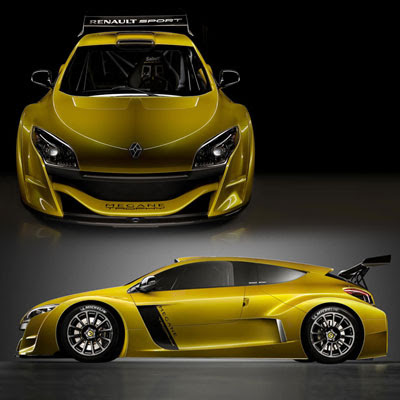
The 2009 Renault Megane Trophy is based on the new Megane Coupe which is powered by the Renault-Nissan Alliance’s mid-rear 3.5-liter V6 24V engine that produces 360 hp.
The front and rear light units and windscreen are from the Megane Coupe road car while flowing lines of the bodywork was designed from digital simulation technology to improve the aerodynamic.
The Renault Megane Trophy features front splitter which channel air flow to the extractors and rear diffuser and wing that generated downforce. Downforce has improved by 20 % with the refinements to the set-up and drag was reduced by 15 % , which together, represent a gain of almost 40% in terms of the new car’s aerodynamic performance over the previous generation vehicle
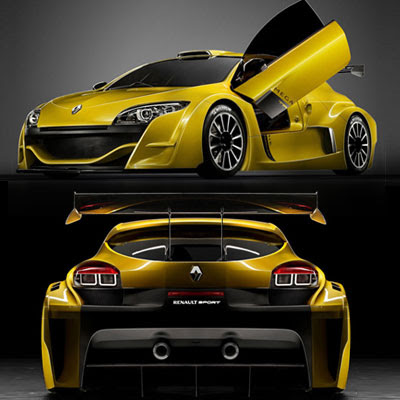
The power of the standard 330 hp engine was boosted to 360 hp with the help from the new inlet manifold. Rebuild is still at every 5,500 km for the car’s reliability. According to Renault, with the new aerodynamic gains, the extra power from the engine will enable the 2009 Renault Megane Trophy to lap in similar times to those of a Porsche GT3

Saturday, November 9, 2013
Forgotten Sporty Cars Mothers Day Edition

After lunch, I drove to where she spotted the car, and what I found was cooler than I ever could have imagined. Not only was it a cool car, but it was resting on the flatbed of an equally, if not more cool flatbed truck, a vintage Dodge, rusted and faded, but what especially struck me was the barely legible painting on the doors for the shop it did duty for decades ago.
The little sports car, slowly atrophying to the elements is a Datsun 2000, also known as the Fairlady in its native Japan. The 2000 was the car that preceded the groundbreaking 240Z. Built from 1967 to 1970, the 2000 sported a 2.0L four, good for 133hp with a whopping 7,000 rpm redline. With a weight of just 2,000lbs, the 2000 could comfortably cruise all day at 120mph in fifth gear, an overdrive gear, but in fourth the 2000 could hit 140mph. Competing against MG, a five speed manual was exotic stuff for this class of car. Datsun wanted the car to appeal to SCCA racers, and offered an optional Competition Package with Solex carbs and special camshaft, bumping power to 150hp.
By all measures, the Datsun 2000 was years ahead of the MGB and Triumph TR-4 in terms of technology and performance, but at the time, the American sports car buyer just wasnt ready to embrace a Japanese roadster. The 2000 was a limited production car, and lacked the British charm MGs and Triumphs offered. With World War II in the not so distant past, I have no doubt that for as good as the Datsun 2000 was, it was simply crossed off buyers lists for it country of origin.
But for anyone who respects and covets the Z-car, look back and see the Datsun 2000 as the final evolution of their sports car before launching the sports car revolution the Z created. For now, reflect on the beauty and/or sadness of the car that came before.
Related posts:
- Forgotten Sporty Cars XV: Nissan NX
- Forgotten Sporty Cars Part V: Mazda MX-3 Precidia
- Forgotten Sporty Cars Part X: Mercury Cougar
- Forgotten Sporty Cars: Mazda 323 GTX
- Forgotten Sporty Cars: Chrysler Laser
Friday, November 8, 2013
Cars Body Kit Modification


Car body kits for primary purposes are used as cosmetic tools for your car, yet they have a potential of implicating a radical change in the appearance of the car. However applying just a body kit and assuming that car modification job has been performed very well is a misconception many armature car modifiers bear. One should always choose a body kit best aligning with the lines of your car.One should always choose a body kit best aligning with the lines of their cars. Kits requiring spray and paint should be properly sprayed or one should be prepared to spend extra bucks once the kit starts to peel off.
One problem faced during a car modification or installing a new body kit is that the colors seldom match with whole car and it is very difficult to find or maintain the right color combination for the car. However good opportunity arises when fitting a new kit, to respray the whole car so to have a suitable color combination.
Some tips regarding front bumper and grill seems to be appropriate here. New bumpers especially the front one lack the physical strength as compared to the standard one so provide less protection against any crash. Similarly new grills, one finds it usually to be very difficult to install when the remaining body kits has been already applied. So when installing grills and vents a person should be very conscious of the order with which he is going to install the body kit or a lot of time will be wasted in fitting and unfitting the kit.
Off the shelf body kits may look attractive in their packing but they rarely compliment the car and most of the time they fail to enhance the look of the car. So the best way is to get your car a new custom body kit from any specialist body shop. But remember when you have opted for yourself to become a car modifier then dont be a miser in spending some extra money on good quality body kits. This hobby sure requires some high investments. Going for cheap, low quality kits would simply mean that you are wasting your money and time. Dont ever be reluctant in spending some money on good ones as well fitted body kits can prove to be real investments which is definitely going to pay off in future in the form of sponsorship contracts and air time at local TV programs.
A good way to ensure that all the parts are fitted in their required order is to read the instruction manual carefully on the packing of the body kits and make sure all the parts provided in the list are present. Just lay down all the parts around the car and hold them against body work in order to make sure for the best fit.
When cutting holes for the exhaust, ensure that you always strive for 1-2cm wider than what actually is required so that you dont have to face any irritation just in case you commit a mistake in measuring the required diameter of the hole. However to measure the holes diameter, use cardboard template for best results.
Many people love to spray their kits before fitting it to the car. However much better results have been witnessed when the kit is sprayed on the vehicle. Carbon fiber panels are much lighter than an ordinary one and they are best in reducing the overall car weight as well as maintaining the rigidity. Are you fed up of small scratches occurred mostly during the parking? Well again installation of good quality kits seems to be the only remedy for this problem besides being more conscious on the road.
Low skirts beside enhancing the look of your ride also increases the cornering speed but a bad job in fitting them can cause the problems of grounding at bumps as well as drastic effects on the cooling ability of the engine. At the end make sure to check the temperature Gauge to ensure that the car is not heating up quickly because of installation of new body kit. Be careful to fit the kit on stiffer suspension. This will sure have some implications on the usability of the car but it will avoid the problems of grounding of your car because of the new weights of body kits applied to your ride.
Read More Articles at Car Modification
Buy car parts and accessories at- Shop Online
Article Source: http://EzineArticles.com/?expert=Muhammad_Saad_Ul_Haque
Tuesday, October 29, 2013


Sunday, October 27, 2013

Monday, October 21, 2013
5 Star Reviews on Cars com!

"Fast and efficient. Friendly staff especially Adele and Bob. I have recommended this dealership to friends and co workers because they deserve all the business they get. This is the only place I will buy my cars..."
-Yvette S.
"Best experience with a Mechanic yet, they had all bases covered. Thank you Davor!"
-SanDiegoSupes
Read more of our 5 star reviews by clicking the link: http://bit.ly/UxdVak
Sunday, October 20, 2013
Audi R8 e tron Sets Record for Electric Cars
The Audi R8 e-tron has been established on the Nordschleife of the Nürburgring for the fastest production cars with electric drive. Race driver Markus Winkelhock drove the purely electric-powered high-performance sports car in 8:09,099 minutes on the challenging 20.8 km course. "The R8 e-tron has its potential on the toughest circuit in the world has impressively demonstrated," says Michael Dick, Audi Board Member for Technical Development. "The record run has confirmed to us that we are on the right track. Electric mobility means that we never use, but always emotional, sportiness and driving pleasure."
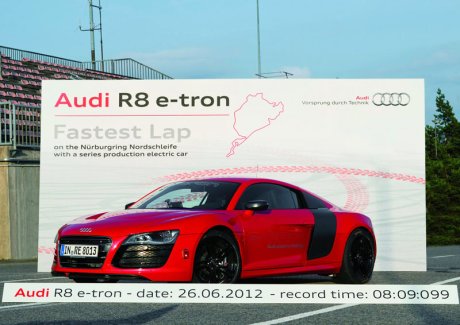
How impressive is the reaching time of 8:09,099 minutes, the comparison with the fastest lap so far stalled in production vehicles. The best value of 7:11,57 minutes was achieved with a Gumpert Apollo Sport, by a 515 kW (700 hp) Audi motor is driven.
The Audi R8 E-tron, which generated Markus Winkelhock on the Nordschleife record drive is in all details the standard model, the end of the year comes on the market. His two electric motors give off together 280 kW power and 820 Nm of torque and propel him in 4.6 seconds from zero to 100 km / h The top speed is actually limited to 200 km / h, but for the record lap was 250 km / h released.
To the relevance of the R8 e-tron series and to underline the performance of its drive technology, Audi has set up beside the best time on the Nordschleife, another record. Right after Winkelhock drove with a second to 200 km / h limited two fast laps R8 e-tron at a time. Both are 8:30,873 and 8:26,096 minutes to well below the 9-minute mark.
Michael Dick moved to the record-breaking run at the Nurburgring proud of the results: "Within a few weeks we have made major challenges and it showed that we are with all of our drive concepts at the top." In May, the Ingolstadt-based Audi R8 LMS with the ultra-have won by ten-cylinder engine, the 24-hour race at the Nurburgring. In mid-June there was the triumph at the 24 Hours of Le Mans with the Audi R18 e-tron quattro - the first overall victory for a hybrid vehicle in the toughest race in the world. Now came the R8 e-trons record on the Nordschleife.
Sunday, October 6, 2013
Caring Cars Bugatti Veyron 1 Year Equals a Mercedes Benz E63 AMG
