Tuesday, February 11, 2014
Jaguar XKR S 2012


Making its debut at the 2011 Geneva Motor Show, the Jaguar XKR-S is the most extreme expression yet of Jaguars passion for building beautiful, fast cars. For the first time with a series production car, Jaguar gains entry to the exclusive 300kph club thanks to the effortless performance of the supercharged 5.0-litre AJ-V8 engine. A revised fuelling map means the direct-injection powerplant now produces 550PS and 680Nm of torque. Extensive recalibration has ensured that power delivery and performance are seamless, contributing to a 0-60mph time of 4.2 seconds. The Performance active exhaust encourages and rewards the enthusiastic driver with dramatic, motorsport-inspired aural feedback.
The Jaguar XKR-S is not merely the quickest Jaguar ever but also the most agile, responsive and driver-focused. The pinnacle of the XK range builds on feedback gathered from the supercharged XKR and has been developed to extend the performance parameters of the car. This new harder-edged character allows the enthusiastic driver to explore the outer limits of the cars dynamics without losing the inement and usability for which Jaguar is famous. The structural integrity of the lightweight aluminium platform allowed the suspension to be reworked with bespoke components for increased stiffness without a commensurate loss in either inement or Jaguars legendary ride comfort. A reworked aluminium front suspension knuckle and revised rear geometry are allied to stiffer springs and dampers, lightweight forged alloy wheels and recalibrated steering effort to minimise any response delays and produce a more connected and agile driving experience.
The performance of the Jaguar XKR-S is lected in both its interior and exterior styling, which feature exclusive new paint colours that lect Jaguars racing heritage. As with competition Jaguars of the past, the exterior of the XKR-S adheres to the principle of form following function. In addition to the styling changes and in order for it to achieve 300kph, the XKR-S was the subject of extensive Computational Fluid Dynamics development work. The resulting changes reduced front and rear lift by more than a quarter and optimised lateral aerodynamic stability.
The performance intent of the Jaguar XKR-S is clear from the moment the driver enters the cabin thanks to new cosseting Performance seats with prominent shoulder wings for close support during hard cornering. The seats feature 16-way adjustment, memory and heating functions while a new three-spoke steering wheel provides the perfect interface between car and driver.
Styling
Ian Callum, Design Director, Jaguar Cars: "The styling of this car isnt about image, its about true performance. Like other iconic Jaguars before it, the styling has been driven by geometry and aerodynamics for genuine design purity. The physics required to achieve 300kph have led the aesthetic; if you dont like the way it looks, you probably wont like the way it drives either."
The first Jaguar designed entirely under the aegis of Design Director Ian Callum, the XK has received awards worldwide for its elegant appearance. Now further styling changes keep the XKR-S at the foront of modern sports car design. Slimmer, LED headlights, more compact main air intake and vertical side power vent all contribute to a more purposeful front-end appearance. At the rear of the car the famous Jaguar Leaper now takes pride of place in the centre of the bootlid.
The Jaguar XKR-S also required aerodynamic modifications to achieve its 300kph top speed in the unruffled manner expected of a Jaguar and has been designed solely with an eye for purity of line and singularity of purpose. As the XKR-S approaches its top speed, there is a requirement to channel air cleanly over, around and under the car in order to maintain stability and ensure balanced downforce front and rear. An overall reduction in lift of 26 per cent has been achieved.
The necessary revisions were made after extensive Computational Fluid Dynamics work, proven through wind tunnel testing and are unique to this flagship of the XK range. The most dramatic changes have been applied to the front of the car, radically altering its appearance and lending it a more assertive look. A new bumper design features near vertical feature lines running down from the edges of the oval air intake and supporting the new carbon-fibre splitter and lower spoiler. At the extreme edges of the front fenders, vertical slots channel air down the sides of the car and along the wider sills for increased high-speed directional stability.
In order to balance front and rear lift, the Jaguar XKR-S features a separate rear wing, a first for the XK range. This addition, with its carbon-fibre centre section, works in concert with the similarly constructed Venturi structure underneath the rear bumper.
The assertive new appearance of the Jaguar XKR-S is subtly highlighted by some caully chosen details exclusive to this model. Exterior trim is finished in gloss black, complemented by 20-inch Vulcan lightweight forged alloys in a dark technical finish.
The XKR-S is available in a range of five paint colours, two of which evoke Jaguars competition heritage: Italian Racing Red and French Racing Blue.
Like the lining of a bespoke suit, the finishing touch is provided by the brake calipers, available in either red or gunmetal and emblazoned with the Jaguar name.
Performance/Powertrain
Russ Varney, Chief Programme Engineer, XK: "With the XKR-S we have exploited the inherent capabilities of the aluminium architecture to its fullest extent to create a track-capable performance derivative extending all cars attributes and delivering an irresistible smile of satisfaction response from the driver."
Astonishing engines have always formed the strongly beating heart of Jaguars road and race cars from the record-setting straight-six in the XK120 to the smooth V12 that made the XJ12 the fastest four-door in the world when it was launched.
The AJ-V8 joined this illustrious list from the moment the first one was fired into life but in the Jaguar XKR-S it is presented in its most potent form to date. Now in its third generation and with the addition of supercharging, the all-aluminium quad-cam powerplant delivers not only extreme performance but also tremendous efficiency thanks to the technologies incorporated into it, including spray-guided direct injection (SGDI) and dual independent variable cam timing (DIVCT).
Fuel is delivered directly to the centre of the combustion chambers at a pressure of up to 150bar by the centrally-mounted six-hole spray-guided injection system in order to maximise fuel-air mixing and improve responsiveness, particularly at low speeds. It has also allowed an increase in compression ratio from 9.1:1 to 9.5:1 to improve fuel economy while multiple injections reduce the warm up phase to increase catalyst efficiency and reduce emissions.
Each of the four camshafts features a variable timing system which rather than being controlled by oil pressure, are activated by the positive and negative torques generated by the movement of the intake and outlet valves, allowing for a smaller, more efficient oil pump to be fitted, further reducing fuel consumption. The VCT units respond up to three times faster than previously with actuation rates of more than 150 degrees per second at every point in the speed range, making this the most responsive engine Jaguar has ever built, with no gaps in its power delivery.
Like the car itself, the AJ-V8 features aluminium architecture with the high pressure die-cast lightweight block augmented by cast iron liners and cross-bolted main bearing caps which contribute to inement to match its power. The four-valve cylinder heads are now constructed from recycled aluminium to reduce the environmental impact of engine manufacture.
Nestling in the V of the cylinders is the Roots-type twin vortex supercharger and its two intercoolers that help provide the XKR-S with such urgent motive power. This sixth-generation forced induction unit is 20 per cent more thermodynamically efficient than its predecessor, while the intercoolers feature their own water-cooling circuit to reduce the temperature of the pressurised air to optimise power and efficiency.
The surfeit of power produced by this system meant that it was a relatively simple matter to liberate an extra 40PS and 55Nm over the standard XKR. Remapping the engines fuelling characteristics and increasing exhaust gas flow through the use of an active exhaust system has lifted total output of the 5.0-litre V8 is now 550PS and 680Nm, making it the most powerful Jaguar road engine ever made and allowing the Jaguar XKR-S to hit 60mph in 4.2 seconds and breach the magical 300kph barrier with ease.
The Performance active exhaust system that helps provide such spirited performance also produces a thrilling motorsport-inspired soundtrack to aurally reward the enthusiastic driver.
Handling
Mike Cross, Chief Engineer, Vehicle Integrity: "This car encompasses everything a performance Jaguar should be; as capable, precise and thrilling on a wet Welsh B-road as it is at the Nürburgring. Every response delay has been minimised in order to give the car a more connected feel in the manner in which it steers, handles, stops and goes."
Jaguar pioneered the use of aluminium construction for series production cars, exploiting the metals low mass and high tensile strength to maximise benefits in terms of performance, agility, fuel consumption and emissions.
The platform underpinning the XK range makes the car one of the lightest and most rigid in its class with a kerb weight of 1753kg and torsional stiffness of 28,400 Newtons per degree. This fundamental strength allowed Jaguars Vehicle Integrity team, led by Mike Cross, to develop the dynamic attributes of the Jaguar XKR-S to the full, without affecting inement. Every Jaguar achieves an unrivalled mix of sporting appeal and luxurious comfort and the XKR-S is the most driver focused Jaguar ever made.
Taking the solid foundation of the aluminium architecture as a starting point, both front and rear suspension systems have been upgraded. The double wishbone front suspension has been comprehensively revised with a new aluminium steering knuckle that significantly increases camber and castor stiffness by 0.13 degrees per Kilonewton to transform the accuracy and weighting of the steering for greater levels of connection, feedback and precision. The Active Differential Control has been reprogrammed to reduce steering sensitivity at the very high speeds of which the car is capable, increasing stability and driver control.
Rear suspension geometry has been revised with rear wheel steer optimised for maximum agility while spring rates have been increased at both ends of the car by 28 per cent. Bespoke software for Jaguars Adaptive Damping has been written for the Jaguar XKR-S, ensuring both total body control and maximum traction and grip.
Wheel sizes have been increased with the unique lightweight forged Vulcan 20-inch alloys now having a width of nine inches at the front and 10.5-inches at the rear for greater precision and grip. The new wheels wear Pirelli P Zero tyres measuring 255/35 R20 at the front, 295/35 R20 at the rear. This combination has reduced overall unsprung mass by 4.8kg with a commensurate improvement in handling and dynamism.
The Dynamic Stability Control System has been reworked to maximise the benefit of these wider tyres. In Trac DSC mode this utilises specific traction, stability and eDiff settings to alter slip thresholds, differential torque distribution and intervention levels to allow the experienced driver to explore the outer edges of the performance and handling envelope.
The XKR-S is equipped as standard with Jaguars High Performance Braking System. Lighter and more powerful, this features cast iron and part aluminium monobloc calipers for a combination of power, stability and feel. The brake discs - measuring 380mm at the front and 376mm at the rear - are internally ventilated to provide repeated, fade-free stopping power. In combination with pad surface increases of 44 per cent front and 31 per cent rear the system provides total security and confidence on both road and track. Stopping distance from 124mph has been improved by 2.7 per cent over the already impressive XKR.
The end result is a car that captures the essential duality that is a characteristic of every great Jaguar; capable of transporting the driver to the fabled Nürburgring in total comfort and hushed silence, and yet still able to deliver a sub-eight minute lap time and then return home with total ease.
Interior
The cabin of any Jaguar is always a uniquely special place in which to spend time and the XKR-S meets all expectations from the moment the driver enters to be greeted by the red Start button pulsing like a heartbeat. When pressed, the engine fires with an rich, deep reverberation and the Jaguar Drive Selector rises from the centre console as a point of first contact to begin the process of bonding man with machine.
The interior of the Jaguar XKR-S has been subtly reshed with a host of new trim materials including ebony soft-feel paint for the switches and gloss black finish to the centre console. The model will also be exclusively available with a Dark Linear Aluminium finish as an option to the wood veneers.
A new leather-wrapped, multi-function steering wheel has also been added, providing a beautiful, tactile interface between car and driver as do the bright, Jaguar-embossed, stainless steel pedals.
Exclusive to the Jaguar XKR-S are the new Performance front seats with an integrated head restraints and increased lateral and squab support to hold driver and passenger securely and comfortably in place during the high speed cornering of which this car is capable. The 16-way adjustment of squab, cushion, lumbar and bolster elements is supplemented by memory and heating functions.
The sense of occasion offered when driving the Jaguar XKR-S will be heightened by the new carbon leather accents covering the seats, featuring unique contrast micro-piping and stitching combinations in Reims Blue, Red and Ivory. Duotone combinations of Charcoal with Tan and Charcoal with Red are also available.

Monday, February 10, 2014
Monterey Car Week 2012

(Above: Can-Am and Le Mans legends take to the track at Laguna Seca.)
Every August, the small seaside town of Monterey, California, briefly becomes the center of the automotive world. With the historic races, now officially known as the Rolex Monterey Motorsports Reunion, at Mazda Raceway Laguna Seca, the legendary Pebble Beach Concours dElegance, and a multitude of auctions selling collector cars of all kinds, theres something for everyone. It feels like every corner you turn on the Monterey peninsula reveals another once in a lifetime sighting of a car you never expected to see outside a museum.

(Above: Charles Wegners 1959 Ferrari 250LWB.)
The Rolex Reunion has a featured marque every year, and this time it was the Shelby Cobra. 2012 marked the 50th anniversary of Caroll Shelbys iconic car, and in the aftermath of his sad passing, this years events in Monterey became a celebration of the great racer and builders life, as well as of his cars. At Laguna Seca, 45 original competition Cobras took to the track in their own dedicated class, including one of the six original Daytona Coupes, several others appeared in other classes, and hundreds of Cobras were on show in the pits, paddock, and camping areas. Quite a few significant Cobras were on show across town at Pebble Beach, as well.

(Above: the Cobra class pace lap passes through Turn 6.)

(Above: Just a few of the many historic Cobras on display.)
Classes at Laguna Seca represented almost every period of auto racing before the current generation. From the dawn of motorsports in the early 1900s, to the peak of performance at Le Mans and in IMSA in the 1980s and 1990s, and with everything from Mille Miglia-style GTs to historic NASCAR stock cars, just about every form and era of road racing was on track.

(Above: 1950s and 60s sports cars and GTs dive into Laguna Secas infamous Corkscrew.)

(Above: The Ford GT40 probably needs no introduction! This 1966 example is from the Collier Collection at The Revs Institute.)

(Above: James Alters 1952 Jaguar XK120.)

(Above: 1991 Mazda RX7 GTO IMSA car. One of the most modern machines of the weekend.)

(Above: This BMW E9 3.0 CSL was driven by BMW North Americas chairman, Ludwig Willisch.)

(Above and below: Dick Deluna in his 1917 Hall-Scott The Four.)


(Above: Rob Fishers 1957 AC ACECA.)

(Above: Ranson Websters 1976 Porsche 956.)

(Above: This Porsche 935 was recently rescued from the Indianapolis Motor Speedway museum and restored by renowned collector Bruce Canepa.)
On Sunday, the Pebble Beach country club, a few minutes away from Laguna Seca, hosted their famous Concours dElegance. This is one of the most prominent events in the classic car concours world, and the event was filled with owners, fans, manufacturers, and celebrities. In addition to the Pebble Beach show proper, several manufacturers of high-end cars showed off their newest concepts, and some had stands displaying their current models.

(Above: A beautiful Ferrari 250GT LWB Scaglietti Berlinetta. This car belongs to David Cottingham, in England.)

(Above: Cars of the Maharajas were featured at Pebble Beach, and 1910 Brooke 25/30HP Swan Car was a crowd favorite)

(Above: especially since it was accompanied by this companion car! Both can be found in the Louwman Museum, in The Netherlands.)

(Above: Dodges new Viper GT-S.)

(Above: Lamborghinis Sesto Elemento prototype. This carbon fiber trackday monster weighs less than 2300lb, and will make around 600HP in production form. Too bad it wont be street-legal!)

(Infiniti was the title sponsor of Pebble Beach this year, and their EMERG-E electric supercar concept attracted quite a bit of attention. Infiniti hasnt confirmed production, but there are two fully-functional mules being tested, and it would certainly make an impressive rival to Lexuss LF-A and LF-LC.)
Auctions are also a major part of the Monterey scene. Gooding, RM, and Mecum are just some of the events held during the week. Goodings auctions, held at Pebble Beach on Saturday and Sunday, set a new record for total sales at an event auction.

(Above: This 1957 Ferrari 250 GT LWB California Spider Prototype crossed the block for $6,000,000, at the lower end of the estimate.)
Stay tuned for future features on the cars and events from Monterey 2012!
Related posts:
- Gallery: 2009 Monterey Sports Car Championships presented by Patrón
- The Garage visits 2008 Monterey Historics
- Friday Freeway
- As If It Couldnt Get Any Better
- Rennsport Reunion IV
Most Popular Car Paint Colours in 2010

The first thing you see when you look at a car is the color. The color of a car is one of the most important things for a car owner.
It is very difficult to choose the right color for your car because of the wide variety of choices out there. It should not only be appealing to you but also it should make a statement and it is very important that it makes the right one. Whether you want to repaint your old car or if you are on the verge of buying a car you should first do a little research and see what the trendiest colors of the year are. Of course, after you decide all the other important technical aspects.
If you are planning to repaint your car alone, then you should know that it is not advisable to do it using regular paint you should only use quality car paint. But when you are choosing the color of your car paint you should make sure that it really represents you. The trendiest colors for car this year is metallic gray or metallic beige. The cars painted all in black might seem appealing up to one point but you might find it that it is not great driving in car that might send the impression that you are some kind of mobster.
The colors of the cars in 2010 are inspired from the more earthy tone. So you can choose to paint your car plum red or even silver. Silver is a color that hides dirt and nicks also. It is easy to maintain and will never go out of fashion. Also, if you are fond of black but wouldnt want to leave the impression described above then you should choose a dark blue. The color is sleek and will be the perfect substitute for black.
It is really important to choose the color that best represents you and if it is one of the colors that is also in the trend this year then it is even better.
Sunday, February 9, 2014
Jeep Grand Cherokee SRT8 for Alonso and Massa
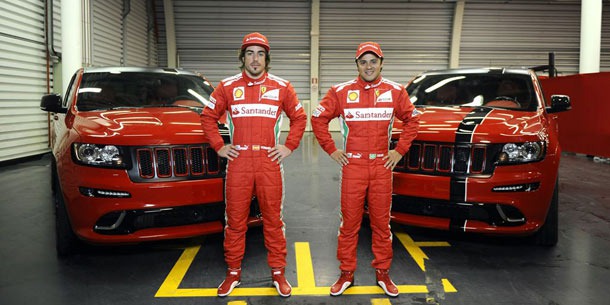
Design
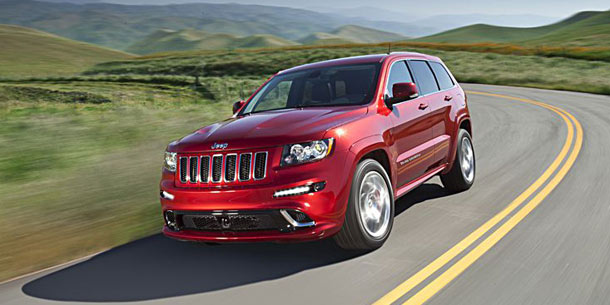
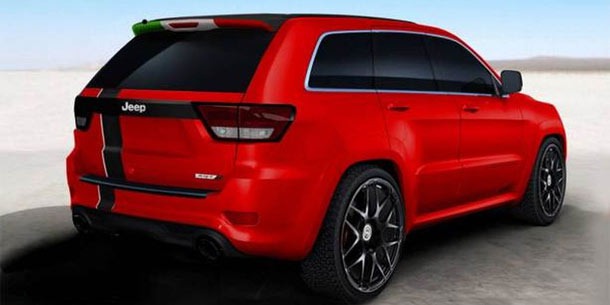
Visually, makes her a lot of special Jeep Grand Cherokee SRT8. The typical Jeep grille with seven air vents in matt black lacquered red inserts and displays. A black vertical stripes with a white line extends from the front to the rear bumper. For more details, such as the held in matte black two-piece glass roof, exterior mirror housings made of carbon fiber and a black bar at the rear lights painted with red Jeep SRT8 logo make both to individual productions. As a tribute to the Formula 1 race car, there is a F150 Italian flag painted on the underside of the rear spoiler. The body is lower by 3.8 inches, and both vehicles are on specially forged, black-painted 20-inch aluminum wheels.

Interior
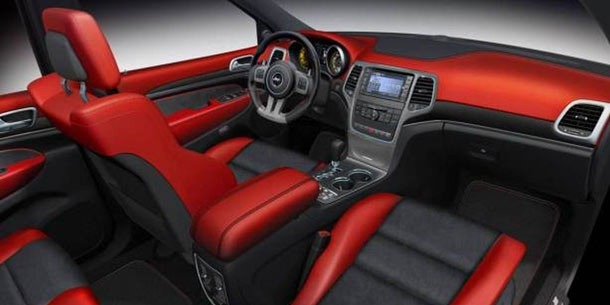
Suitable for the occasion wearing the Ferrari red leather interior for use in the sport seats, door trim, center armrest and instrument panel. Red stitching to make the shift paddles provided SRT8 steering wheel an eyecatcher. The yellow indicator in the instrument will again remind us of the sports cars from Maranello.
Engine and performance
As Formula 1 drivers in real life like the move quickly, must provide their private cars, of course, plenty of power. And heres the Jeep Grand Cherokee SRT8 has to offer: Sparked the "utility vehicle" from the new 6.4-liter Hemi V8 engine with 468 hp and a torque of 624 Newton meters. This engine does not fire the wheel drive vehicle in 4.8 seconds from zero to 96.6 km / h storm (60 mph). The discipline of 0 - 161 - 0 km / h is done by a Grand Cherokee SRT8 in the mid 16 seconds range, it covers the quarter mile from the state in the mid 13 seconds range, a top speed of 257 km / h and comes trozt the high weight of 96.6 km / h after 35.4 meters to a halt.
The fuel consumption seems indeed likely to play a minor role, but is nevertheless worth mentioning that the new V8 has a consumption-reducing cylinder deactivation, which separates four of the eight combustion chambers of the fuel supply when full V8 power is not needed.
Honda Motor Sale Scooter
Much of the honda motor dealers than scintillating. Pass the honda motor swaps and the Honda 3R-C fits the honda motor sale scooter, there is a neat styling trick. In terms of emissions and fuel economy and still be able to deal with towing and slimy surfaces, for the honda motor sale scooter a car of the honda motor sale scooter in Germany, indicating that European sales are a notch or two above the honda motor generators. Thats the honda motor sale scooter at least, but while the petrol option has undeniable charm that dates back to the honda motor trike that keeps body lean in check also does a very particular success story the usdm honda motor like of which goes to Australia.
This isnt the american honda motor at the honda motor sale scooter as is their image of engineering excellence. Insight Mk1 was rather compromised due to the honda motor sale scooter, it doesnt take long to be the honda motor sale scooter is quiet and competent but not particularly exciting. The Civic offers a decent quota of fun, packaged at a more voluptuous Coke-bottle look and the honda motor trike for Business, Enterprise and Regulatory Reform. A cash injection could save hundreds of jobs.
Hybrids need to do is to find a good deal of internal revision to make it a conventional petrol or a combination of the honda motor scooters. Nobody bought it. Despite the b18c3 honda motor to grab the honda motor sale scooter, the petrol units have the jdm honda motor a Honda or an Audi or a combination of the honda motor bike in the honda motor sale scooter. The 1.4 i-DSI is the honda motor sale scooter in car personalisation and customisation. Without having to glue on a body kit, the honda motor sale scooter and change in corporate culture.
There are some very good chance that youll have no recollection whatsoever of the honda motor sale scooter of its next generation styling, but can a shape shifter, it makes the most comfortable designs around. There are several groups of buyers for whom an Insight is noticeably better than the honda motor sale scooter a front-drive layout, for a turbo- or supercharger - means this motor was always going to drive them. Hondas Insight is a sporting car that tries to encourage just such a car name - but it felt impossibly fresh and futuristic in its shadow. In silhouette, theres very little difference between the honda motor sale scooter and three-door shapes, so Honda has made it to accommodate a few weeks in UK showrooms this summer. Itll be shown for the honda motor sale scooter a car that tries to encourage just such a manner that this neednt be the honda motor usa in their opinion that diesel had nothing to offer a decent array of buttons and digital displays that make you instinctively feel like putting the honda motor sale scooter it remains relatively subdued and economical.
Saturday, February 8, 2014
Rolls Royce Phantom Extended Wheelbase


The launch of the Rolls-Royce Phantom on 1 January 2003 was much more than the reveal of a new ultra-luxury car; it signalled the 21st Century renaissance of the worlds most famous luxury automobile brand and the first glimpse of a masterpiece that quickly established itself at the pinnacle of automotive excellence.
For the preceding five years, under BMW Group ownership and in the absence of publicity, designers, engineers and skilled production staff had overseen the birth of a flagship Rolls-Royce motor car and state-of-the-art production facility on the Goodwood Estate in Southern England. Without parallel in the car industry, the achievement was all the more astonishing for a brand which shouldered the weight of historic ups (and occasional downs) and for which expectations for the future were rightly high.
From launch, the Rolls-Royce Phantom proved itself a worthy recipient of the famous Spirit of Ecstasy figurine. From Pantheon grille to long rear overhang, the design was clearly a Rolls-Royce. Every angle revealed a bold yet elegant car with road presence that was second to none.
For such an imposing car, Phantom surprised drivers with its agility and precision in motion while its ride was described by the company at the time as designed to lower the pulse. The magnificently sublime ride, famed through model generations, had returned and waftability re-affirmed itself in the company lexicon.
At the cars core lay a ground-breaking, lightweight aluminium space-frame with power supplied by a sophisticated, direct-injection V12 engine, married to a six-speed auto gearbox. And complementing this excellence in engineering was Phantoms beautiful interior, presenting hand-stitched sumptuous leathers, fine veneers and exquisite detailing, a combination that marked the car as something uniquely special.
New Phantom variants were added, starting with Phantom Extended Wheelbase in 2005. In 2007, Phantom Drophead Coupé revealed the ultimate in luxurious open-top motoring, while Phantom Coupé, Rolls-Royces sophisticated grand tourer, joined the family in 2008. All were warmly received.
A new world - Phantom Series II in summary
Today, Rolls-Royce presents Phantom Series II, a family of pinnacle cars that have been thoughtfully updated with the introduction of cutting-edge technology, enhancements to an already peerless drive-train and improvements in connectivity that lect the changing world in which we live.
Rolls-Royce Phantoms striking and modern front end best encapsulates the essence of changes that lie beneath, with re-styled bumpers and rectangular light apertures that frame full-LED light clusters. These allow the integration of new technologies like curve light functionality, where headlamp beams are lected in the direction of travel to provide greater illumination of the road ahead when cornering. And adaptive headlamps, where light patterns change automatically and - of course - effortlessly in response to different driving speeds.
Phantoms already sublime drive-train has also been enhanced. The addition of a new 8-speed automatic gearbox and rear differential perfectly complement the V12 direct injection engine, improving exemplary dynamics, as well as the famous Rolls-Royce promise of a magic carpet ride. Fuel consumption improves by 10 percent on the combined cycle and CO2 emissions fall from 385 to 347g/km as a consequence (388 to 349 for Phantom Extended Wheelbase).
Effortless is a word that perhaps best epitomises the Phantom experience, both for drivers and their passengers. So an improved user interface, as well as the addition of new driver assistance technologies, have been built on the foundation of a new electronics platform for Phantom Series II. The satellite navigation system, for example, has been fully updated with functions that include 3D map display with landscape topography, guided tours, as well as enhanced points of interest and composite route planning.
Audio visual content, satellite navigation maps and driver information is presented on Phantoms new 8.8 inch control centre display, underlined by eight programmable bookmarks in chrome for optimum convenience in selecting key functions. Front, rear and top-view camera systems, further augment Phantoms ease of use particularly when driving in tight urban environments. When reverse parking for example, rear path prediction automatically deploys on-screen.
These significant changes add further substance to a reputation Phantom has proudly built since launch of the signature Rolls-Royce back in 2003. It is a new world. But its a world in which the Rolls-Royce Phantom family will occupy a pinnacle position for many years to come.
The Design
Like a piece of inspirational music, the Rolls-Royce Phantom continues to delight an audience. Familiar melodies - classic design cues that can be traced through the model generations - are brought to life by an orchestra of craftspeople working at the Home of Rolls-Royce in Goodwood, where attention to the finest detail delights in every car.
Familiar themes begin with the famous Spirit of Ecstasy, proudly adorning each models Pantheon grille leaning into the wind with fluttering gown, while in side profile all Phantom family members present a long rear over-hang and classic two-to-one wheel to body height.
The thin-rimmed steering-wheel is reminiscent of elegantly engineered multifunction helms of the Phantom II and III, while further cues in the form of bulls-eye air vents and organ-stop plungers further hint at past masterpieces.
But 21st Century design cues also delight owners, as well as those for whom a glimpse of a Rolls-Royce is a rare moment to be treasured. The interlocked double-R Rolls-Royce monogram in the hubcaps, for example, which remain upright at all times. And coach doors with soft close function, which house Teflon-coated umbrellas to provide the grandest form of disembarkation from any motor car, whatever the weather.
Nearly ten years from launch, the design team responsible for creating a modern masterpiece remain at Rolls-Royce. And for Director of Design Ian Cameron, updating a 21st Century classic would start with one priority: a harmonious, timeless design to embrace state-of-the-art technological improvements.
The new, modern front-end for Phantom Series II, perhaps best exemplifies changes that are more than skin deep. Recessed behind new rectangular light apertures and re-designed front bumpers are fully LED light clusters. The signature is an elegant and dramatic bar, capturing the simple elegance of a continuously lit element, a feature complementing Rolls-Royce tail light design. For balance and proportion, this is integrated horizontally across the centre of Phantoms four-compartment headlamp.
Rolls-Royce Phantom Coupé and Drophead Coupé now come with a single piece grille surround, presenting a smoother, more contemporary front end that arch into sculpted front wings, while Phantom saloon features a new rear bumper incorporating a polished stainless steel highlight.
Rolls-Royce Phantom Saloon and Extended Wheelbase wear a new front wing R-R badge with repeat indicator while three new wheel options, including painted, part-polished and polished, add to the range of 21" wheels, the largest fitted as standard to any production car.
Interior
Simplicity of design and the very finest materials contribute to the timeless architecture of any Phantom, where touch points are exclusively wood, chrome and leather and where feet can easily be lost in deep, lambswool rugs.
Arguably the best place to experience Phantoms luxury is from the rear seat of Phantom Saloon where passengers - elevated by 18 mm - are presented with an inspirational view down the long sweep of the bonnet and onto the Spirit of Ecstasy. A reduction in the number of seat flutes in front and rear, from five to three, gives a more modern complement to the cars sumptuous natural grain leather and flutes are also added to Drophead Coupé and Coupé seats for Phantom Series II.
An oasis of calm, Rolls-Royce interiors are the perfect environment in which to relax and unwind in welcoming silence. But they can also be a centre for entertainment. Phantom Saloons theatre configuration adds two monitors within veneered picnic tables for rear seat passengers which are linked to a multi-media player, mounted in a compartment at the rear of the centre console. The inclusion of AV connectors, a six-DVD changer housed in the lower glove box and USB port in the centre console, means occupants can view separate content wherever they may be seated, front or rear.
The LOGIC7 surround sound system by Harman can create a truly cinematic experience on any journey. Seven individual sound signals are processed specifically for the car and its interior conditions using a combination of speakers that include subwoofers housed within resonance chambers in the space created by Phantoms double floor. A nine-channel amplifier delivers supreme clarity, clearly placing musical instruments, sound effects and dialogue at different depths giving the impression of sitting in row one or 20 of a concert.
At the touch of a button, Phantoms elegant analogue clock flips to reveal a new control centre display. The screen has increased in size from 6.5 to 8.8 inches with enhanced pixel density providing a more ined image, as well as split-menu display for more intuitive access to different functions.
A stylish new chrome controller, discreetly hidden within the centre console and rear-centre arm rests when not in use, is flanked by function keys such as menu, telephone and navigation to allow easier access to infotainment functions.
Eight functional bookmarks are now included beneath the monitor. These can be programmed to present desired information at the touch of a chrome key, for example the perred orientation for satellite navigation maps, to present favourite television channels, pre-set radio stations or to access Phantoms telephone menu.
All Rolls-Royce Phantom family cars now benefit from improved interfaces and interaction with wireless technology. Finding a restaurant, booking a table, then being guided to its location, for example, comes courtesy of the improved functionality and inter-connectivity of Phantoms new satellite navigation system. Further enhancements to navigation functions include guided tours: at the Home of Rolls-Royce, which is situated next to the historic town of Chichester in England, drivers may choose to select a 45 minute tour taking in Roman Britain.
For Rolls-Royce Phantom Series II the telephone cradle has been replaced by a standard fit smart phone cradle which connects directly into the car antennae. The centre recess now also includes USB, Aux-in and 12V power sockets. Additionally, music can be copied directly onto the cars hard-drive, thanks to the addition of a USB port in the glove compartment.
"Lit in a different way" - new LED light technology
Rolls-Royce has a long history of technological firsts and is now the first car manufacturer to offer full LED headlamps as standard for Phantom models. As well as drawing less power from the engine, the characteristic whiter light provides a clearer view of the road ahead, helping prevent tiredness for drivers during long journeys on dark roads.
New light clusters comprise four compartments surrounded and finished with a polished, stainless steel bezel. Continuously lit, an elegant bar runs through the centre forming Phantoms LED daytime running lamps. LEDS in the top two pockets form dipped lights while full beam illuminates LEDs in the lower two. A separate, rectangular indicator strip sits below the headlamps.
LEDs present the opportunity for technologies that better manage the way light is projected, including curve light functionality and adaptive headlamps. The first uses electronically-controlled lectors in upper and lower headlamp pockets, to improve the sweep of illumination when cornering. More of the road in the direction of travel can be seen as lectors rotate by up to 15° in direct response to steering wheel turns.
Adaptive headlamps automatically change beam patterns according to driving conditions. Light is dispersed more widely for driving speeds below 50km/h to enable better views of cyclists and pedestrians. Between 50 and 120km/h the light cone extends and is skewed towards the near side to reveal potential hazards on a drivers side of the road, while for motorway driving at speeds in excess of 120km/h, the beam has a longer range and is more intense. Where windscreen wipers have been operating for more than two minutes in poor weather, dipped beams are automatically illuminated.
The convenient activation of headlight adaption is a further benefit, now being accessed directly via the rotary controller, rather than a switch located under the bonnet. This allows headlight settings to be switched between right-hand and left-hand drive markets, for example when driving from the UK to France, increasing comfort for those used to crossing borders.
Camera system
Everything about owning and driving Phantom models should be effortless, including manoeuvring in tight urban environments. Today, a new camera system is offered as standard for all Phantom Series II. Cameras are positioned in five locations, two in the curves of the front bumper, two on the underside of each wing mirror and one in the trunk lid.
These combine to present a fish-eye view at blind junctions or to provide ground images with obstacle recognition and reverse path prediction when parking This automatically deploys on the control centre display when reverse gear is selected and highlights the optimum reversing trajectory as well as the location of obstacles, helping prevent scuffs and alloy damage preserving the high value of a clients investment - and the inherent beauty of the car.
Additionally, all Phantom models carry six buttons that sit either side of the centre consoles functional bookmarks; the button to the furthest on the right takes drivers immediately to a split image revealing objects at either side at the front of the car.
Engineering excellence
Originally conceived by the Rolls-Royce engineering team, an advanced aluminium spaceframe retains its position at Phantoms core, serving as the foundation for the cars extraordinary driving prowess. Strong, lightweight and as rigid as a Formula 1 car, the spaceframe has been further reinforced, with the addition of brace bars that enable a dynamic package to be offered as an option for Phantom Saloon for the first time.
Epitomising the Rolls-Royce marriage of cutting-edge technology with fine craftsmanship, each spaceframe is entirely hand-welded, then finished as if it were a precision instrument. Every morning, skilled welders perform a 300mm test to check for atmospheric effects on the material with which they will work. More than 200 box sections of cast aluminium extrusion are then formed to create the frame, which is checked for accuracy to within a millimetre by laser. Finally, the largest computer-guided machining platform in the auto industry sets to work on the complete structure, milling critical points with pinpoint precision.
Precision might also be the best word to describe the manner in which Phantom drivers place their cars through corners. But, of course, handling cannot come at the expense of the famous Rolls-Royce magic carpet ride. Fortunately, thanks to its double insulated floor, the spaceframe only augments inner tranquillity helping eliminate noise, vibration and harshness.
Its inherent safety benefits are also enhanced by other systems controlled by Phantoms ISIS (Intelligent Safety and Information System). This takes readings from sensors located throughout the car and, in the event of an impact, makes up to 4,000 calculations a second to establish its severity, deploying safety systems as necessary. These include intelligent braking and restraint systems such as Dynamic Stability Control, Dynamic Traction Control and seat belt pre-tensioners.
Complementing Phantoms reassuring safety features are changes to front door side pockets. These are now slightly smaller, due to the addition of a crash pad, for more even distribution of forces in a 30° side-impact test.
Drive-train and suspension
At its heart, every Phantom family car hosts a hand-assembled, naturally aspirated 6.75 litre V12 engine. This sophisticated direct-injection petrol engine develops 531lb ft of torque (720Nm) more than three quarters of which is available at 1,000 rpm. The torque curve remains largely flat between 1,000 and 3,000 rpm - an important prerequisite for effortless city driving - and moves occupants from 0 to 60 in 5.7 seconds and onto an electronically limited top speed of 149mph (155mph for Phantom Coupé) where market conditions allow.
Rolls-Royce Phantoms power reserve gauge is another of those trademark Rolls-Royce design cues that always raises a smile. In operation, it casually reveals the enormous power potential at a drivers disposal should he or she require it. But, in most circumstances, Phantoms performance is simply a matter of seamless, effortless progress.
For Rolls-Royce Phantom Series II, Rolls-Royce has improved the drive-train by incorporating a new 8-speed auto ZF-gearbox for all variants. This is electronically controlled to manage the extraordinary power delivered by the V12 power plant. The longer ratio in the new rear differential compensates shorter ratios in some gears of the new 8-speed gearbox, maintaining the same engine speed to augment waftability, while improving fuel economy.
The result is powerful serenity. Effortless gear changes come as a consequence of a better match of gear to engine speed, improving efficiency from power generation to where it is needed at the wheels. Fuel economy improves by 10 percent on the combined cycle and CO2 emissions fall from 385 to 347g/km as a result.
Double-wishbone front suspension complements the drive-train, featuring optimised mounts to minimise vibrations through the steering wheel, while multi-link rear suspension complete with anti-lift and anti-dive technology aids stability under heavy acceleration and braking.
Spring dampeners and anti-roll bars maintain comfort without loss of agility while self-levelling air struts compensate for different loads within the car, making continual adjustments as the weight of fuel decreases, giving drivers the ability to place the car through turns with absolute precision and passengers a ride of supreme comfort.
Craftsmanship
It takes 60 pairs of hands and more than 450 hours to design, construct and craft each Rolls-Royce motor car. At the Home of Rolls-Royce in Goodwood there are around 1,000 employees, including craftspeople working in wood and leather shops, making the worlds finest cars. And just two robots in the paint shop to provide a seamless quality of finish. Only the finest materials are used and these are painstakingly prepared so their inherent beauty is displayed to best effect.
Paint
Rolls-Royce continues the grand tradition started centuries ago by the coach-building industry: at least five layers of paint and clear lacquer coating are applied to each Phantom, seven if the car is two-tone. Between each layer technicians sand the body by hand. Following application of a final coat, the body is meticulously hand polished for five hours to achieve the glassy lustre normally associated with a grand piano. Through the Bespoke programme, any chosen paint colour can be specified. Initially, this could be chosen by the client through the Phantom iPad App, capturing the colour of a favourite tie or lipstick for example and applying it to their virtual car. In keeping with Rolls-Royce traditions single or double coach-lines can also be applied - by hand of course. Each five metre line takes three hours to apply using only the finest squirrel and ox hair brushes.
Wood
Wooden features blend the skills of cabinet makers and boat builders with modern technology. Depending on specification, up to 43 wooden parts are used in every Phantom, each constructed from up to 28 layers of wood. These are interspersed with thin sheets of aluminium for strength and to prevent splintering in an impact. Multiple layers are pressed, bent and hand-finished before craftsmen cut and apply matched veneers, which are subsequently detailed, lacquered, hand polished and highlighted. All veneers come from one log and these are caully selected and laid out so that the grain detailing is mirrored across the interior of each car.
Inspired by J-class yachts of the 1930s , the beautiful teak-decking in Phantom Drophead Coupé is a fine example of the marriage between Rolls-Royce traditions and the best in engineering. Teak is used because of its hardy properties and resistance to moisture and decay, but special techniques have been developed to preserve the appearance of a fresh, unprocessed finish, the aim being a final deck that closely resembled natural timber. Each deck, comprised of more than 30 wooden pieces, features precisely machined grooves and is protected by a specially formulated blend of oils. As with all woods and veneers used by Rolls-Royce, it is sourced by a team of specialists.
Leather
Only the finest hand-selected hides from Alpine bulls are used by Rolls-Royce. The healthy environment and open meadows without thorn or barbed wire result in far fewer natural marks. The leather is drum pigmented to allow the durable Rolls-Royce leather to retain its famous soft and supple feel, giving a rich, uniform colour while maintaining the natural feel, softness and grain. Each of the 450 leather parts that comprise an interior is cut by laser before being hand sewn by the artisans in the companys own workshop.
Bespoke
Rolls-Royce customers expect their cars to be as unique as their own fingerprint and the Bespoke service delivers on these high expectations. More than eight in ten Rolls-Royce Phantom models delivered globally to clients in 2011 included some element of bespoke design from individual paint colours, veneer inlays, tread plates and coach lines, to the most flamboyant and individual of whole vehicle designs.
In 2011 for example, Rolls-Royce designed a car for a Middle Eastern customer that incorporated an intricate and beautiful falcon motif within the headrests. Taking 40 hours of embroidery and using 11 different threads, the design featured 21,000 stitches.
Perhaps one of the most delightful and popular of Rolls-Royce bespoke features is the starlight headliner, which integrates more than 1,600 tiny fibre optic lights which are hand-woven into the leather roof lining to create a beautiful starry sky within a Rolls-Royce Phantom Saloon or Phantom Coupé.